
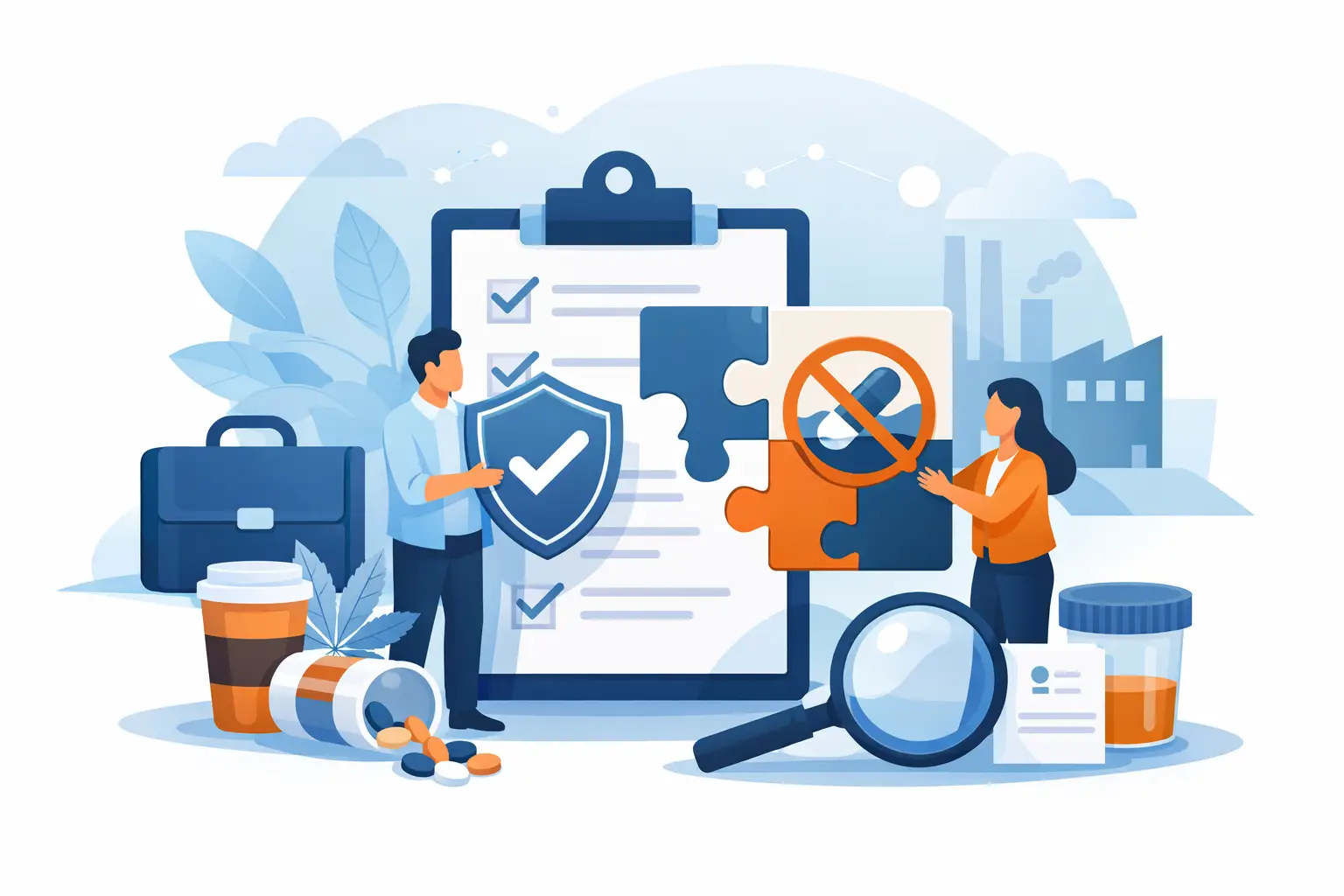
A positive test result, a post-accident call, or an untrained supervisor can expose an employer to safety risks and avoidable disruption. Knowing how to build a drug free workplace program before an incident occurs gives your organization a clear, defensible process for responding quickly, treating employees fairly, and meeting applicable requirements.
For DOT-regulated employers, the program must follow agency-specific federal rules. For non-DOT employers, the framework should reflect the organization’s safety needs, state and local law, collective bargaining obligations, and workforce culture. The goal is not simply to order tests. It is to establish a program employees understand, supervisors can administer, and management can document.
Start With Your Regulatory and Safety Requirements
Begin by identifying which employees and operations fall under DOT drug and alcohol testing rules. A driver, dispatcher, mechanic, or contractor may be safety-sensitive under one agency’s rules but not another’s. FMCSA, FAA, FTA, FRA, PHMSA, and USCG programs each have specific testing triggers, recordkeeping expectations, and reporting obligations.
If your business operates under DOT authority, do not blend DOT and company-authority testing into one undefined process. DOT testing must use required forms, procedures, laboratories, medical review officers, and testing rates. A separate non-DOT program may be appropriate for employees outside the regulated pool, but it needs its own policy language, authorization process, and result-handling procedures.
Non-regulated employers should assess job risk before choosing a testing approach. Construction, manufacturing, warehousing, healthcare, and fleet operations may have legitimate safety reasons for testing. Office-based roles may call for a different approach. State laws can limit when and how employers test, particularly for marijuana, pre-employment screening, and adverse employment actions. Have qualified legal counsel review your policy for the states where you employ people.
Build a Policy Employees Can Follow
A workplace policy should be direct enough for a new employee to understand and detailed enough to guide a supervisor during a real event. Avoid vague statements such as “drug use will not be tolerated.” Define what conduct is prohibited, when testing may occur, and what happens after a verified result or refusal.
Your written policy should clearly address these core areas:
- Covered employees, safety-sensitive positions, and any contractors subject to the program
- Prohibited conduct, including alcohol misuse, illegal drug use, refusals to test, and on-duty impairment
- Testing circumstances, such as pre-employment, random, reasonable suspicion, post-accident, return-to-duty, and follow-up testing
- The collection, laboratory, medical review, and confidentiality process
- Consequences for policy violations and the process for removing an employee from safety-sensitive duties
- Employee assistance, rehabilitation, and return-to-work expectations where applicable
For DOT programs, policy language cannot replace the regulations. It should reflect them accurately. For example, a DOT-covered employee who has a verified positive test or refusal must be immediately removed from safety-sensitive functions. The required return-to-duty process involves a qualified Substance Abuse Professional and a negative return-to-duty test. An employer cannot substitute an internal disciplinary meeting for those requirements.
Require each employee to acknowledge receipt of the policy. Keep acknowledgments with program records and issue updated versions whenever laws, regulations, or company procedures change. Consistency matters. A policy that is enforced differently across departments is difficult to defend and undermines employee trust.
Choose Testing Procedures That Work in the Field
A written policy has limited value if testing cannot be arranged when an incident happens at 10 p.m., during a weekend, or far from headquarters. Build procedures around the realities of your operation, including remote routes, multiple terminals, owner-operators, and after-hours accidents.
Select a testing partner with broad collection-site coverage and defined after-hours support. Your internal procedure should identify who can authorize a test, who contacts the testing provider, how the employee is transported when needed, and where documentation is stored. For post-accident situations, supervisors need a simple action path, not a policy manual they have to interpret under pressure.
Random testing requires equal care. DOT random selections must be scientifically valid, unpredictable, and completed at the required annual rate. Employees should be directed for testing promptly after notification. Attempts to schedule selections around routes, vacations, or managerial preference can compromise the integrity of the pool.
Reasonable suspicion testing is another area where process matters. A supervisor should never make a testing decision based on rumors, personality conflicts, or a general feeling that someone is not performing well. Document specific, contemporaneous observations of appearance, behavior, speech, or body odor. For DOT alcohol testing, the timing requirements are especially strict, so the organization needs a plan for immediate action.
Train Supervisors to Recognize and Respond
Supervisors are often the point where a policy either works or fails. They need training before they are asked to make a reasonable suspicion determination, respond to an accident, or remove an employee from duty.
DOT supervisor training includes required education on the physical, behavioral, speech, and performance indicators of probable drug use and alcohol misuse. Supervisors should also understand what they are not qualified to do. They are not diagnosing substance use disorders, conducting investigations alone, or deciding whether a laboratory result is valid.
Practical training should cover notification scripts, documentation standards, transportation arrangements, confidentiality, and escalation contacts. Role-based scenarios are useful: a driver who appears impaired at dispatch, an accident on an overnight route, or an employee who refuses a collection. Training should reinforce calm, factual communication. A supervisor’s job is to protect safety and follow the process, not argue about the result.
Protect Confidentiality and Control Records
Drug and alcohol testing records contain sensitive information. Limit access to staff with a legitimate business need and store records separately from general personnel files. Use secure systems with defined permissions, retention schedules, and audit trails.
DOT employers must retain records for specific periods, and requirements vary by record type. Keep custody and control forms, alcohol testing forms, random selection records, training records, policy acknowledgments, and follow-up documentation organized and retrievable. Employers covered by FMCSA must also meet Drug and Alcohol Clearinghouse reporting and query requirements.
A reliable program administrator or C/TPA can reduce administrative burden by coordinating testing, maintaining program documentation, managing random pools, and producing reports. The employer still remains responsible for compliance, so assign an internal program owner who reviews activity, follows up on exceptions, and knows where to obtain records during an audit.
Review Results and Correct Gaps
A drug-free workplace program should be reviewed at least annually and after any significant incident, audit finding, or regulatory change. Look beyond positive-test numbers. Review whether random tests were completed on time, whether post-accident decisions were documented, whether supervisor training is current, and whether collection access matched operational needs.
Also look for friction points. If managers routinely struggle to locate a collection site after hours, or if employee notices are delayed because no one knows who has authority to act, revise the process. The best program is not the longest policy. It is the one your organization can execute correctly when time is limited.
For employers managing DOT and non-DOT testing, a partner such as WOOTS can help coordinate testing access, program administration, reporting, supervisor training, and after-hours response while keeping program requirements clearly separated.
A well-run drug-free workplace program supports more than compliance. It gives supervisors a reliable response, gives employees clear expectations, and gives your organization a practical way to protect people when the stakes are high.



Leave A Comment