
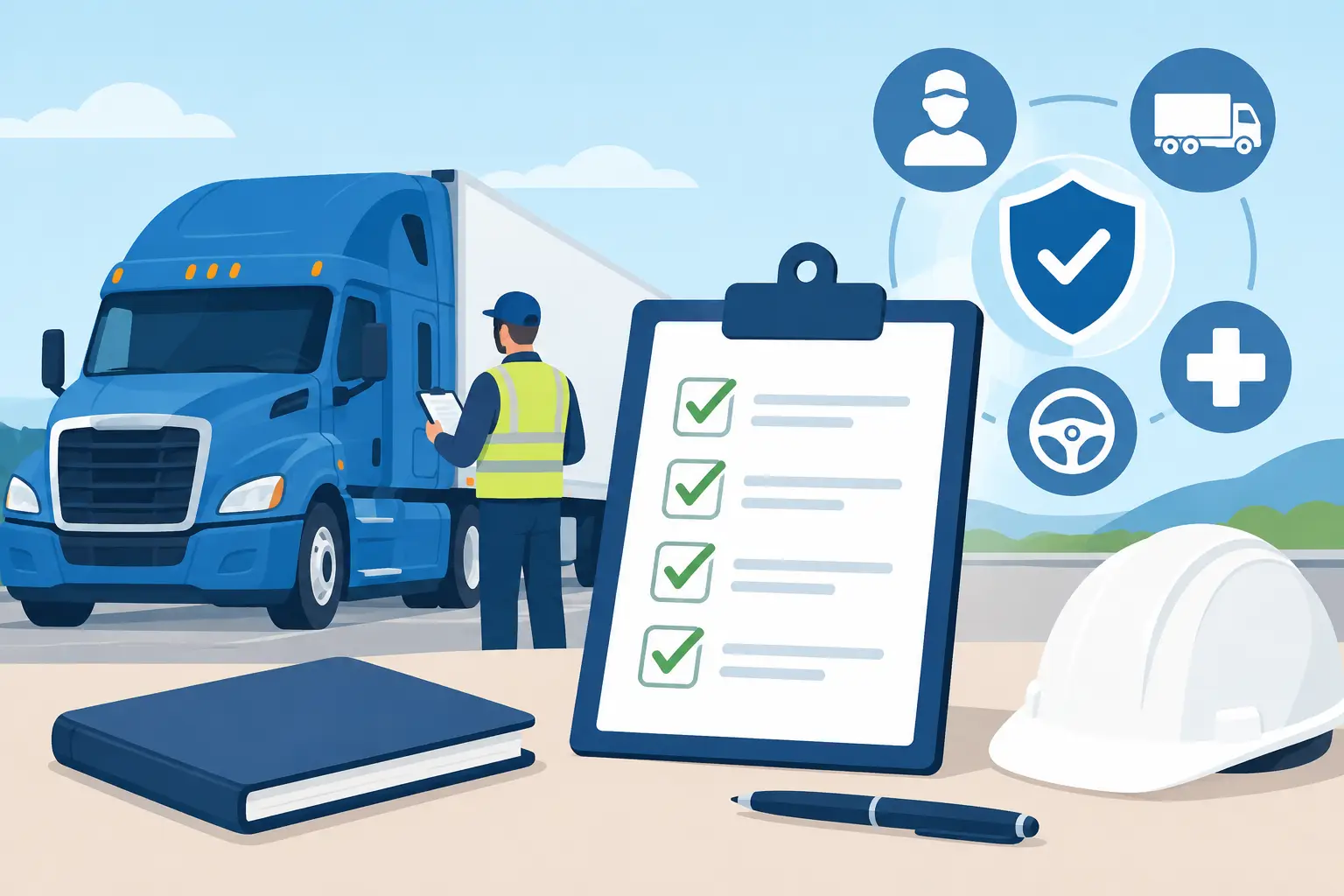
A missed random test, an untrained supervisor, or a misplaced custody and control form can create a DOT compliance problem long before an audit begins. For transportation employers, owner-operators, and safety managers, compliance is not a once-a-year task. It is an active program that must work when a driver is hired, selected for testing, involved in an accident, or removed from duty.
A dependable program protects the public, supports your workforce, and helps keep operations moving. The objective is straightforward: apply the right rules to the right employees, maintain required documentation, and respond quickly when testing or reporting is required.
What DOT Compliance Covers
DOT compliance refers to meeting federal drug and alcohol testing requirements for employees who perform safety-sensitive functions in regulated transportation industries. The program framework comes from 49 CFR Part 40, while individual DOT agencies set additional requirements for their regulated employers and employees.
The applicable agency matters. FMCSA rules apply to commercial motor vehicle operations, while FAA, FTA, FRA, PHMSA, and USCG programs each have their own covered positions, testing rates, reporting obligations, and operational details. An employee may be subject to DOT testing because of the duties they perform, not because of their job title alone.
A compliant program generally includes pre-employment testing, random testing, reasonable suspicion testing, post-accident testing, return-to-duty testing, and follow-up testing when applicable. It also requires compliant collection procedures, medical review officer review for drug tests, supervisor training, employee education, recordkeeping, and reporting.
The rules are detailed because the consequences are real. A safety-sensitive employee cannot perform covered duties after certain violations or while pending a required return-to-duty process. Employers that cannot produce complete records may face audit findings, enforcement exposure, operational delays, and avoidable administrative work.
Start With the Right Testing Pool
The first operational decision is identifying which employees belong in your DOT testing pool. This should be based on regulated safety-sensitive duties, not a broad assumption that everyone in transportation is DOT covered.
For example, a fleet may have CDL drivers who belong in an FMCSA pool and office staff who do not. A transit operation may have FTA-covered drivers, mechanics, and dispatchers whose duties affect safety. Employees must be placed in the correct pool before they can be selected at the correct random testing rate.
This is also where employers need to separate DOT and non-DOT programs. A non-DOT workplace drug testing policy may be appropriate for other employees, but it cannot replace a DOT-required test for a covered worker. The testing authority, paperwork, laboratory process, reporting path, and consequences can differ.
For employers operating in both the United States and Canada, this distinction deserves special attention. U.S. DOT requirements apply to covered U.S. transportation operations, while Canadian employer testing programs must be designed around the employer’s policy, operational needs, and applicable legal requirements. Combining the programs without clear administration creates confusion for supervisors and employees.
Build a DOT Compliance Program That Works in Real Time
Written policies matter, but a policy alone does not manage a post-accident call at 2 a.m. Your program needs defined actions, responsible contacts, and access to testing when normal business hours are over.
Maintain a complete employee roster
Your testing pool should be current. Add newly covered employees promptly, remove employees who no longer perform safety-sensitive functions, and verify status changes before each random selection period. Inaccurate rosters can lead to missed selections or include individuals who should not be tested.
For FMCSA-regulated employers, pre-employment requirements may also include Clearinghouse queries and reporting responsibilities. Employers should know who is responsible for completing these actions and retain proof that required steps were completed.
Use a scientifically valid random selection process
Random testing must be genuinely unpredictable. Employees should have an equal chance of selection throughout the testing period, regardless of prior selection history, seniority, route, location, or supervisor preference.
Do not attempt to manage random testing informally through a calendar or hand-picked list. A compliant random pool should account for the applicable annual testing rate, selection frequency, employee roster changes, and documentation of each selection cycle. Employees selected for random testing must report immediately or as directed under the employer’s compliant procedures.
Train supervisors before an issue occurs
Reasonable suspicion testing depends on trained supervisors who can recognize and document signs of possible drug use or alcohol misuse. Training is not permission to make a diagnosis. It prepares supervisors to identify specific, contemporaneous observations about appearance, behavior, speech, or body odors and to act according to company procedure.
DOT requirements include at least 60 minutes of training on controlled substances and 60 minutes on alcohol misuse for supervisors who make reasonable suspicion determinations. Training should be documented, refreshed as needed, and paired with a clear escalation process. Supervisors need to know who to call, how to arrange testing, and how to protect confidentiality.
Prepare for post-accident testing
Post-accident testing is one of the areas where timing and agency-specific rules matter most. An accident does not automatically trigger a DOT test in every case, and the decision criteria vary by agency. For FMCSA operations, for example, testing obligations depend on factors such as whether there was a fatality, whether a vehicle was towed, whether medical treatment away from the scene was required, and whether the covered driver received a citation.
Your team should never make these decisions from memory during an emergency. Keep a post-accident response plan available to dispatch, supervisors, and after-hours contacts. It should identify decision-makers, testing locations, documentation steps, and the required time frames for alcohol and drug testing. If a required test cannot be completed within the applicable time frame, document the reason according to the regulations.
Documentation Is Part of the Test
Many compliance gaps are administrative rather than clinical. The collection may have been completed correctly, but the employer cannot show that the employee was properly selected, trained, removed from duty, or returned to work under the required process.
Maintain records that support each part of your program, including testing results, chain of custody documentation, random selection records, supervisor training, employee education, refusal documentation, post-accident decision records, and return-to-duty or follow-up testing plans where applicable. Access should be limited to authorized personnel because drug and alcohol testing records are sensitive and subject to confidentiality requirements.
Retention periods vary by record type. Some records, such as those involving violations and follow-up testing, must be retained longer than routine negative test records. A structured reporting system makes those differences easier to manage and gives employers a clearer audit trail when questions arise.
Know What Happens After a Violation
A verified positive drug test, alcohol result that meets the DOT violation threshold, test refusal, or other covered violation requires immediate action. The employee must be removed from safety-sensitive duties. This is not discretionary and should not wait for the next scheduled shift.
The employee must be provided with information about qualified Substance Abuse Professionals, or SAPs. If the employee seeks to return to DOT-regulated safety-sensitive work, they must complete the SAP process, comply with recommended education or treatment, receive a follow-up evaluation, complete a return-to-duty test with a negative result, and follow any required follow-up testing plan.
Employers should avoid common shortcuts. A negative test obtained outside the required process does not erase a DOT violation. Likewise, an employee cannot self-clear to return to safety-sensitive duties because they believe treatment is complete. The SAP process and employer obligations must be followed in order.
For FMCSA-regulated employers, Clearinghouse reporting and query requirements add another layer of responsibility. Delayed reporting or missed annual queries can create a separate compliance issue even when the testing process itself was handled correctly.
When Outsourced Support Makes Sense
Managing a DOT program internally can work for organizations with dedicated compliance staff, stable employee rosters, and established procedures. It becomes harder when operations span multiple terminals, employees work irregular hours, testing demand changes quickly, or a small team is responsible for many competing safety tasks.
A qualified consortium/third-party administrator can coordinate random testing pools, collections, reporting, Clearinghouse administration, and program records while giving employers access to guidance when unusual situations arise. The employer still retains key responsibilities, including policy oversight and operational decisions, but outside administration can reduce manual work and strengthen consistency.
WOOTS supports DOT-regulated employers with program management, testing coordination, supervisor training, after-hours assistance, and access to a broad North American collection network. The practical advantage is having a defined process ready before a random selection, accident, or reasonable suspicion event puts time pressure on your team.
Keep Compliance Operational
The best DOT programs are not hidden in a policy binder. Supervisors know what to do. Employees understand their responsibilities. Testing records are organized. After-hours contacts can arrange a collection without searching for answers. When regulations, staffing, or operating locations change, the program is reviewed before a gap becomes an enforcement issue.
Set a recurring calendar to review your roster, random testing activity, training records, policy language, Clearinghouse responsibilities, and post-accident procedures. A focused review now is far easier than reconstructing a program after an audit, incident, or missed test.





Leave A Comment