
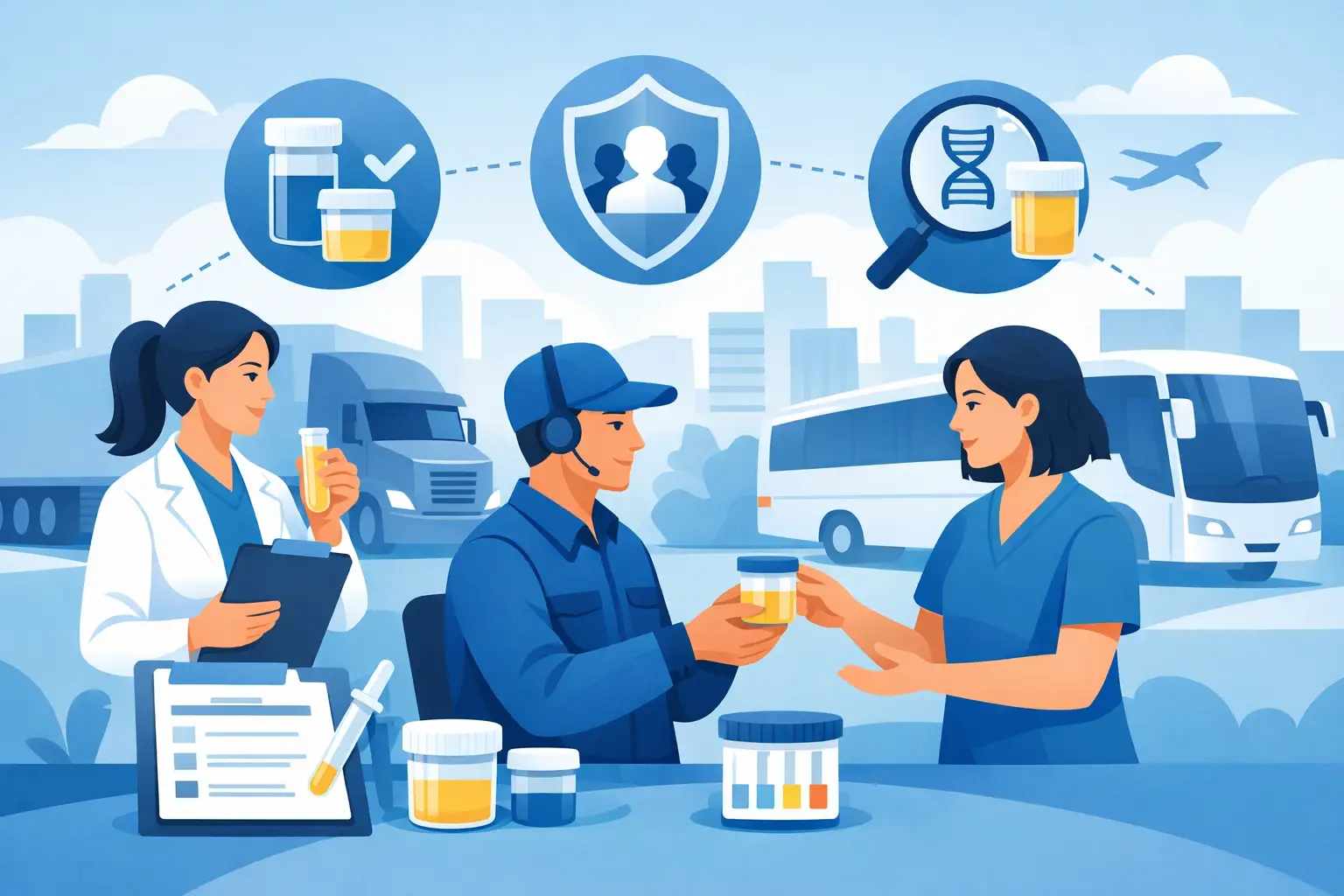
A missed random test, an outdated driver roster, or a post-accident testing delay can quickly become a compliance problem. Drug testing consortium services give DOT-regulated employers a structured way to manage random testing pools, testing coordination, records, and program administration without carrying every task internally.
For owner-operators, small fleets, and employers with safety-sensitive employees across multiple locations, a consortium can reduce administrative strain while supporting a consistent testing process. The right service does more than place employees in a random pool. It helps ensure the program is built around the applicable DOT agency, current employee status, required documentation, and timely access to collection sites.
What Drug Testing Consortium Services Do
A drug and alcohol testing consortium is a shared random testing pool. Multiple employers enroll their safety-sensitive employees in the pool, and employees are selected through a scientifically valid random process. This structure is especially useful for owner-operators and small employers that do not have enough covered employees to maintain an efficient standalone random testing program.
A consortium or third-party administrator can also coordinate the operational work around the program. Depending on the service arrangement, that may include enrollment, random selections, collection site coordination, test scheduling, result reporting, record retention support, and after-hours assistance for time-sensitive events.
For DOT-covered employers, the details matter. Random testing pools must be separated by DOT agency. An FMCSA-regulated driver cannot simply be placed in the same random pool as an FAA-covered employee because the testing requirements, rates, and program rules may differ. A capable provider maintains dedicated pools for agencies such as FMCSA, FAA, FTA, FRA, USCG, and PHMSA.
The consortium model is not a way to transfer away employer responsibility. Employers still need to maintain accurate employee information, remove workers who are no longer in safety-sensitive positions, act on test results appropriately, and make required decisions after qualifying accidents or other testing events. The service provider supports execution and documentation, but accountability remains with the employer.
When a Consortium Is the Right Choice
A consortium is often the practical choice when an employer has a small number of DOT-regulated workers. A one-driver motor carrier, for example, still needs a compliant random testing program. Joining an FMCSA consortium gives that driver a legitimate random selection pool and provides a documented process for required testing.
It can also work well for fleets with changing headcounts, seasonal operations, or drivers working in several regions. Rather than building relationships with individual collection sites in every market, employers can access a broader testing network through their program provider. This is particularly valuable when a driver is dispatched far from the home terminal or needs prompt post-accident assistance.
A standalone random pool may make more sense for larger organizations that want greater control over selection timing, reporting structure, and internal program management. It can also be appropriate when a company has a large enough covered population to support its own pool. The best fit depends on workforce size, DOT agency coverage, geographic footprint, and the level of internal compliance expertise available.
Random Testing Is More Than a Selection Notice
A compliant random testing program starts with an accurate roster. Every safety-sensitive employee who is required to participate must be included, and employees who leave a covered role must be removed promptly. A roster that is not maintained can lead to missed selections, unnecessary testing, or an unreliable audit trail.
Selections must be random and made at the required annual rate for the applicable DOT agency. Those rates can change, so employers should not rely on prior-year assumptions. Employees must have an equal chance of selection each time selections are made, regardless of whether they were selected previously.
Once a worker is selected, timing and confidentiality matter. The employee should be directed for testing promptly and with limited advance notice. Supervisors need to understand how to communicate the instruction, how to document the employee’s status, and when a delay could create a refusal issue. A provider can coordinate the test, but trained company representatives still need to manage the employee appropriately at the worksite.
Drug testing consortium services should provide clear selection notices, test status updates, and reporting that helps employers show how selections were handled. Good reporting is not just a convenience. It supports audit readiness and gives safety managers a reliable view of pending tests, completed tests, and employee eligibility.
What to Look for in a Service Provider
The lowest enrollment price is not always the lowest operational cost. A program that is difficult to use after an accident, cannot locate a nearby collection site, or does not provide timely documentation can create expensive disruptions when a testing need arises.
When evaluating a consortium or C/TPA, employers should confirm five practical capabilities:
- DOT-specific random pools that are separated by agency and managed according to current requirements.
- Broad collection site access, including the ability to coordinate testing for drivers and employees away from their primary location.
- Post-accident and after-hours support for situations that cannot wait until the next business day.
- Clear reporting for random selections, test completion, results, and program records.
- Supervisor and employer training that explains reasonable suspicion, post-accident decisions, documentation, and required actions after a violation.
It is also worth asking how the provider handles non-DOT testing. Many employers operate in both regulated and non-regulated environments, or have Canadian operations alongside U.S. DOT-covered functions. DOT and non-DOT programs should not be treated as interchangeable. The testing authority, policy language, consent process, reporting needs, and consequences may differ. A provider that understands both environments can help employers keep the programs distinct while managing them through one coordinated process.
Clearinghouse Management Requires Ongoing Attention
For FMCSA-regulated employers, the Drug and Alcohol Clearinghouse adds another layer of responsibility. Employers must complete required pre-employment full queries, conduct annual limited queries for employed drivers, obtain driver consent where required, and respond appropriately to reported violations.
Consortium support can make Clearinghouse administration easier, particularly for small carriers and owner-operators. However, employers should understand which activities their designated service provider is authorized to perform and which actions still require employer involvement. Access, consent, query timing, and recordkeeping should be reviewed as part of the larger testing program rather than handled as an isolated administrative task.
A driver who has a prohibited status cannot perform safety-sensitive functions until the applicable return-to-duty process has been completed. This is where quick, accurate communication between the employer, service agent, medical review officer, and when applicable, a substance abuse professional, becomes critical.
Build a Program That Works Under Pressure
Testing programs are often judged during the moments nobody planned for: a roadside incident, a late-night accident, a selected driver who is traveling, or a regulator requesting records. Employers should establish their procedures before those events occur.
Start by identifying every safety-sensitive position and the DOT agency governing that role. Confirm that each employee is assigned to the proper random pool. Designate who can order testing, who receives reports, who makes post-accident determinations, and who is available outside normal business hours. Then train supervisors on the process and review the program whenever operations, staffing, or regulations change.
WOOTS supports employers with DOT consortium enrollment, dedicated agency pools, collection site access across North America, Clearinghouse support, workplace testing, and practical compliance assistance. For organizations that need responsive help rather than another administrative system to manage, the value is in having a program that can move quickly when testing is required.
A compliant consortium program should make the next required action clear: who needs testing, where they should go, what must be documented, and who needs to be informed. That clarity helps protect employees, keep operations moving, and give employers a stronger footing when compliance questions arise.



Leave A Comment