

A DOT testing program can fail long before a positive test or an audit finding. It can fail when a driver is placed in the wrong random pool, a post-accident decision is delayed, a supervisor does not recognize reasonable-suspicion indicators, or records cannot be produced when requested. This guide to DOT program administration focuses on the daily controls that keep employers ready for testing events, inspections, and safety-critical decisions.
What DOT Program Administration Covers
DOT program administration is the ongoing management of a drug and alcohol testing program for employees in safety-sensitive positions. It is not simply scheduling a test when an issue arises. The employer must maintain a compliant testing framework, apply it consistently, protect confidential information, train the right people, and document each required action.
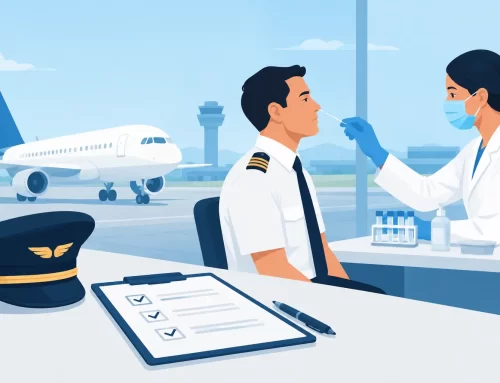
The core federal testing procedures are found in 49 CFR Part 40. Individual DOT agencies, including FMCSA, FAA, FTA, FRA, PHMSA, and USCG, add agency-specific rules that determine who is covered, applicable testing rates, reporting obligations, and operational requirements. A program that is appropriate for a trucking company may not be complete for an aviation, transit, rail, pipeline, or maritime employer.
For employers with limited internal compliance resources, a C/TPA can coordinate testing, random selections, reporting, and program administration. However, outsourcing administration does not transfer the employer’s regulatory responsibility. The employer remains accountable for making correct safety-sensitive duty decisions and ensuring its program meets the rules that apply to its operations.
Build the Program Around Covered Employees
Start with an accurate roster. This is the operational foundation of random testing, reporting, and recordkeeping. Include every employee who performs a DOT-defined safety-sensitive function, even if that work is occasional, part-time, seasonal, or performed under a different job title.
A job title alone is not enough. Review the actual duties performed. For example, an employee who may drive a commercial motor vehicle requiring a CDL is generally part of the FMCSA program when performing that function. A dispatcher who never performs a safety-sensitive duty is not automatically covered just because they work for a transportation company.
The roster should identify the employee’s DOT agency, employment status, work location, supervisor, and whether the employee is active, on leave, or removed from safety-sensitive duty. Update it immediately after hiring, termination, leave status changes, job changes, mergers, or acquisitions. Stale rosters create two common problems: covered employees are omitted from random selection, while non-covered employees are selected under the wrong authority.
Keep DOT Programs Separate From Non-DOT Testing
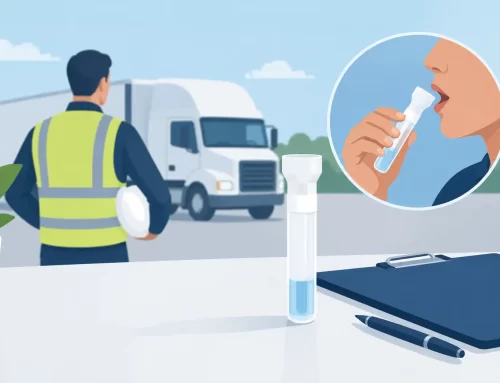
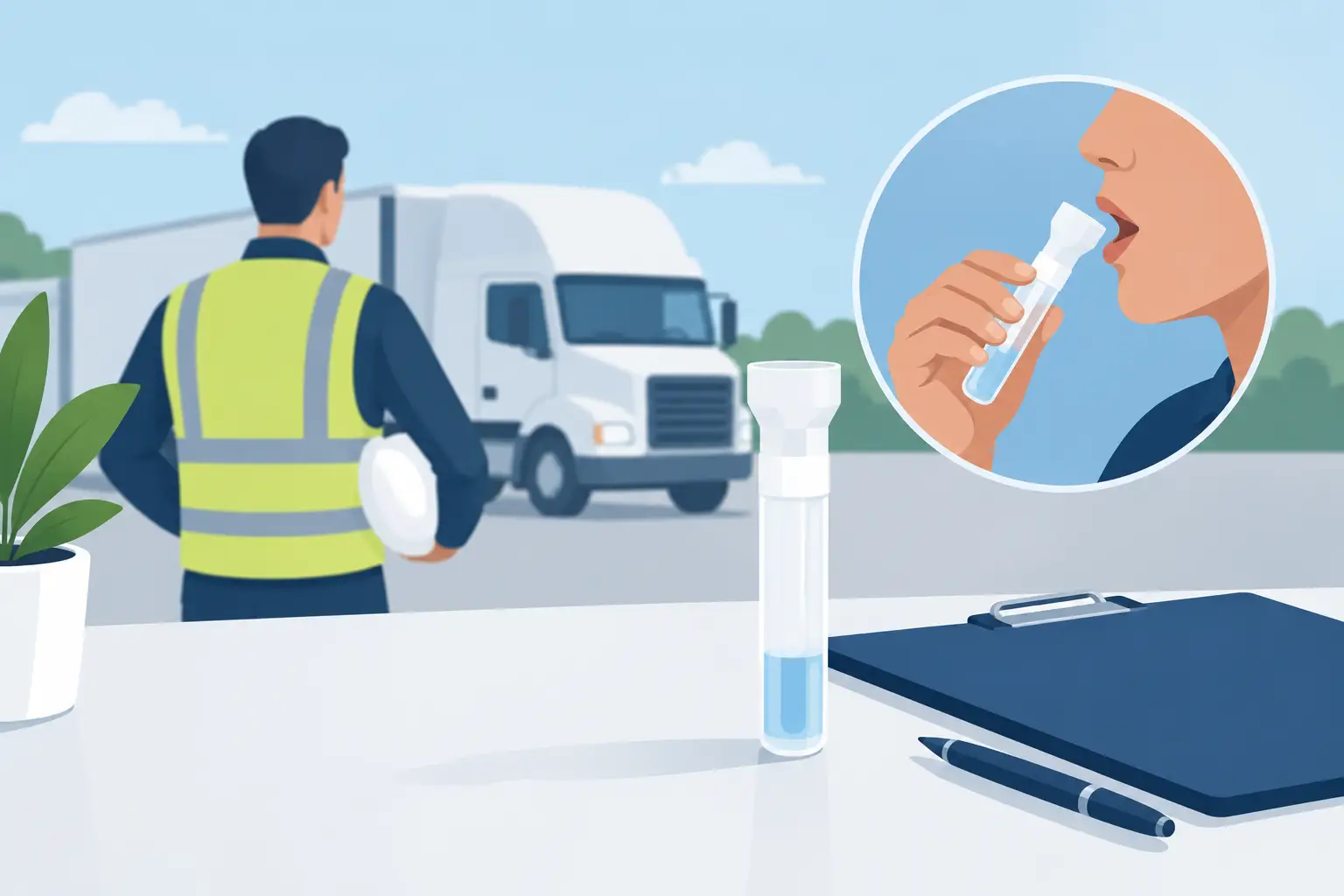
Many employers also conduct non-DOT workplace testing. That can be a useful risk-management tool, particularly for Canadian operations or non-regulated roles, but it must not be confused with a DOT test. DOT testing requires the correct federal custody and control form, collection procedures, laboratory processes, medical review process, and reason for testing.
Maintain separate policies, test orders, reporting workflows, and records for DOT and non-DOT programs. A non-DOT result cannot replace a required DOT test, even if the test panel appears similar.
Administer Each Required Test Type Correctly
A complete program must be ready to manage pre-employment, random, reasonable suspicion, post-accident, return-to-duty, and follow-up testing. Each test type has a different trigger, timing requirement, and documentation standard.
Pre-employment testing must be completed with a verified negative result before an employee performs a DOT safety-sensitive function. Employers should also complete any required prior-employer inquiries and, for FMCSA-regulated drivers, required Clearinghouse queries before allowing duty.
Random testing is often the most visible administrative requirement. Selections must be made through a scientifically valid method, employees must have an equal chance of selection each time, and testing must occur at unannounced and reasonably spread intervals throughout the year. Do not give selected employees advance notice beyond what is necessary to report for testing. Random testing is not something to postpone because a selected employee is inconvenient to schedule.
Reasonable-suspicion testing requires trained supervisors who can identify specific, contemporaneous physical, behavioral, speech, or performance indicators of possible drug or alcohol misuse. A supervisor’s assumption, rumor, or general concern is not sufficient. Document what was observed, when it was observed, who observed it, and the action taken. For alcohol testing, the required observations must be made by a trained supervisor.
Post-accident testing needs a written response plan because events are stressful and time-sensitive. The plan should tell dispatchers, supervisors, and drivers who to call, how to determine whether DOT post-accident testing is required, where to locate an available collection site, and how to document the decision. Do not delay emergency medical care or accident response to arrange testing. At the same time, do not make a testing decision based solely on whether a crash looks serious. Apply the applicable agency criteria.
Return-to-duty and follow-up testing occur after a violation and the required substance abuse professional process. The follow-up plan is established by the SAP, not the employer. Employers must ensure testing occurs exactly as directed and that a negative return-to-duty result is received before the employee resumes a safety-sensitive function.
Manage FMCSA Clearinghouse Requirements
FMCSA-regulated employers have additional Clearinghouse responsibilities. Before hiring a CDL driver for a safety-sensitive position, conduct the required full pre-employment query with the driver’s consent. During employment, complete the required annual query for every currently employed CDL driver.
Program administrators should also have a clear process for reporting required information, including actual knowledge violations when applicable. Assign responsibility for Clearinghouse tasks to named personnel, maintain a calendar for annual queries, and preserve confirmation that required actions were completed. A missed annual query is easy to avoid when it is tracked as a recurring compliance deadline rather than handled informally.
Maintain Records That Answer the Auditor’s Questions
Good recordkeeping is more than storing test results. Your files should show that the program was administered properly from selection through final action. Records may include random selection lists, test notifications, chain-of-custody documentation, alcohol testing forms, MRO reports, supervisor training records, policy acknowledgments, post-accident decision records, Clearinghouse confirmations, and return-to-duty documentation.
Retention periods vary by record type. Some alcohol testing records and negative test records have shorter retention requirements, while violation records, SAP reports, return-to-duty records, and follow-up testing documentation must be retained longer. Build your retention schedule around the DOT requirements that apply to your agency and avoid deleting files simply because an employee has left the company.
Records also need access controls. Testing information is confidential and should be available only to authorized personnel with a business need to know. A shared inbox, unsecured spreadsheet, or open drive folder is not an appropriate record-management system for sensitive testing data.
Train Supervisors Before They Need to Act
Supervisors are often the first people asked to make a time-sensitive decision, especially after an accident or when reasonable suspicion may exist. Training should cover the signs and symptoms of drug use and alcohol misuse, the company’s escalation process, documentation expectations, and how to remove an employee from safety-sensitive duty when required.
Training is not a one-time checkbox. Staff turnover, changing routes, new terminals, and revised policies can create gaps quickly. Revisit procedures through short operational refreshers, particularly with dispatch, field supervision, and after-hours personnel. A written policy has limited value if the person answering the phone at 2:00 a.m. does not know where to send a driver for a required test.
Use a Response Plan That Works After Hours
Compliance programs are tested during real operations, not only during business hours. Employers should know how to reach program support, locate collection services, authorize a test, and document the event after hours. This is particularly important for fleets that operate across state lines, run overnight shifts, or work from remote locations.
A nationwide collection-site network and after-hours testing support can reduce delays, but a vendor alone does not solve the process. Assign internal decision-makers, provide current contact information, and test the plan before an incident occurs. WOOTS supports DOT program administration with testing coordination, Clearinghouse management, reporting, supervisor training, and access to more than 20,000 collection sites across North America.
Review the Program Before a Problem Exposes It
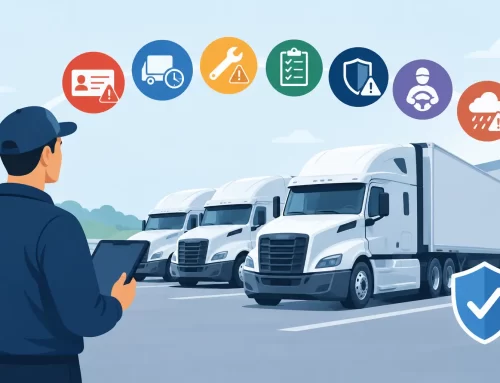
Set a routine schedule to review your roster, random testing completion, supervisor training, policy language, record retention, and agency-specific obligations. Monthly checks are useful for active fleets, while quarterly reviews may be appropriate for smaller operations. The right frequency depends on employee turnover, operating hours, number of DOT agencies involved, and the volume of testing events.
The next useful step is not waiting for an audit. Assign an owner to review your current DOT roster and random testing records this week, then identify one after-hours scenario your team should be able to handle without delay.





Leave A Comment