
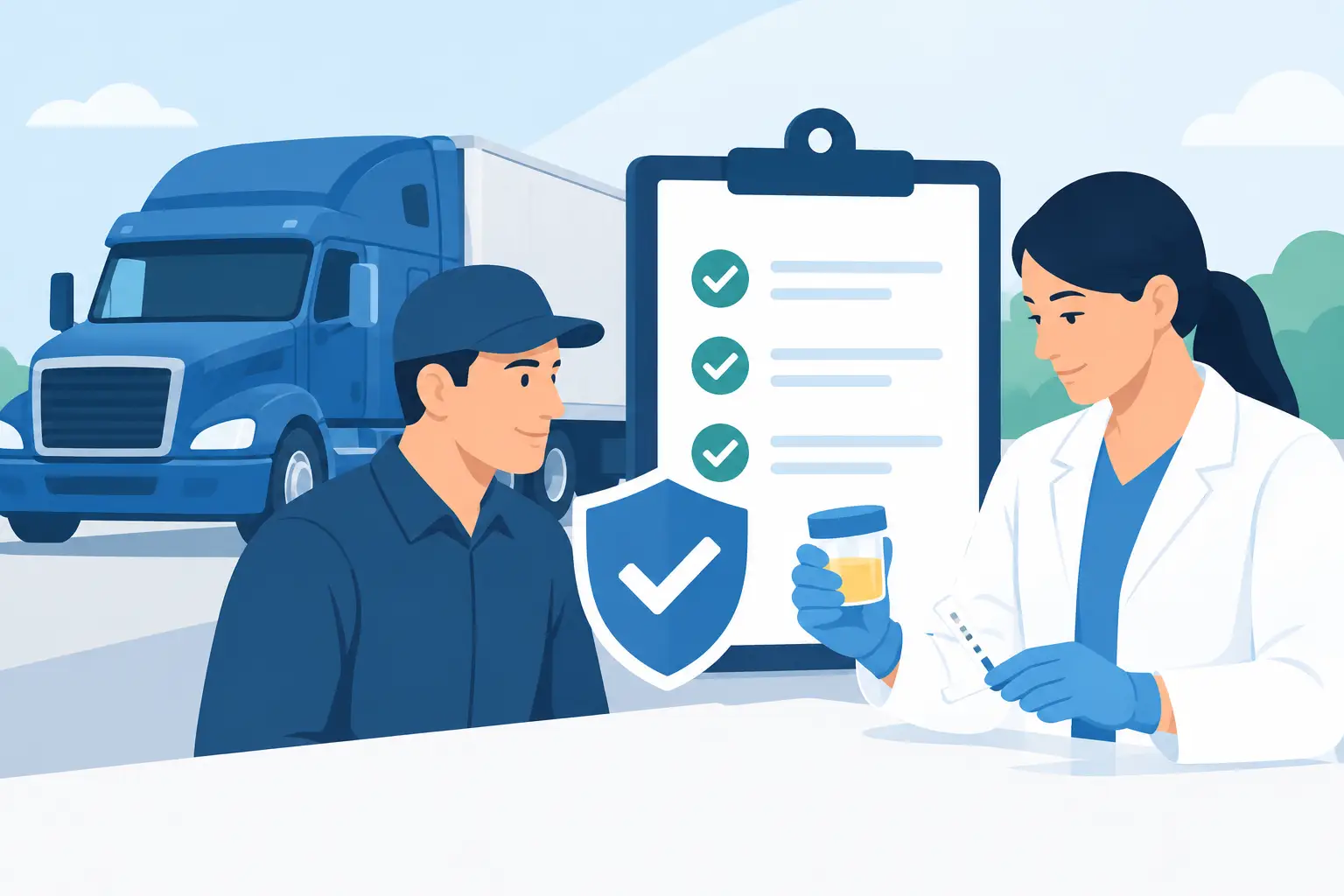
A missed random test notice, an incomplete custody and control form, or a post-accident delay can put a DOT-regulated employer in a difficult position quickly. That is why use a CTPA is a practical question for fleets, owner-operators, and safety-sensitive employers. A qualified consortium/third-party administrator helps organize the moving parts of a DOT drug and alcohol testing program so compliance work does not depend on one overwhelmed manager or an improvised process.
A CTPA does not remove the employer’s responsibility for compliance. It gives the employer a structured way to manage that responsibility with testing coordination, random pool administration, documentation support, reporting, and access to experienced guidance when decisions need to be made.
Why Use a CTPA for DOT Compliance?
DOT drug and alcohol programs involve more than sending an employee to a collection site. Employers must maintain a compliant random testing process, act quickly after qualifying accidents, ensure employees receive the correct test type, retain required records, and manage results appropriately. Requirements can differ by DOT agency, including FMCSA, FAA, FTA, FRA, PHMSA, and USCG.
For a small business, those requirements may fall to an owner, dispatcher, HR generalist, or safety manager who already has a full workload. For a larger operation, the challenge is often consistency across terminals, shifts, and states. A CTPA creates a central process for these activities, reducing the chance that a deadline, notice, or document is missed.
The value is especially clear when an event happens outside regular business hours. A post-accident situation does not wait for Monday morning. Having a defined testing process, collection site access, and responsive support helps employers act promptly while keeping operations focused on the next safe step.
What a CTPA Does for Your Testing Program
A CTPA is a consortium/third-party administrator. In DOT testing, the consortium component is particularly useful for owner-operators and smaller employers that need to participate in a compliant random testing pool without building and administering one internally. The third-party administrator component supports the operational work that keeps a program functioning.
Random testing administration
Random testing must be scientifically valid, unannounced, and completed at the required annual testing rates for the applicable agency. A CTPA can maintain the random pool, make selections, issue notices, coordinate collection appointments, and document completion. This provides a repeatable process rather than a manual spreadsheet that may be overlooked during a busy week.
For an owner-operator, consortium enrollment can also solve a practical problem: there may not be enough safety-sensitive employees to create a meaningful standalone pool. Participation in a properly managed consortium allows the driver to meet random testing requirements while receiving administrative support.
Test coordination where your people work
Drivers, crews, and other safety-sensitive employees are rarely all in one office. They may be on the road, at a remote terminal, or responding to an incident far from their home base. A CTPA with broad collection site access can help identify an appropriate site and arrange testing without requiring the employer to research providers under pressure.
Collection access is not merely a convenience. It supports timely testing, especially for reasonable suspicion, post-accident, return-to-duty, follow-up, and pre-employment situations. Employers should still understand which circumstances require testing and what their company policy says. The CTPA helps turn that policy into an action plan.
Records, reporting, and program visibility
DOT programs generate records that must be handled carefully. Employers need visibility into testing status, random selections, completed tests, and program activity. They also need reliable documentation when answering an audit question, reviewing a safety issue, or managing workforce changes.
A CTPA can provide organized reporting and secure online access to testing information. Customized reports can be particularly useful for employers with multiple locations, separate divisions, or agency-specific testing pools. Instead of chasing paper files or comparing disconnected reports, managers can review program activity in one place.
Support for time-sensitive events
A compliant program must work when conditions are not ideal. After an accident, employers may need help locating a collection site, documenting efforts to obtain testing, or understanding next steps. When a supervisor has a reasonable suspicion concern, the employer needs a clear process that respects the employee while protecting public safety.
A capable CTPA provides operational direction and testing coordination. This does not mean every decision is outsourced. Supervisors and designated employer representatives must know their responsibilities, and reasonable suspicion determinations must be made by trained personnel. But support during urgent situations can prevent delays and reduce confusion.
The Compliance Benefits Go Beyond Administration
The strongest reason to use a CTPA is not simply to save time, although it often does. It is to create a program that can be followed consistently. Consistency matters when a new employee is hired, when a driver transfers locations, when a test is refused, or when a regulated employee returns after a violation.
A CTPA can help employers build repeatable workflows for pre-employment testing, random selections, result management, return-to-duty testing, and follow-up plans. That structure reduces the risk of treating similar situations differently because a different manager handled the issue.
It also helps employers prepare before a problem occurs. A defined designated employer representative, supervisor training, after-hours process, and current contact information are all easier to maintain when the testing program has a clear administrative foundation.
When an Employer May Need More Than a Basic Consortium
Not every CTPA arrangement provides the same level of support. A one-driver FMCSA owner-operator may primarily need consortium enrollment, random selections, testing coordination, and records access. A multi-state fleet may need agency-specific pools, location-based reporting, Clearinghouse management support, supervisor training, and a dependable post-accident response process.
The right level of service depends on the employer’s DOT agency, employee count, operating footprint, internal compliance resources, and risk profile. Employers with experienced safety teams may use a CTPA to extend their capacity. Employers without a dedicated compliance department may need more hands-on administration and guidance.
Price matters, but it should not be the only factor. A low-cost arrangement can become expensive if it leaves the employer without timely support, accessible collection sites, clear reporting, or help when a test must be arranged immediately. Ask how random pools are managed, what reporting is available, how after-hours requests are handled, and whether the provider understands your specific DOT agency requirements.
Employer Responsibilities Still Matter
Using a CTPA is not a transfer of legal responsibility. The employer remains accountable for maintaining a compliant program and making employment decisions. Designated employer representatives must stay engaged, keep employee rosters current, ensure supervisors are trained, and follow their DOT agency rules and company policy.
Employers must also communicate promptly with their CTPA. A provider cannot manage a random pool correctly if new hires, terminations, leaves, and changes in safety-sensitive status are not reported. Likewise, a testing administrator needs accurate contact information for the people who can authorize testing or respond to an urgent notice.
Think of the relationship as a compliance partnership. The employer provides accurate information, maintains policy ownership, and acts on required decisions. The CTPA supplies the systems, coordination, documentation support, and testing access needed to execute the program reliably.
Choosing a CTPA That Fits Your Operation
Look for a provider that understands the difference between DOT and non-DOT testing and can support the requirements that apply to your workforce. Collection site coverage, online reporting, responsive customer service, and after-hours availability should be evaluated alongside program administration.
For employers operating across North America, it can also be helpful to work with one partner that understands both U.S. DOT requirements and employer-driven workplace testing needs. WOOTS supports DOT program management, C/TPA services, testing coordination, and collection site access for employers that need a practical, responsive compliance resource.
A CTPA is most valuable when it makes the correct action easier to take under real operating conditions. Review your current process before the next hire, random selection, or after-hours incident, and make sure the people responsible know exactly who to call and what happens next.









Leave A Comment