

A missed random test, an incomplete record, or an unreported violation can create far more than an administrative problem. For DOT-regulated employers, these gaps can interrupt operations, expose the business during an audit, and compromise a safety-sensitive program. Understanding the difference between a DOT consortium versus CTPA helps employers select the right level of support before a compliance issue arises.
The terms are often used together, and sometimes used as if they mean the same thing. They do not. A consortium provides a shared random testing pool. A C/TPA, or consortium/third-party administrator, provides administrative services that may include random pool management but can extend much further. The right arrangement depends on your DOT agency, workforce size, internal resources, and the responsibilities you want a compliance partner to manage.
DOT Consortium Versus CTPA: The Core Difference
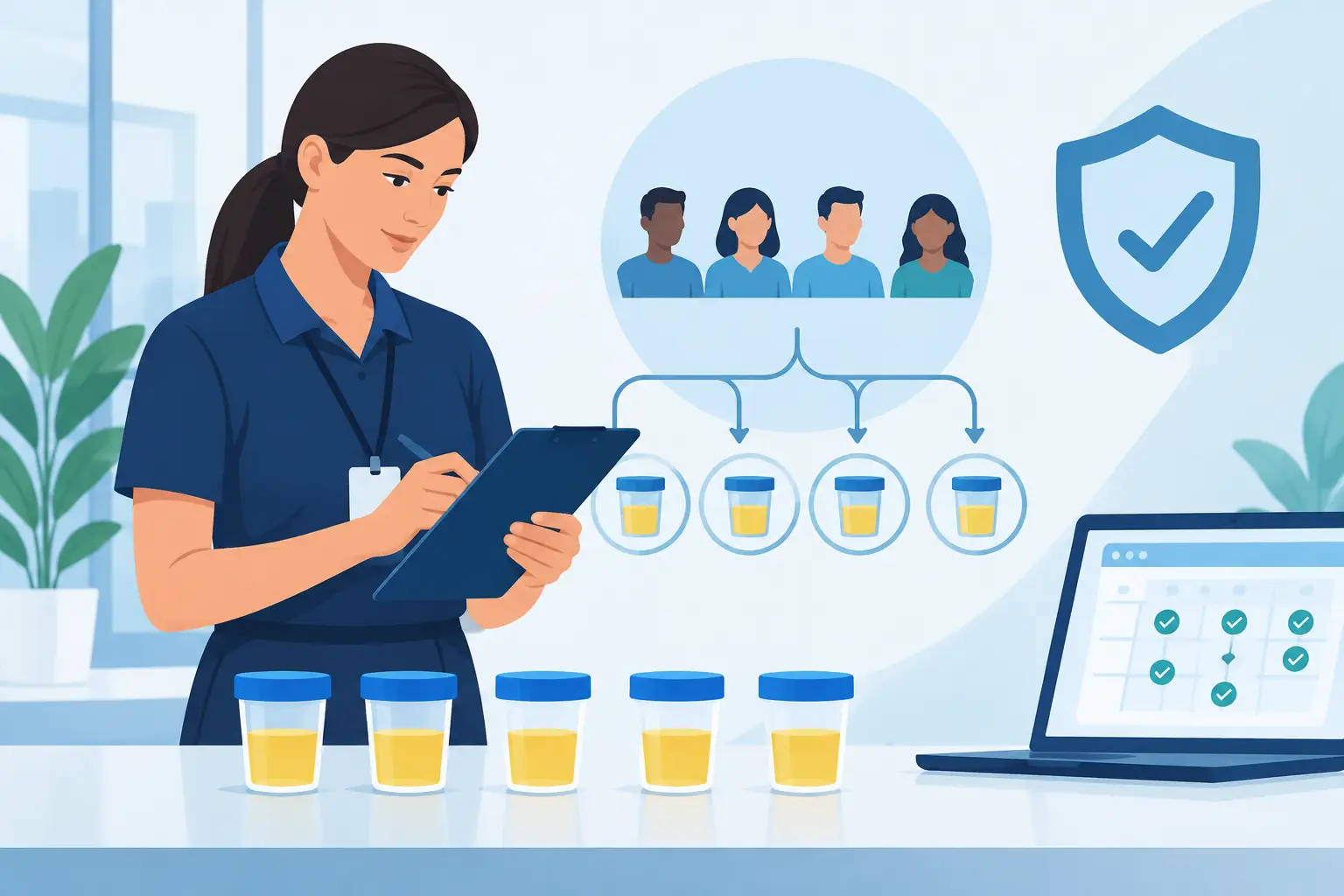
A DOT consortium is a group of DOT-regulated employers whose safety-sensitive employees are combined into one random testing pool. Employees in that pool are subject to scientifically valid, unannounced random selections at the testing rates required by the applicable DOT agency.
This model is particularly common for FMCSA-regulated owner-operators. An owner-operator cannot conduct a compliant random testing program alone because they cannot randomly select themselves. Enrollment in a compliant consortium places the driver in a larger pool and creates an independent random selection process.
A C/TPA is an organization that performs one or more DOT drug and alcohol testing program functions for an employer. Those functions can include administering a consortium, coordinating collections, managing random selections, maintaining program records, supporting Clearinghouse tasks, arranging post-accident testing, and providing reporting or supervisor training.
Put simply, a consortium is primarily about the random pool. A C/TPA is about program administration. A C/TPA may operate a consortium, but not every C/TPA client needs to be in one.
What a DOT Consortium Does
The central purpose of a consortium is to help employers meet random testing requirements through a shared pool. The consortium must maintain a pool that is appropriate for the participating employees and make random selections throughout the year at the required annual testing rate.
When an employee is selected, the employer must ensure the test is completed within the required timeframe. The selection is unannounced. It cannot be delayed simply because testing is inconvenient, a driver is on a route, or a manager is unavailable. A well-managed consortium provides clear notices and collection-site access so employers can act quickly.
For small fleets and owner-operators, the shared-pool model reduces administrative burden while maintaining the independence required for a legitimate random testing process. It also avoids the statistical problems that can occur when a very small employer tries to maintain its own pool.
A consortium does not automatically handle every part of a DOT program. It may provide the pool and selection notices while the employer remains responsible for policy administration, training, records, post-accident decisions, return-to-duty coordination, and other required actions. The service agreement matters.
When a consortium is usually the practical choice
A consortium is often the right fit for a single owner-operator, a small motor carrier, or an employer with a limited number of safety-sensitive employees. It is also useful when the employer wants a straightforward way to meet random testing obligations without operating its own standalone pool.
For FMCSA owner-operators, participation in a compliant random testing consortium is generally the practical and required path. The owner-operator must also ensure the designated consortium or C/TPA relationship supports applicable Drug and Alcohol Clearinghouse responsibilities.
What a C/TPA Can Manage
A C/TPA can provide a broader operating framework for a DOT testing program. The exact scope varies, but the goal is consistent: reduce administrative friction while keeping the employer’s program organized, responsive, and inspection-ready.
A full-service C/TPA may coordinate pre-employment, random, reasonable suspicion, post-accident, return-to-duty, and follow-up testing. It may manage employee rosters, issue selection notices, arrange testing through a national collection-site network, track test status, and provide employer reports. It can also help employers establish dedicated random pools for specific DOT agencies when a shared consortium is not the best fit.
This broader support is valuable for employers with multiple drivers, changing headcounts, multiple terminals, or operations that run outside standard business hours. Post-accident decisions and time-sensitive testing cannot wait for a coordinator to return to the office. Access to after-hours support and a broad collection network can make the difference between a timely test and a missed compliance obligation.
A C/TPA may also support program documentation, but employers should be clear about what is included. DOT rules place ultimate responsibility for compliance on the employer. Outsourcing administration does not transfer that responsibility. Employers still need to maintain accurate employee information, act on testing notices, make required decisions, and retain records for the required periods.
Clearinghouse support requires clear roles
For FMCSA-regulated employers, Clearinghouse management is often part of the C/TPA discussion. A C/TPA may assist with authorized reporting and query-related administration, but the employer must understand its own duties and permissions within the Clearinghouse.
Before relying on a provider, confirm who will conduct pre-employment full queries, annual limited queries, violation reporting, and driver record management. Confirm how consent will be obtained and documented. A C/TPA can make these workflows easier, but unclear responsibilities are a common source of avoidable compliance gaps.
Should You Use a Consortium or a Dedicated Pool?
The answer depends less on preference than on program structure. A consortium is often efficient for small employers because it provides immediate access to a compliant random pool without the work of managing one internally. A dedicated pool may make more sense for larger organizations that want their own employee group, customized reporting, or separate pools by DOT agency.
Employers with employees regulated under different DOT modes should not assume one pool structure fits every worker. Random testing rates, records, testing requirements, and agency expectations can differ. A provider should be able to separate employees correctly by agency, such as FMCSA, FAA, FTA, FRA, USCG, or PHMSA, rather than placing everyone into a generic pool.
There is also a practical management question. If your internal team can maintain accurate rosters, respond to selections immediately, coordinate collections, monitor records, and manage annual reporting requirements, a dedicated pool may be manageable. If those tasks compete with dispatch, HR, safety, or daily operations, C/TPA support can reduce risk and free up internal time.
Questions to Ask Before Enrolling
The strongest testing arrangement is one that matches your actual operation, not just your current headcount. Before choosing a DOT consortium or C/TPA, ask how employees are assigned to the correct DOT agency and random pool. Ask whether the provider can support nationwide or cross-border operations, including access to collection sites near drivers and terminals.
You should also confirm how random selections are communicated, what happens when a selected employee is unavailable, and how after-hours or post-accident testing is coordinated. Review what reports you will receive, how quickly test status is updated, and how records are stored and retrieved. If Clearinghouse support is included, document exactly which party owns each required action.
Finally, ask about service limits. Some providers offer only random-pool enrollment. Others provide end-to-end administration, training, reporting, and responsive support for urgent testing situations. Neither model is automatically better, but the scope must match your compliance needs.
Build the Program Around Accountability
The most useful way to evaluate DOT consortium versus CTPA services is to start with accountability. A consortium solves the shared random-pool requirement. A capable C/TPA can help organize the wider system around that pool – testing coordination, records, reporting, training, and rapid response when an incident occurs.
For employers that need broad coverage and hands-on program support, WOOTS can coordinate DOT testing and compliance services across a network of more than 20,000 collection sites. The right partner should leave your team with clear responsibilities, reliable access to testing, and records that are ready when you need them most.





Leave A Comment