
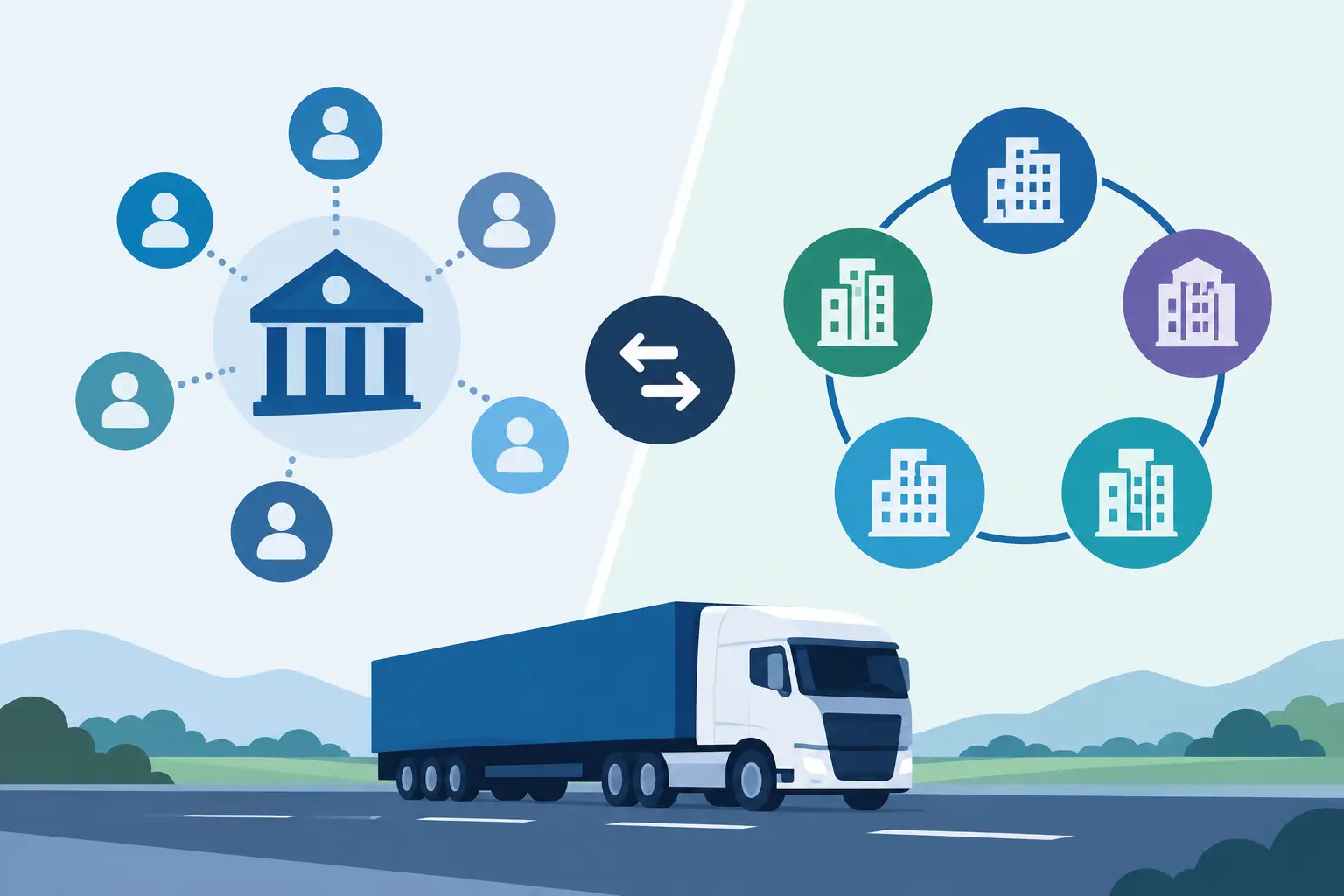
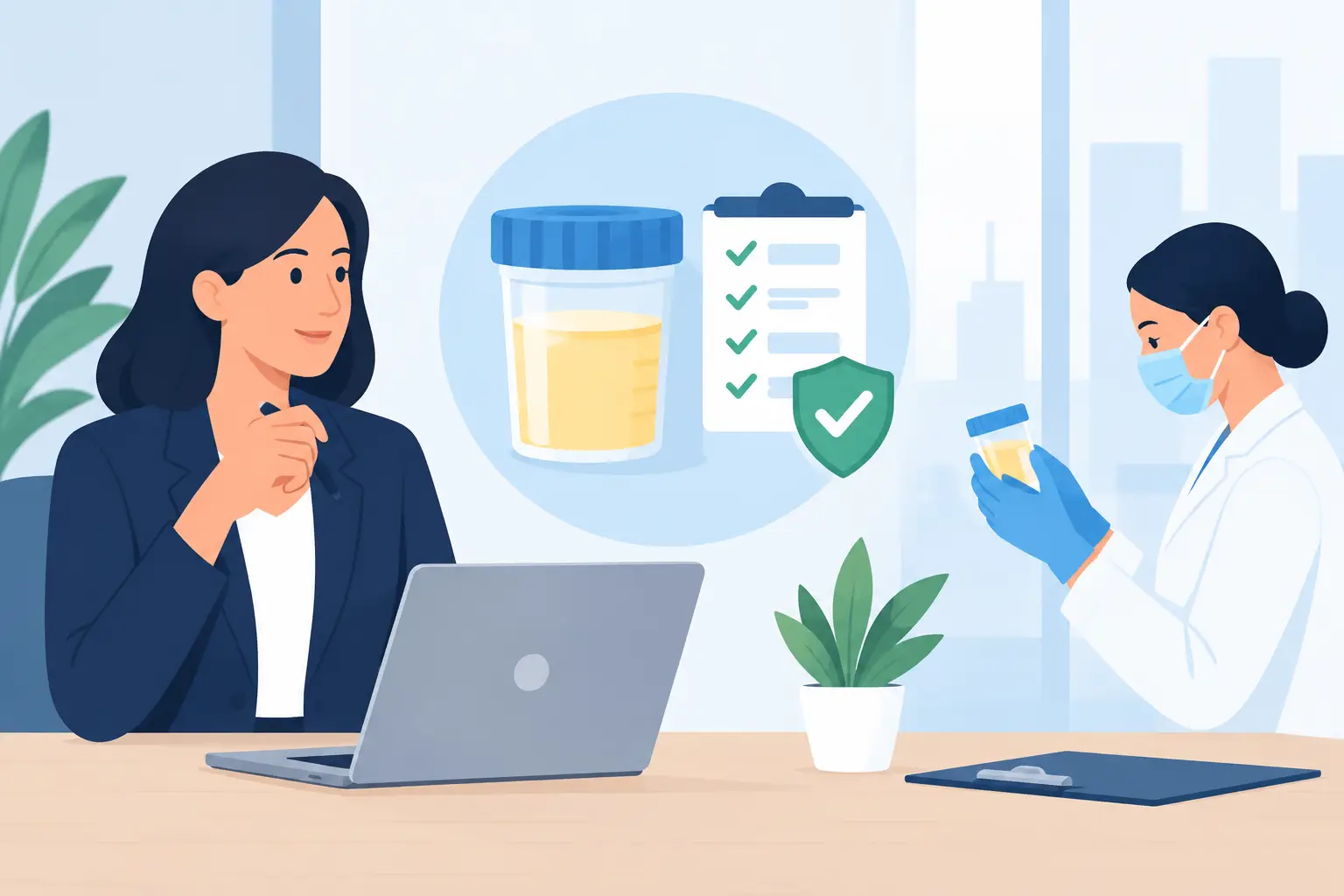
A DOT Clearinghouse vs consortium decision is often framed as an either-or choice. For most FMCSA-regulated employers, it is not. The FMCSA Drug and Alcohol Clearinghouse and a DOT consortium serve different compliance functions, and a compliant drug and alcohol program may require both.
The Clearinghouse documents specific drug and alcohol program violations and return-to-duty status for commercial driver’s license (CDL) and commercial learner’s permit (CLP) drivers. A consortium helps employers administer random testing pools and coordinate required testing. One is a federal reporting and query system. The other is a testing program structure.
Understanding the difference prevents a common and costly gap: enrolling in a random pool but failing to complete required Clearinghouse queries, or registering in the Clearinghouse while assuming it covers random testing.
DOT Clearinghouse vs Consortium: The Core Difference
The FMCSA Clearinghouse is a secure federal database. It applies to drivers who operate commercial motor vehicles that require a CDL or CLP and are subject to FMCSA drug and alcohol testing regulations. Employers use it to query a driver’s record before allowing that driver to perform safety-sensitive functions and at least annually for current drivers.
The database contains information about drug and alcohol program violations, including positive drug test results, alcohol confirmations of 0.04 or higher, refusals to test, actual knowledge violations, and certain return-to-duty process milestones. It gives employers a way to identify unresolved violations that could make a driver prohibited from performing safety-sensitive work.
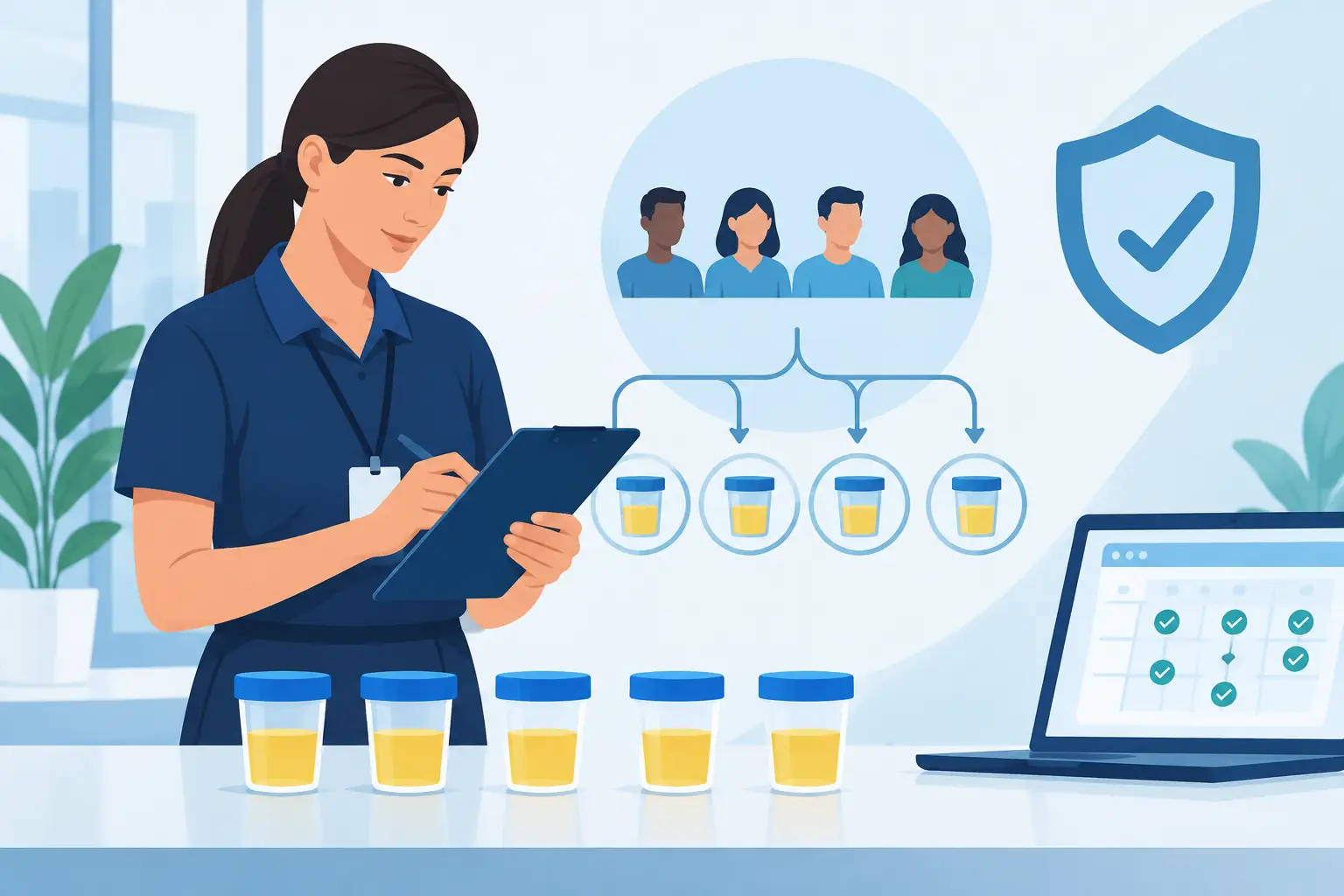
A consortium is a group of employers combined into one random testing pool, typically managed by a consortium/third-party administrator, or C/TPA. Members of the pool are subject to scientifically valid random selections at the applicable DOT testing rate. When a driver is selected, the employer must ensure testing is completed promptly.
The key distinction is simple: the Clearinghouse tracks FMCSA violation and eligibility information. A consortium supports random testing administration. Neither replaces the other.
What the FMCSA Clearinghouse Requires
A Clearinghouse program starts with registration. Employers must register and designate any C/TPA that will perform Clearinghouse functions on their behalf. Drivers must also register to provide electronic consent for full queries.
Before a driver performs FMCSA safety-sensitive duties, the employer must complete a full Clearinghouse query. A full query requires the driver’s electronic consent and provides detailed information about any record in the system. Employers must also conduct an annual query for every current CDL or CLP driver. This may be a limited query if the employer has obtained the driver’s required consent outside the system and retains that consent documentation.
If a limited query identifies that information exists in a driver’s record, the employer must obtain electronic consent and complete a full query within the required timeframe. Employers should have a defined process for tracking annual query dates, consent status, and follow-up actions.
The Clearinghouse also involves reporting responsibilities. Depending on the event, reporting may be completed by an employer, medical review officer, substance abuse professional, or another authorized party. Employers remain responsible for making sure their program is administered correctly, even when a C/TPA supports registration, queries, reporting, and recordkeeping.
The Clearinghouse does not schedule collections, select drivers for random testing, maintain a random pool, or manage post-accident response. It is not a substitute for a complete DOT drug and alcohol testing program.
What a DOT Consortium Does
A DOT consortium combines eligible employees from multiple employers into a shared random testing pool. This arrangement is especially practical for owner-operators, small fleets, and employers with a limited number of safety-sensitive employees. A larger combined pool supports valid random selections without requiring each small employer to operate a separate pool.
A properly managed consortium typically handles random selections, test notifications, collection site coordination, result reporting, and program documentation. It may also provide support for pre-employment, post-accident, reasonable suspicion, return-to-duty, and follow-up testing coordination.
For FMCSA employers, the consortium’s random pool must meet the current FMCSA minimum annual testing rates and use a scientifically valid selection method. The same principle applies to programs regulated by the FAA, FTA, FRA, PHMSA, and USCG, although each agency has its own rules, testing rates, and pool requirements.
A consortium is not a federal database and does not determine whether a CDL driver has an unresolved Clearinghouse record. It also does not remove the employer’s duty to make employment decisions, act on verified results, or maintain a compliant policy.
When You Need Both
Most FMCSA-regulated employers need both Clearinghouse management and a compliant random testing program. A trucking company with CDL drivers must complete required Clearinghouse queries and ensure drivers are included in an FMCSA-compliant random testing pool. Those functions can be managed by one service provider, but they remain separate obligations.
Consider a one-truck owner-operator leased to a motor carrier. The owner-operator may be enrolled in a consortium for random drug and alcohol testing. That does not eliminate the need for Clearinghouse registration and required queries. The party acting as the driver’s employer for FMCSA purposes must understand who is responsible for each Clearinghouse task.
For a larger private fleet, a company may operate its own random pool rather than join a consortium. That can work if the company has sufficient administrative controls, valid selection procedures, testing coordination, and documentation. The company will still need Clearinghouse registration, pre-employment full queries, annual queries, and appropriate follow-up procedures.
Employers outside FMCSA may need a DOT consortium or standalone random pool but may not have Clearinghouse duties. For example, an FAA-regulated aviation employer is subject to FAA drug and alcohol testing requirements, but the FMCSA Clearinghouse is specifically tied to CDL and CLP drivers under FMCSA authority. This is why a single “DOT program” should never be treated as one-size-fits-all.
Common Compliance Gaps to Avoid
The first gap is assuming a negative pre-employment drug test clears a driver for duty. For an FMCSA-regulated CDL or CLP driver, a pre-employment test and a Clearinghouse full query are separate requirements. Both must be addressed before the driver performs safety-sensitive functions.
The second is treating annual Clearinghouse queries as optional because the driver has worked for the company for years. Every current driver must be queried annually, and employers need a reliable method to document consent and query completion.
The third is enrolling a driver in a consortium but not acting quickly after a random selection. Random testing is unannounced. Delays can create compliance concerns and weaken the integrity of the testing program. Supervisors and dispatch staff should know who contacts the driver, where the driver reports, and how the event is documented.
The fourth is mixing DOT and non-DOT testing processes. A non-DOT test may support an employer’s workplace policy, but it does not satisfy DOT testing rules. Chain-of-custody procedures, laboratory requirements, review processes, and consequences must align with the program under which the test is ordered.
Finally, do not rely on a provider without confirming the scope of service. Some providers administer random pools but do not manage Clearinghouse queries. Others support Clearinghouse activities but do not provide broad collection access or after-hours post-accident coordination. Ask exactly who performs each task, what records are retained, and what alerts or reporting are provided.
How to Build a Practical Compliance Process
Start by identifying every safety-sensitive employee and the DOT agency that regulates each position. A CDL driver operating under FMCSA rules has different obligations than an employee covered by FAA or FTA testing rules. Accurate classification drives the correct random pool, testing rate, policy language, and reporting process.
Next, assign ownership for Clearinghouse registration, driver consent tracking, full and limited queries, and any required reporting. If a C/TPA performs these tasks, document the authorization and establish a review process. Outsourcing administration can reduce workload, but it does not transfer the employer’s ultimate compliance responsibility.
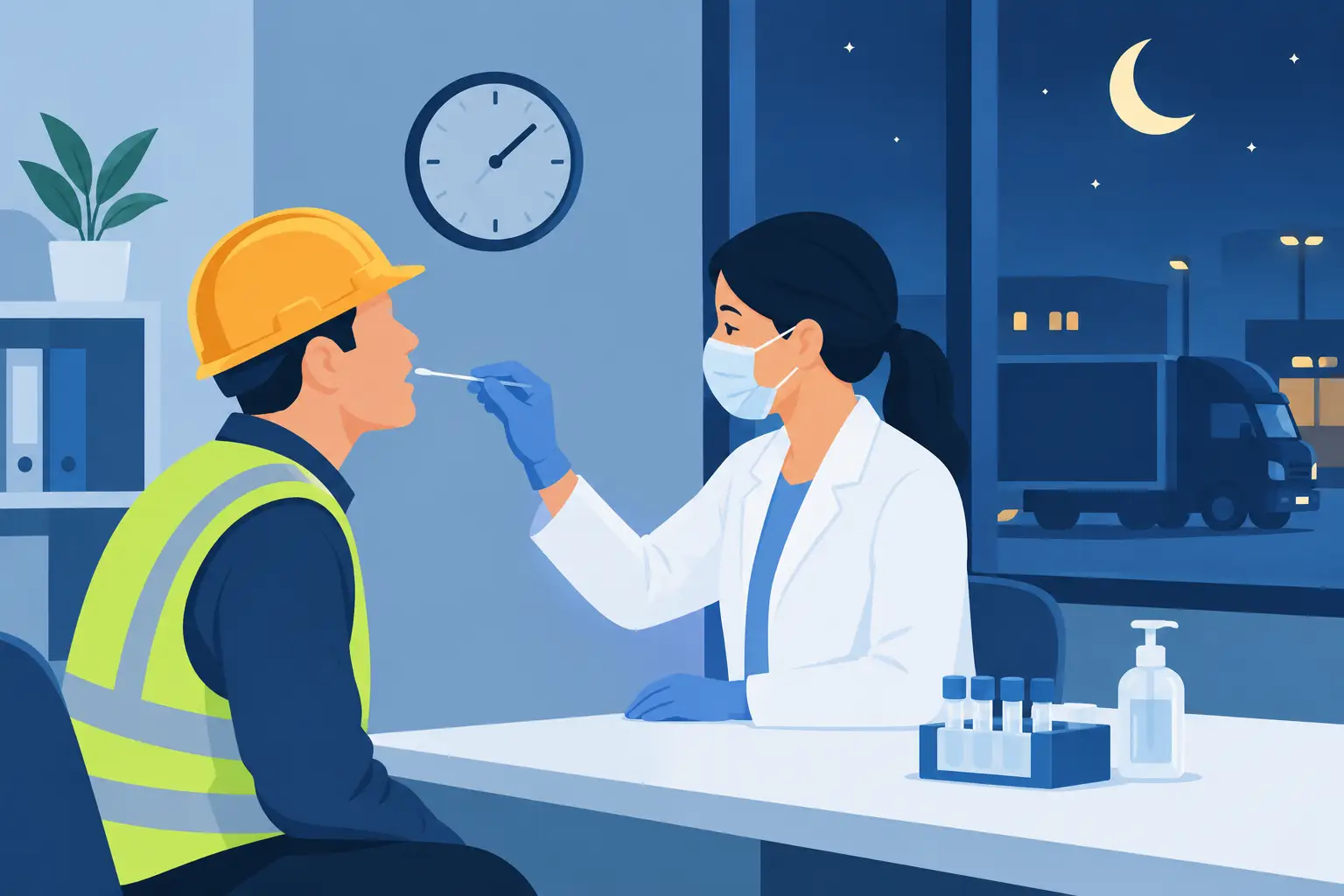
Then establish a testing workflow that covers routine and urgent events. Your team should know how to order a pre-employment test, respond after an accident, arrange reasonable suspicion testing, manage random selections, and receive verified results. Access to a broad collection network and after-hours coordination can make the difference when a test is needed away from a home terminal.
WOOTS helps regulated employers coordinate DOT testing, Clearinghouse management, random pool administration, reporting, and responsive testing support through one compliance-focused program. The right structure should make it easier to act quickly while keeping records organized and responsibilities clear.
The best approach is not to choose between the Clearinghouse and a consortium. Treat each as part of a documented compliance system, with clear ownership, timely testing, and consistent follow-through whenever a driver’s status or testing requirement changes.



Leave A Comment