
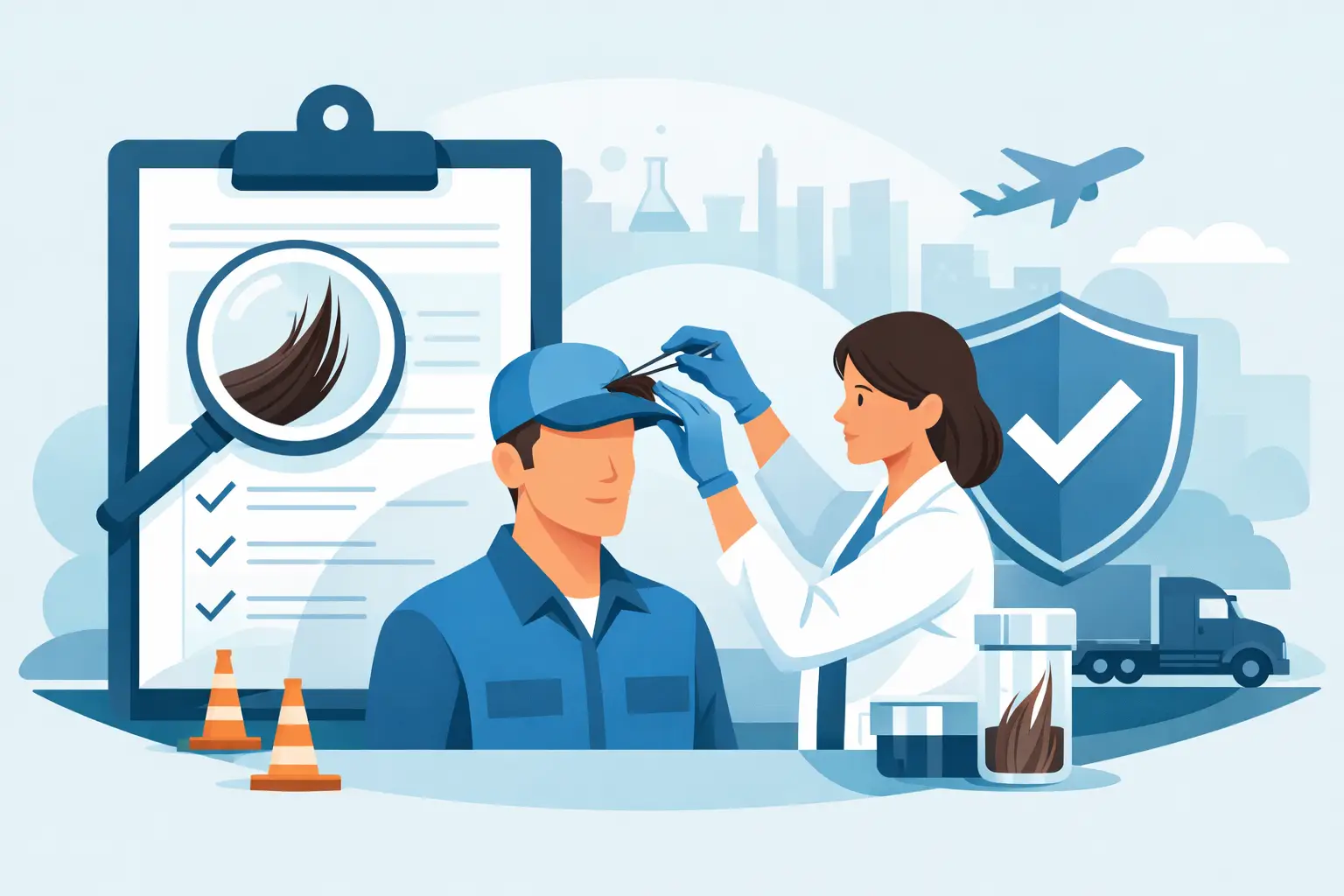
A hair-test result may be useful information for an employer, but it cannot replace a required DOT drug test. For regulated transportation employers asking, “are hair tests DOT approved?” the direct answer is no. Hair testing is not an authorized specimen type for a DOT drug test under federal transportation testing procedures.
That distinction matters after an accident, during pre-employment screening, and whenever a safety-sensitive employee is selected for random testing. Using the wrong test method in a DOT-required situation can create a compliance gap, even if the employer had a legitimate workplace-safety reason for ordering a hair test.
Are Hair Tests DOT Approved for Drug Testing?
No. DOT-regulated drug testing must follow 49 CFR Part 40 and the applicable DOT agency rules. For DOT drug testing, the required specimen is urine. A DOT collection must use the prescribed custody and control process, go to an appropriate laboratory, and be reviewed by a Medical Review Officer, or MRO, before a verified result is reported to the employer.
A hair specimen does not meet those DOT testing requirements. A hair test therefore cannot serve as a DOT pre-employment, random, reasonable suspicion, post-accident, return-to-duty, or follow-up drug test.
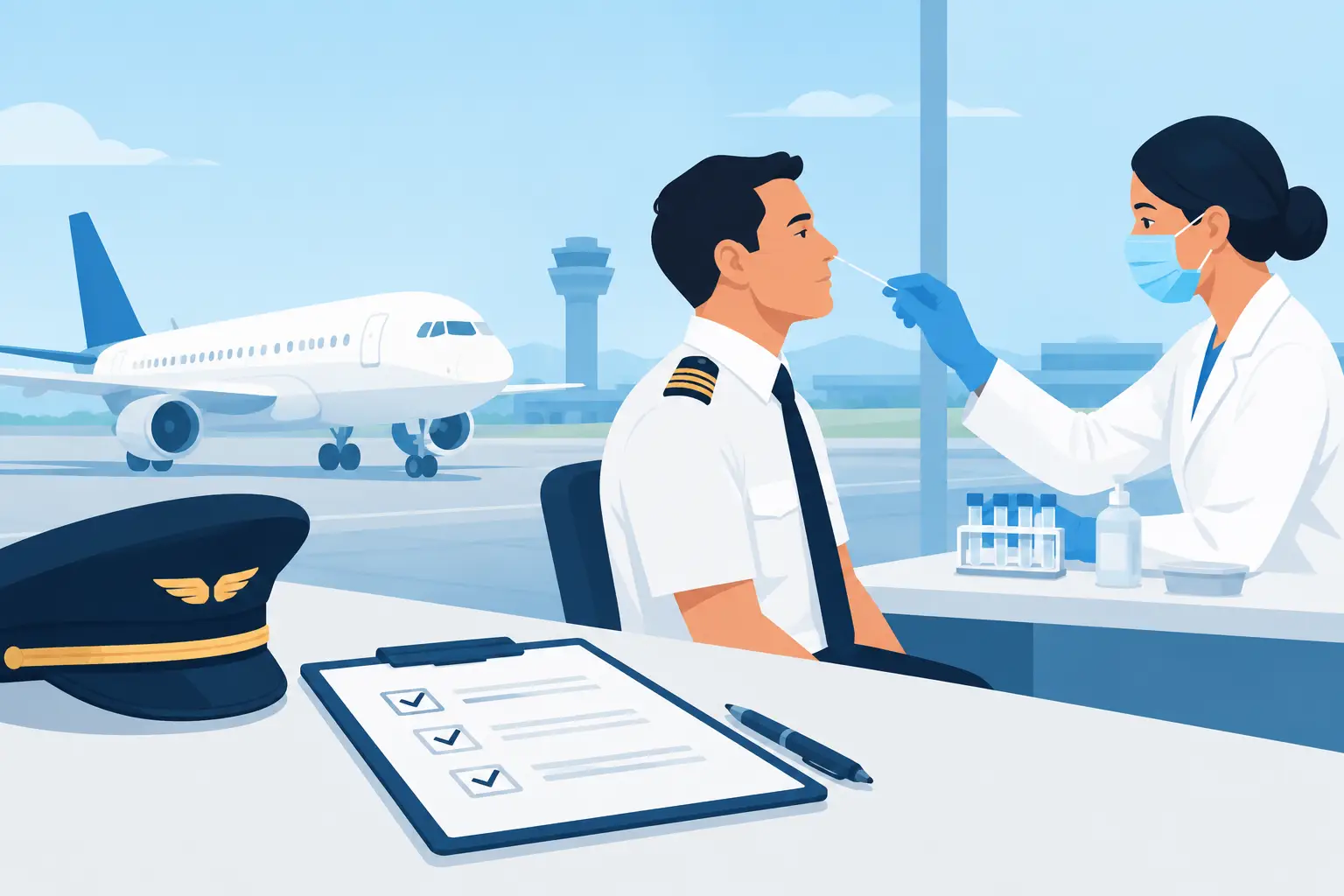
This answer applies across DOT-regulated programs, including FMCSA, FAA, FTA, FRA, PHMSA, and USCG testing requirements. The triggering event may vary by agency, but the basic rule does not: when a DOT drug test is required, employers must use the DOT-authorized process.
Alcohol testing follows a separate set of procedures. DOT alcohol tests are conducted using approved breath or saliva alcohol-testing methods, not hair. Employers should avoid treating a general workplace screening program as interchangeable with a federally regulated DOT testing program.
Why Employers Still Consider Hair Testing
Hair testing can have a place in a non-DOT workplace drug and alcohol policy. Its main attraction is a potentially longer detection window than urine testing. Employers may use it to support broader hiring standards or workplace-risk policies, subject to applicable state law, collective bargaining agreements, privacy requirements, and their written policy.
For example, a transportation company may choose a non-DOT hair test for a position that is not safety-sensitive under DOT rules. It may also decide to add hair testing to its broader company hiring process. Those decisions are operational and legal-policy choices, not DOT compliance actions.
The trade-off is that hair testing is not a substitute for the federal testing process. It may also be less effective for identifying very recent use, because drugs generally take time to become detectable in hair. Employers should understand what question they want the test to answer before selecting a method.
A longer lookback period does not make a test more compliant. In DOT programs, the authorized specimen, collection process, laboratory procedures, MRO review, and documentation controls are all part of compliance.
When a DOT Urine Test Is Still Required
If an employee or applicant must complete a DOT drug test, schedule the DOT urine test even if a hair test has already been completed. A negative hair result does not satisfy the DOT requirement. A positive hair result does not remove the need to follow DOT testing procedures when a DOT test is required.
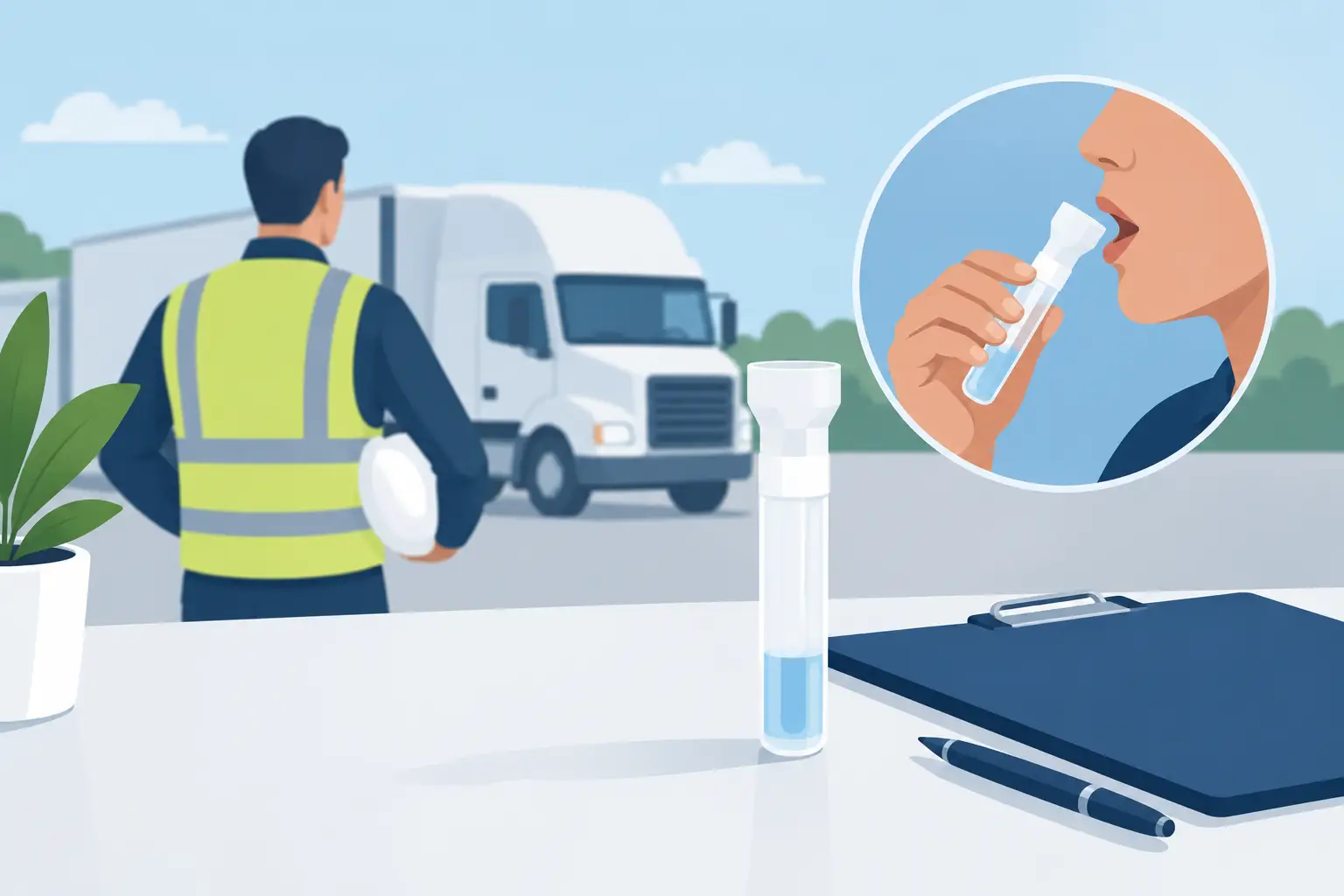
This is especially relevant in two common situations. First, an FMCSA-regulated employer may want additional screening before placing a driver in a safety-sensitive role. The employer may administer a non-DOT hair test under its company policy, but it must also complete the required DOT pre-employment urine drug test before the driver performs safety-sensitive functions, unless a permitted exception applies.
Second, after an accident or when reasonable suspicion exists, supervisors may feel pressure to obtain the most extensive testing available. A hair test can be considered only as a separate non-DOT employer test where lawful and supported by policy. It cannot take the place of a required DOT post-accident or reasonable-suspicion urine drug test. Timing requirements for DOT testing still apply.
The operational priority should be clear: complete the required DOT test promptly and correctly. Any additional non-DOT testing should not delay, alter, or compromise that process.
Keep DOT and Non-DOT Programs Separate
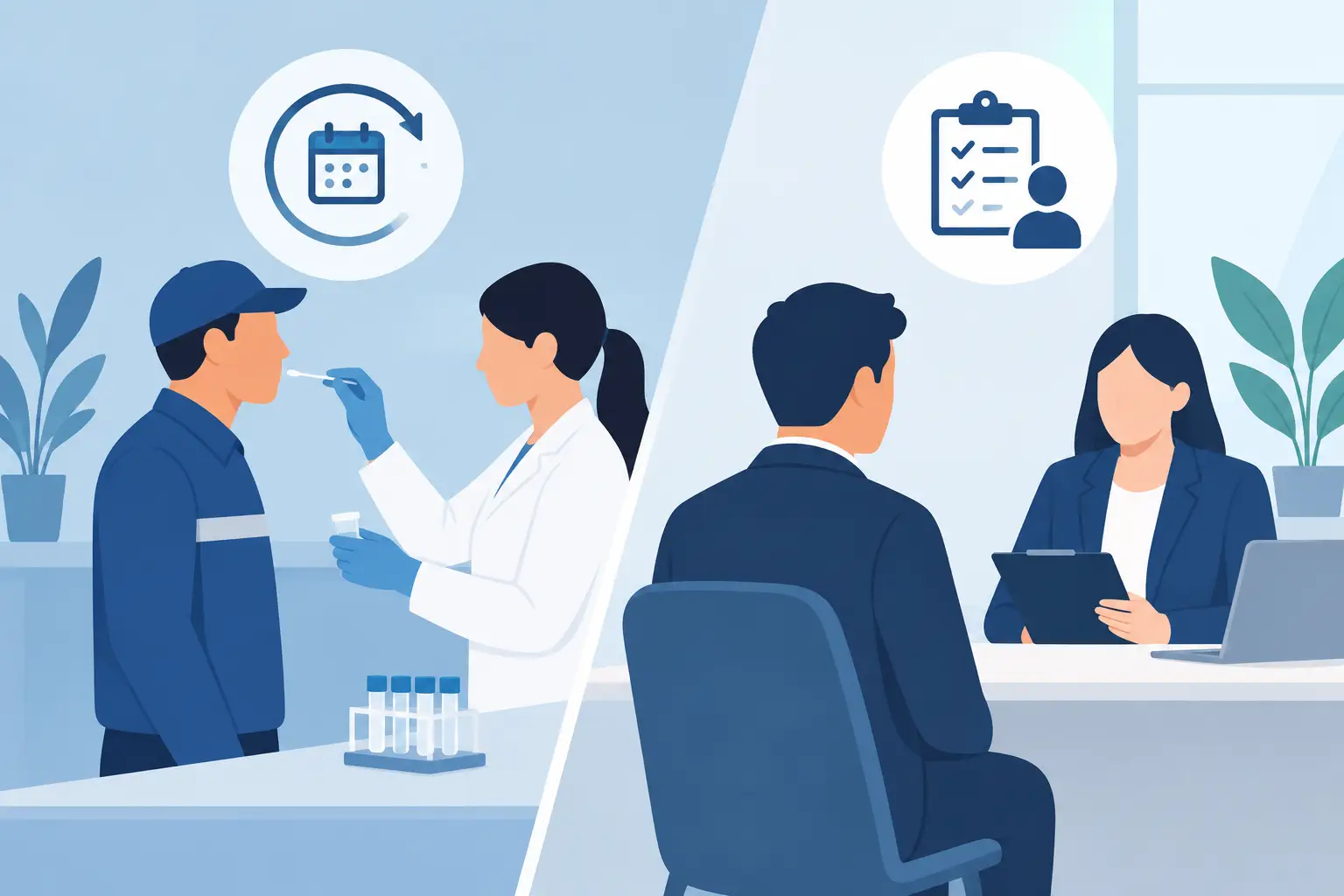
Employers can operate both DOT and non-DOT testing programs, but the programs need clear boundaries. This protects employees, supervisors, and the company when results must be reviewed or challenged later.
A separate non-DOT hair test should be identified as non-DOT from the start. It should use the employer’s non-DOT policy, appropriate authorization forms, and the correct collection and reporting workflow. Do not place a hair-test result on a DOT federal custody and control form or present it as a DOT result.
The consequences of a non-DOT hair-test result must also be addressed in the employer’s written policy. A company may have employment consequences under a lawful non-DOT policy, but that result is not automatically a DOT violation. It does not, by itself, trigger the DOT return-to-duty process or the required evaluation by a Substance Abuse Professional, or SAP.
Likewise, employers should not report a non-DOT hair-test result to the FMCSA Drug and Alcohol Clearinghouse as though it were a DOT drug-test violation. Clearinghouse reporting has specific reporting categories and requirements. Mischaracterizing a non-DOT result can cause significant administrative and compliance issues.
What Happens If a Hair Test Is Positive?
A positive non-DOT hair test needs careful policy-based handling. The employer should first confirm that the test was ordered and administered under a valid non-DOT program. The result should then be reviewed according to the company policy and any applicable legal obligations.
The answer may depend on the role, jurisdiction, employee status, and the terms of a collective bargaining agreement. It may also depend on whether the company’s policy permits retesting, review by a physician, or another defined response. Employers should not assume that a hair-test result creates the same obligations as a DOT verified positive.
If the same employee also has a DOT urine drug test, keep the two results and their outcomes distinct. Only the DOT test result, processed through the required DOT procedures and MRO review, determines the employee’s DOT testing status.
Build the Testing Plan Around the Requirement
The simplest way to avoid errors is to identify the testing purpose before the appointment is scheduled. Is the person in a DOT safety-sensitive position? Is the test required by a DOT agency rule, or is it an employer-directed non-DOT screen? Is the event a random selection, a post-accident response, a pre-employment requirement, or a company hiring decision?
Those answers determine the correct test order. A compliant testing partner can help employers maintain separate testing pools, coordinate collection access, document required actions, and support after-hours testing needs without confusing DOT and non-DOT workflows.
For organizations that want the broader information a hair test may provide, the practical approach is not to replace DOT testing. It is to build a separate, clearly documented non-DOT testing component around it. WOOTS helps employers coordinate DOT-compliant testing programs while keeping employer-directed testing requirements organized and operationally clear.
Before ordering a test, confirm the employee’s regulatory status and the purpose of the test. That one step helps ensure a hair test is used only where it belongs, while the required DOT test is completed without delay.



Leave A Comment