
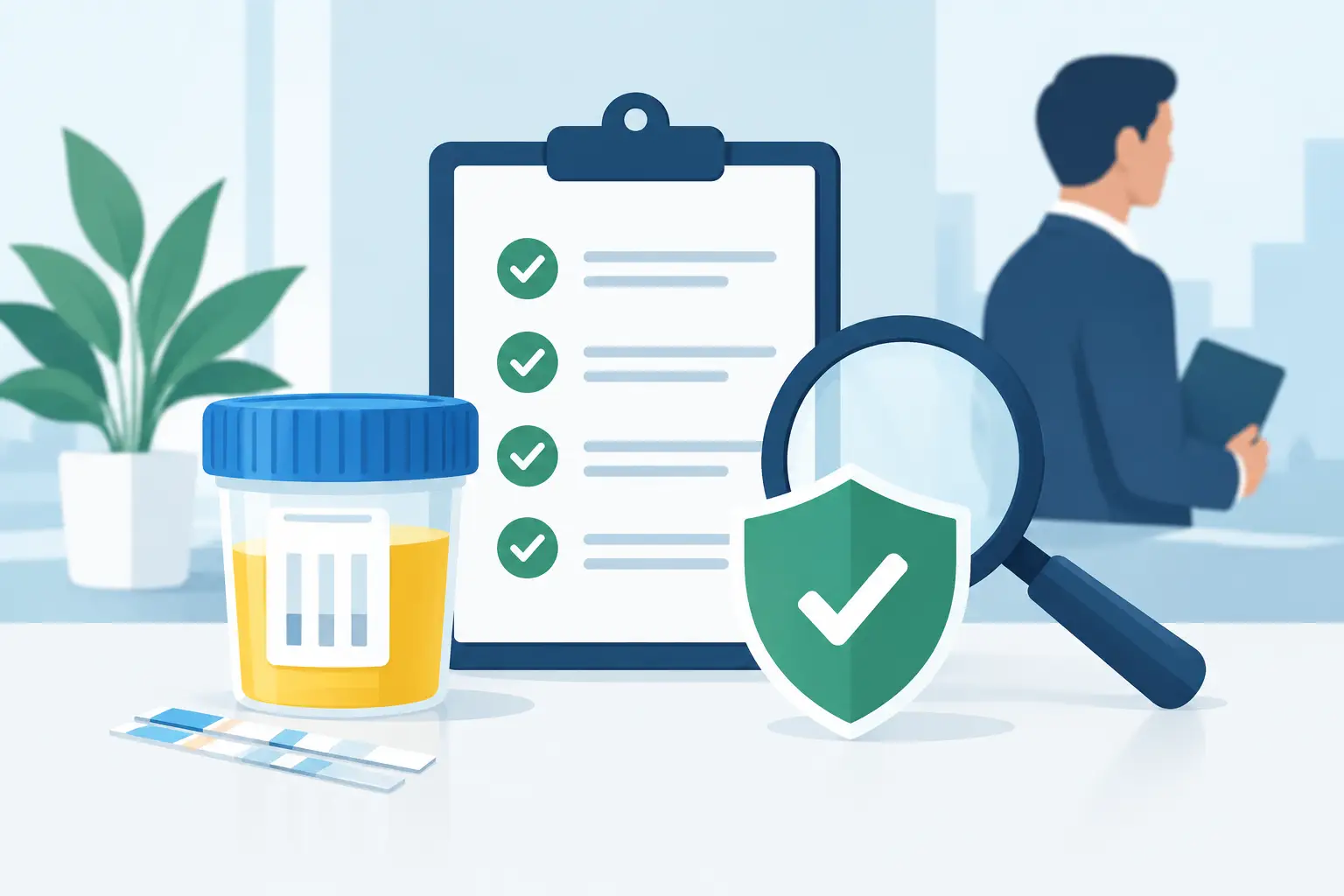
A failed drug screening program rarely fails because an employer did not order a test. It fails because a required test was missed, a supervisor delayed a decision, a collection was not documented correctly, or records could not be produced when requested. For transportation employers and safety-sensitive organizations, drug screening is an operational compliance process – not a one-time HR task.
A well-managed program protects people, supports business continuity, and gives your team a clear process when an incident, reasonable suspicion concern, or random selection occurs. The right approach depends on whether your workforce is regulated by the U.S. Department of Transportation, subject to company policy, or working across both U.S. and Canadian operations.
What a Drug Screening Program Must Do
An effective program has to do more than identify a nearby collection site. It should define who is covered, when testing is required, which testing method applies, who receives results, and what happens when a result requires action. Those details need to be consistent from the first applicant test through post-accident response and annual reporting.
For DOT-regulated employers, federal agency rules set the framework. FMCSA, FAA, FTA, FRA, PHMSA, and USCG programs share core DOT procedures but can have agency-specific requirements. Employers must understand which rules apply to each safety-sensitive employee, including owner-operators enrolled in a consortium or testing pool.
Non-DOT testing is different. Employers generally have more flexibility to establish their own policies, panels, testing circumstances, and consequences, subject to applicable law and collective agreements. That flexibility is useful, but it also means policy language and consistent administration matter even more. A non-DOT policy should never be handled as though it automatically follows DOT rules.
Build the Policy Before You Need the Test
The best time to resolve uncertainty is before a supervisor calls after an accident or reports a reasonable suspicion concern. A written policy should identify covered positions, prohibited conduct, testing circumstances, employee responsibilities, confidentiality practices, and the consequences of refusing or failing to complete a required test.
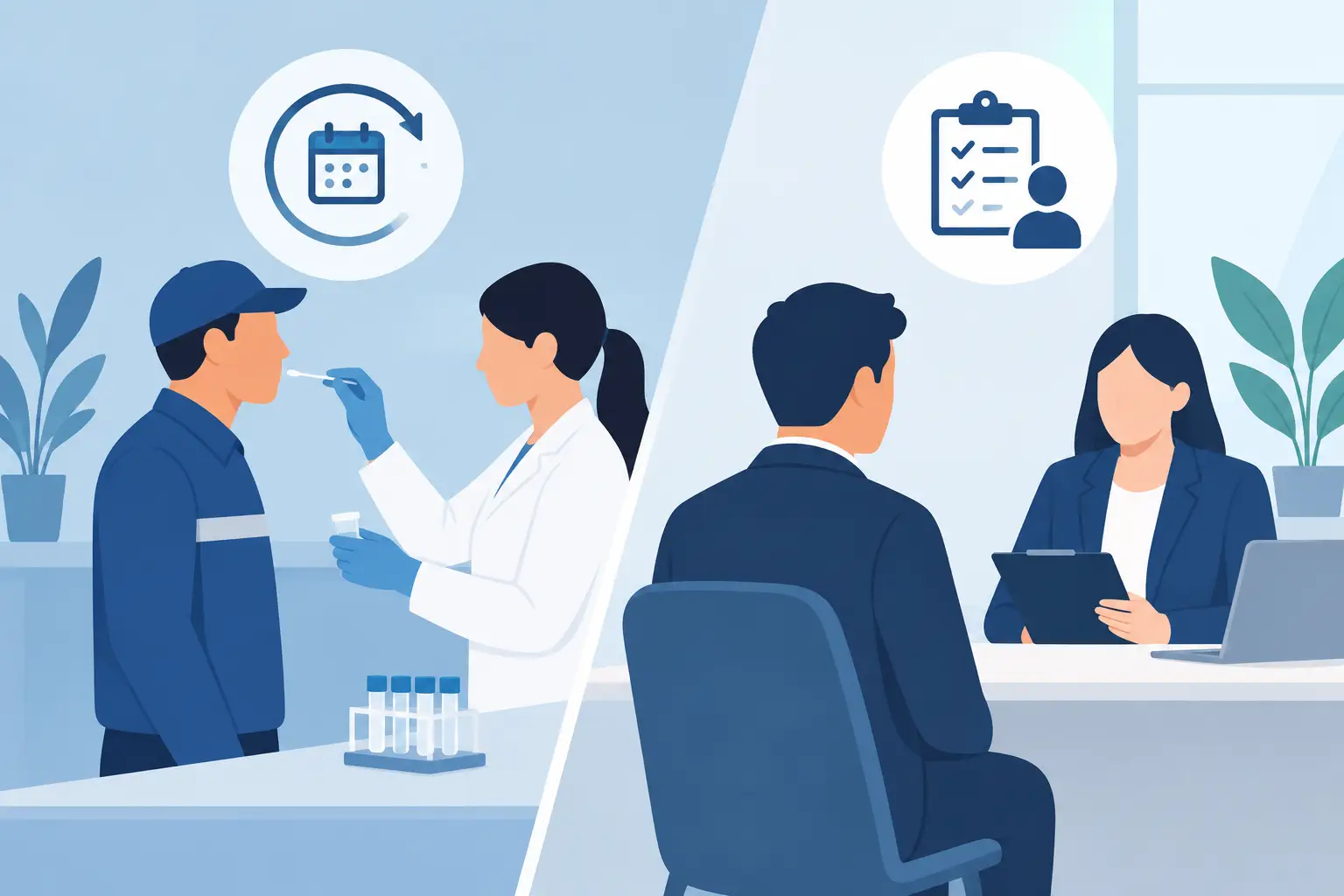
For DOT-covered employees, the policy should reflect current federal requirements and clearly explain testing categories. These commonly include pre-employment, random, post-accident, reasonable suspicion, return-to-duty, and follow-up testing. Each category has a different trigger, timeline, and documentation expectation.
A practical policy also identifies the internal decision-makers. Supervisors should know whom to contact. HR should know what information is needed. Dispatch or operations should know how to remove a safety-sensitive employee from duty when required. The person coordinating the test should not have to interpret policy under pressure.
For organizations with both U.S. DOT and Canadian non-DOT employees, separate workflows are often the safest choice. Using a single generic process may appear simpler, but it can create compliance gaps when jurisdictions, privacy considerations, and testing requirements differ.
Make Testing Access Part of Your Operations Plan
Collection access affects whether a program works in the real world. Drivers, field crews, and mobile employees are not always near a company office during regular business hours. A program should account for remote routes, overnight shifts, weekend incidents, and employees traveling outside their home terminal.
Employers should establish a clear scheduling path for routine tests and an urgent path for post-accident or reasonable suspicion situations. The urgent path should include after-hours contact information, instructions for locating an appropriate collection site, and a process for documenting the event. Delays can affect both regulatory compliance and the reliability of time-sensitive testing.
A broad collection network can reduce travel time and help keep operations moving. However, access alone is not enough. Confirm that your provider can coordinate the appropriate test type, provide the required documentation, and support the program rules that apply to your workforce.
Random Testing Requires More Than Random Names
Random testing is one of the most visible parts of a DOT drug and alcohol program, and it is also one of the easiest areas to mishandle administratively. Employees must be selected through a scientifically valid random process, and each covered employee must have an equal chance of selection during every selection period.
The selected employee should be notified and sent for testing promptly. Employers should not allow a supervisor, dispatcher, or employee to postpone the test for convenience when the employee is available to perform safety-sensitive work. The exact response may depend on the circumstances, but the principle is straightforward: random testing cannot be predictable or selectively enforced.
Accurate rosters are essential. If a driver has left the company, changed status, or is no longer in a covered position, that change should be updated promptly. If an eligible employee is missing from the testing pool, the program is not operating as intended. Dedicated pools by DOT agency can help employers maintain the right population and testing rates for each regulated group.
Train Supervisors to Recognize and Act
Supervisors are often the first people asked to make a difficult call. Reasonable suspicion decisions should not be based on rumor, assumptions, personality conflicts, or a single unverified complaint. They require specific, contemporaneous observations concerning an employee’s appearance, behavior, speech, or body odors, consistent with applicable DOT rules.
Training gives supervisors a structured way to document what they observe and to escalate concerns without making a diagnosis. It also helps them understand what not to do. A supervisor should not conduct an investigation that delays a required response, argue with an employee about the cause of observed behavior, or allow a potentially impaired employee to continue safety-sensitive work.
Post-accident procedures deserve the same preparation. Your team should know which events trigger testing under the applicable agency rules, what immediate safety and reporting obligations come first, and how to coordinate testing after medical care and emergency response needs are addressed. A written post-accident checklist is useful when it reflects your actual operation and is available to the people who will use it.
Protect the Process After Collection
A collection is only one part of the record. Employers need a reliable process for receiving verified results, protecting confidential information, documenting required actions, and retaining records for the appropriate period. Access should be limited to personnel with a legitimate business and compliance need.
For DOT programs, a verified positive drug test, alcohol violation, refusal to test, or other violation requires specific next steps. The employee must be removed from safety-sensitive duties, and the employer must complete applicable reporting and recordkeeping actions. For FMCSA-regulated drivers, Clearinghouse responsibilities can also apply. Employers should not wait until an audit or hiring decision to determine whether required information was reported or queried.
A negative result should also be handled consistently. Results need to be matched to the correct employee and test reason, then retained in the appropriate program record. Customized reporting can make this work easier by showing test status, random selection activity, completion rates, and outstanding actions without exposing more employee information than necessary.
Choose Support That Fits Your Risk Level
Some employers can manage a small program internally. Others need a C/TPA to coordinate random pools, collections, reporting, Clearinghouse administration, and compliance records. Neither approach is automatically better. The deciding factor is whether your team can perform every required step consistently while responding quickly when operations change.
A provider should be able to explain the process in plain language, support testing across your operating area, and remain available when an event happens outside normal hours. For a fleet with drivers moving across state lines, a missed after-hours call is not a minor service issue. It can become a safety and compliance problem.
WOOTS supports employers with DOT program management, non-DOT workplace testing, collection coordination, supervisor training, and after-hours assistance across North America. The goal is practical: give employers a clear path from policy to collection to documentation, without forcing internal teams to piece together the process during a time-sensitive event.
A dependable drug screening program should make the right action easier at the moment it matters. Review your policy, your testing pool, your emergency contacts, and your records before the next random selection or post-accident call puts them to the test.

Leave A Comment