
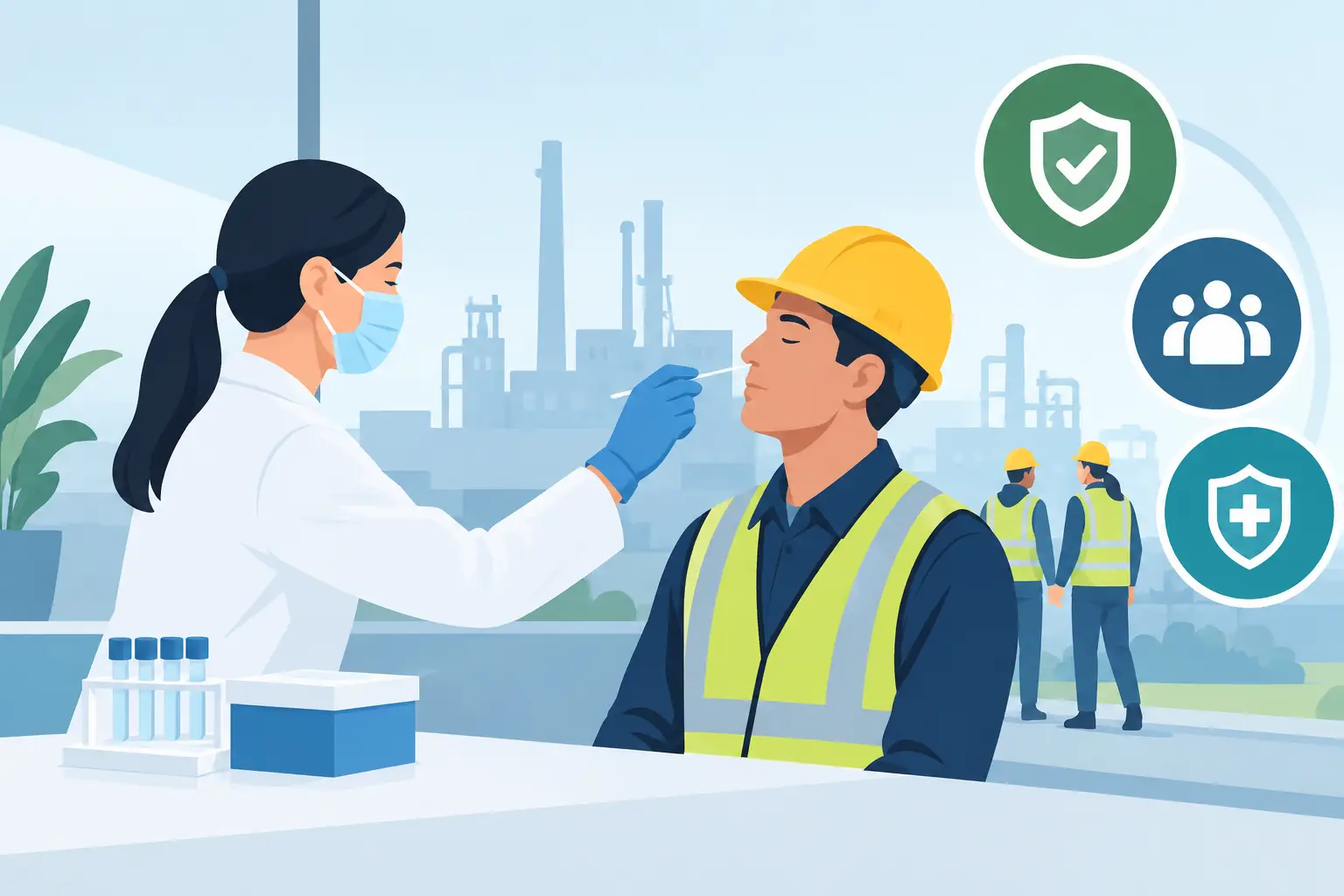
A missed post-accident test, an expired random-testing pool, or a supervisor who does not recognize reasonable suspicion can create far more than paperwork problems. For transportation employers and other safety-sensitive organizations, workplace testing is part of the system that keeps employees, passengers, equipment, and the public safe. It must also stand up to regulatory review.
A useful program does more than schedule a collection when a problem occurs. It defines who is covered, which tests apply, when testing is required, how results are handled, and who is responsible for each step. The goal is clear: timely testing, consistent decisions, protected employee information, and complete documentation.
What Workplace Testing Is Designed to Do
Workplace testing refers to employer-directed drug and alcohol testing and related screening procedures used to support safety, policy enforcement, and regulatory compliance. In DOT-regulated operations, the testing process is governed by federal rules, agency-specific requirements, and strict procedures for collections, laboratory testing, medical review, reporting, and record retention.
For non-DOT employers, the policy framework may be more flexible, but it is not casual. State laws, collective bargaining agreements, privacy expectations, job duties, and local requirements can affect what an employer may test for, when testing can occur, and how a result may be used. A policy that works for a federally regulated motor carrier may not be appropriate for a warehouse, construction firm, or office-based workforce.
Testing is not a substitute for supervision, training, or sound hiring practices. It is one control within a larger safety program. When the policy, training, collection process, and reporting process are aligned, employers can act quickly without making rushed or inconsistent decisions.
Start With the Right Testing Program
The first question is not which test to order. It is whether an employee is subject to DOT testing or an employer policy. That distinction determines the rules that follow.
DOT testing applies to employees who perform safety-sensitive functions under agencies such as FMCSA, FAA, FTA, FRA, USCG, and PHMSA. Covered employers must follow the applicable federal regulations, including requirements for pre-employment, random, post-accident, reasonable suspicion, return-to-duty, and follow-up testing when relevant. Random testing must come from a compliant selection process, and testing records must be retained for the required period.
Non-DOT programs are built around the employer’s operational risks and applicable law. An employer may choose pre-employment, reasonable suspicion, post-incident, return-to-work, or periodic testing. The policy should state the purpose of each test type, which positions are covered, the substances tested, the consequences of refusal, and how employees may raise questions or challenge process errors.
One common compliance mistake is combining DOT and non-DOT rules in a single vague policy. These programs can operate alongside one another, but they should be clearly separated. A DOT test must remain a DOT test from authorization through result reporting. If an employer needs a non-DOT test for a separate policy reason, that test should be administered and documented accordingly.
Match test types to real operating conditions
A pre-employment test supports hiring decisions for covered positions. Random testing helps deter prohibited substance use because the selection is unannounced and neutral. Reasonable suspicion testing addresses observed indicators of possible alcohol misuse or drug use, while post-accident testing may be required after specific events depending on the agency and circumstances.
Return-to-duty and follow-up testing have a different purpose. They apply after an employee has completed the required evaluation and treatment process following a DOT violation. These tests are not optional management tools and cannot be replaced with an employer’s ordinary random test.
The details matter. For example, alcohol testing has time-sensitive post-accident requirements, and drug testing has separate timing expectations. Employers should have a written response process that identifies who makes the call, who arranges transportation, how the collection is authorized, and who documents delays when immediate testing is not possible.
Build a Process That Works at 2 a.m.
Testing programs often fail at the moment they are most needed: after a collision, during an overnight shift, or when a supervisor is unsure whether an observation meets the reasonable suspicion standard. A policy alone cannot solve that problem. Employers need a practical response plan that employees and managers can use under pressure.
Start by assigning responsibilities. Supervisors need to know whom to call. The designated employer representative needs access to employee and program information. Drivers and other covered employees need clear instructions about reporting incidents and remaining available for testing. If the organization uses multiple terminals or remote crews, every location needs the same escalation path.
Collection access is equally important. A national network gives employers more options when employees travel, work across state lines, or need testing outside normal business hours. But availability should be confirmed before an incident occurs. Keep collection-site instructions current, establish after-hours contacts, and ensure authorization forms can be issued without delay.
A well-managed program also protects the employee experience. Employees should be treated respectfully, informed of the required process, and transported when they are not safe or permitted to drive. Testing is a compliance obligation, not a reason to abandon fair treatment or confidentiality.
Train Supervisors to Act on Facts
Supervisor training is one of the strongest controls in any workplace testing program. Managers should not make testing decisions based on rumor, personality conflicts, or assumptions. They need to recognize specific, contemporaneous observations of appearance, behavior, speech, or body odors that may support reasonable suspicion.
For DOT alcohol testing, the determination must be based on trained-supervisor observations and documented properly. Drug reasonable suspicion determinations are also observation-based, with different procedural requirements. Employers should train supervisors on the applicable standard rather than relying on a generic substance-use presentation.
Good documentation uses facts. “Employee smelled of alcohol, spoke slowly, and had difficulty maintaining balance at 9:15 a.m.” is more useful than “Employee appeared impaired.” The first statement records observable conduct; the second is a conclusion. Clear notes help the employer make a defensible decision and reduce the chance that testing appears arbitrary.
Training should also cover what supervisors must not do. They should not diagnose an employee, conduct an investigation alone, search personal belongings without authority, or delay emergency medical care to arrange a test. When there is an immediate health or safety concern, the priority is emergency response.
Treat Records and Reporting as Compliance Work
A negative result does not end the employer’s responsibility, and a positive result does not automatically tell the whole story. DOT drug test results are reviewed by a Medical Review Officer, who may determine whether there is a legitimate medical explanation before reporting a verified result. Employers should never treat a laboratory report as a final DOT result without the required review process.
Result reporting must be timely, limited to authorized personnel, and stored securely. DOT records have defined retention requirements that vary by record type. Employers must also complete required reporting and Clearinghouse actions when operating under FMCSA rules. Missing a reporting deadline or retaining incomplete records can create exposure even when the underlying test was completed correctly.
Centralized administration reduces avoidable gaps. A qualified C/TPA can coordinate random pools, collection scheduling, reporting, record support, and agency-specific program needs. For growing fleets, owner-operators, and employers with limited compliance staff, this support can turn a fragmented process into a repeatable one. WOOTS supports employers with coordinated testing access, program administration, and responsive assistance when timing matters.
Review the Program Before an Incident Reveals the Gaps
A workplace testing policy should be reviewed whenever operations, regulations, locations, or job roles change. New acquisitions, cross-border operations, a new dispatch model, or expanded safety-sensitive duties can all affect who belongs in a testing pool and which procedures apply.
A practical review asks whether the employee roster is current, random selections are documented, supervisor training is up to date, collection instructions are available after hours, and post-accident contacts are known. It should also confirm that non-DOT policy language matches current state and local requirements. Employers operating in Canada should use a separate legal and policy review rather than assuming a US-style program transfers directly.
The strongest testing programs are rarely the most complicated. They are the programs people can follow when the phone rings after an accident, when an employee is selected at random, or when a regulator requests records. Clear procedures, trained people, dependable collection access, and disciplined documentation give employers room to focus on the work that cannot wait: running a safe operation.



Leave A Comment