
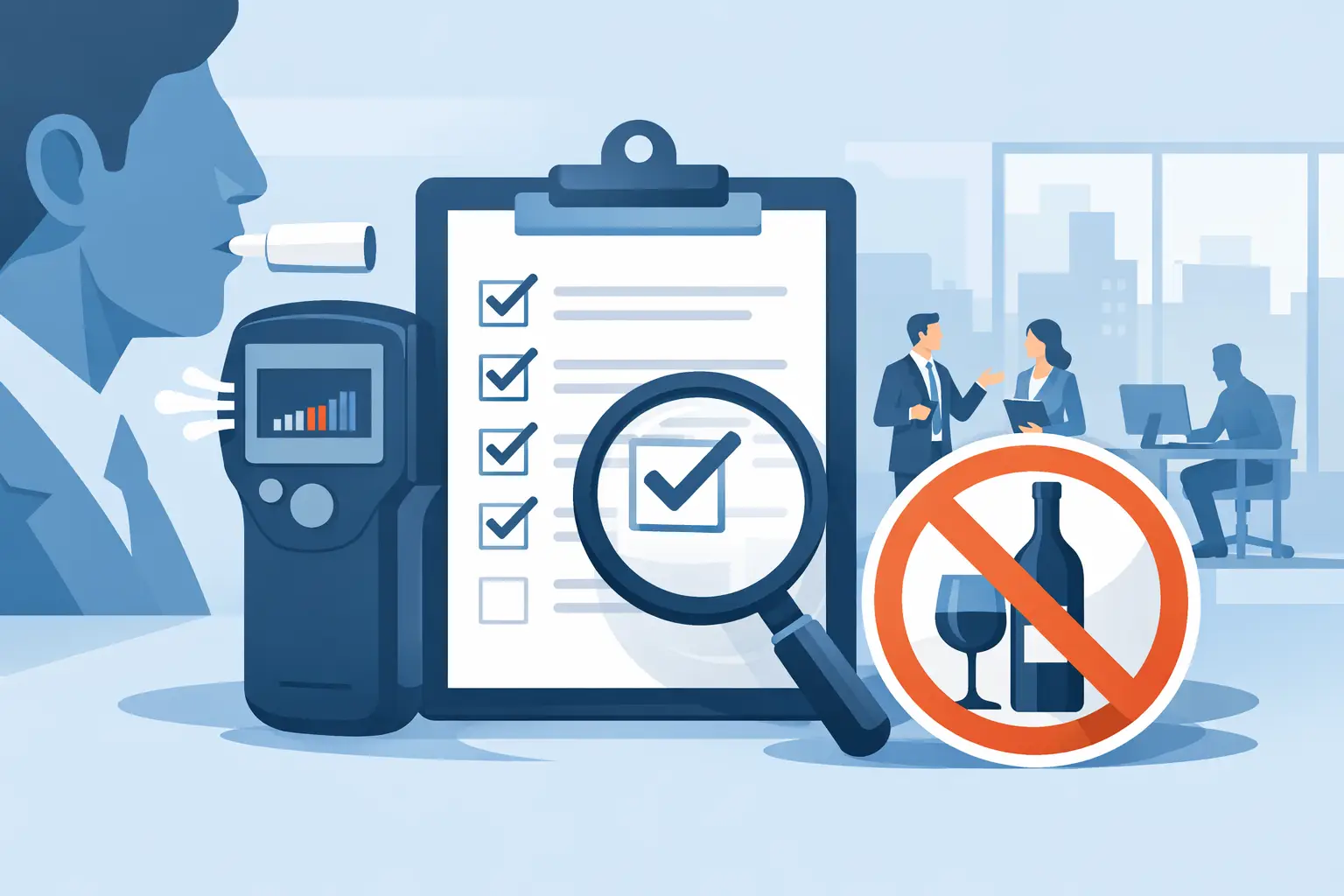
A supervisor gets a call before sunrise. A driver is involved in a minor incident, no injuries, but the facts are unclear and the vehicle is out of service. At that moment, a policy sitting in a binder is not enough. Workplace alcohol screening programs have to work in real conditions – across shifts, across locations, and under pressure.
For employers in transportation, construction, manufacturing, utilities, and other safety-sensitive environments, alcohol testing is not just a policy issue. It is a safety control, a compliance function, and a risk-management process. The challenge is that the right program looks different depending on whether you are covered by DOT rules, operating in Canada under employer-driven requirements, or managing a mixed workforce with multiple job classes and jurisdictions.
What workplace alcohol screening programs are meant to do
At a basic level, workplace alcohol screening programs are designed to identify alcohol misuse when it creates a direct workplace risk. That sounds simple, but an effective program does more than schedule tests. It defines when testing is required, who is covered, how decisions are documented, who is authorized to act, and what happens after a result.
In regulated environments, the framework is often prescribed. DOT-covered employers, for example, must follow specific rules for alcohol testing circumstances, documentation, and qualified administration. Outside those rules, employers have more flexibility, but also more responsibility to make sure the program is reasonable, defensible, and aligned with applicable law and policy standards.
That is where many programs break down. Employers focus on the test itself and underestimate the operational pieces around it. If supervisors are not trained, if post-accident procedures are vague, or if after-hours support is missing, the program can fail when it is needed most.
Why workplace alcohol screening programs fail in practice
Most failures are not caused by bad intent. They come from gaps in planning.
One common issue is policy language that is too broad or too vague. If the policy does not clearly define testing triggers, employees and managers are left interpreting it in real time. That creates inconsistency and increases legal exposure.
Another problem is uneven coverage. A company may have a strong random testing process for one regulated group and almost no structure for non-regulated safety-sensitive positions. That split can create confusion, especially for employers operating across the US and Canada or managing both DOT and non-DOT testing needs.
Response time is another weak point. Post-accident and reasonable suspicion situations do not wait for business hours. If supervisors cannot quickly confirm next steps, locate a collection site, or document events properly, employers lose control of the process fast.
Then there is training. A written program is only as strong as the people applying it. Supervisors need to know what observable signs may justify action, what documentation is required, and when to escalate. Without that, the employer may either miss a legitimate safety concern or take action that cannot be supported later.
Building a workplace alcohol screening program that holds up
The best programs are practical before they are impressive. They are built around repeatable actions, not broad statements.
Start with scope. Identify which employees are covered, which positions are safety-sensitive, and which legal or regulatory standards apply. For a DOT employer, that means building the program around the applicable agency requirements. For a non-DOT employer, it means defining business need, safety rationale, and consistent procedures.
Next comes policy design. A workable policy should address pre-duty expectations, prohibited conduct, testing circumstances, refusal language, consequences, and return-to-work steps where applicable. It should also align with how the company actually operates. A policy that assumes every incident happens near a major terminal will not help a dispersed workforce or a mobile crew.
Testing pathways need the same level of detail. Employers should know in advance how they will handle random testing, post-accident events, reasonable suspicion decisions, return-to-duty steps, and follow-up testing if required. Each pathway should have a clear chain of responsibility so there is no guesswork during an active event.
Administration matters just as much. Collection site access, reporting turnaround, recordkeeping, and after-hours coordination are not back-office details. They are part of compliance. When those elements are fragmented across vendors or handled informally, employers spend more time chasing answers and less time managing risk.
The role of supervisor training
Supervisor training is one of the highest-value parts of any alcohol testing program because it turns policy into action. It is also one of the easiest areas to underfund.
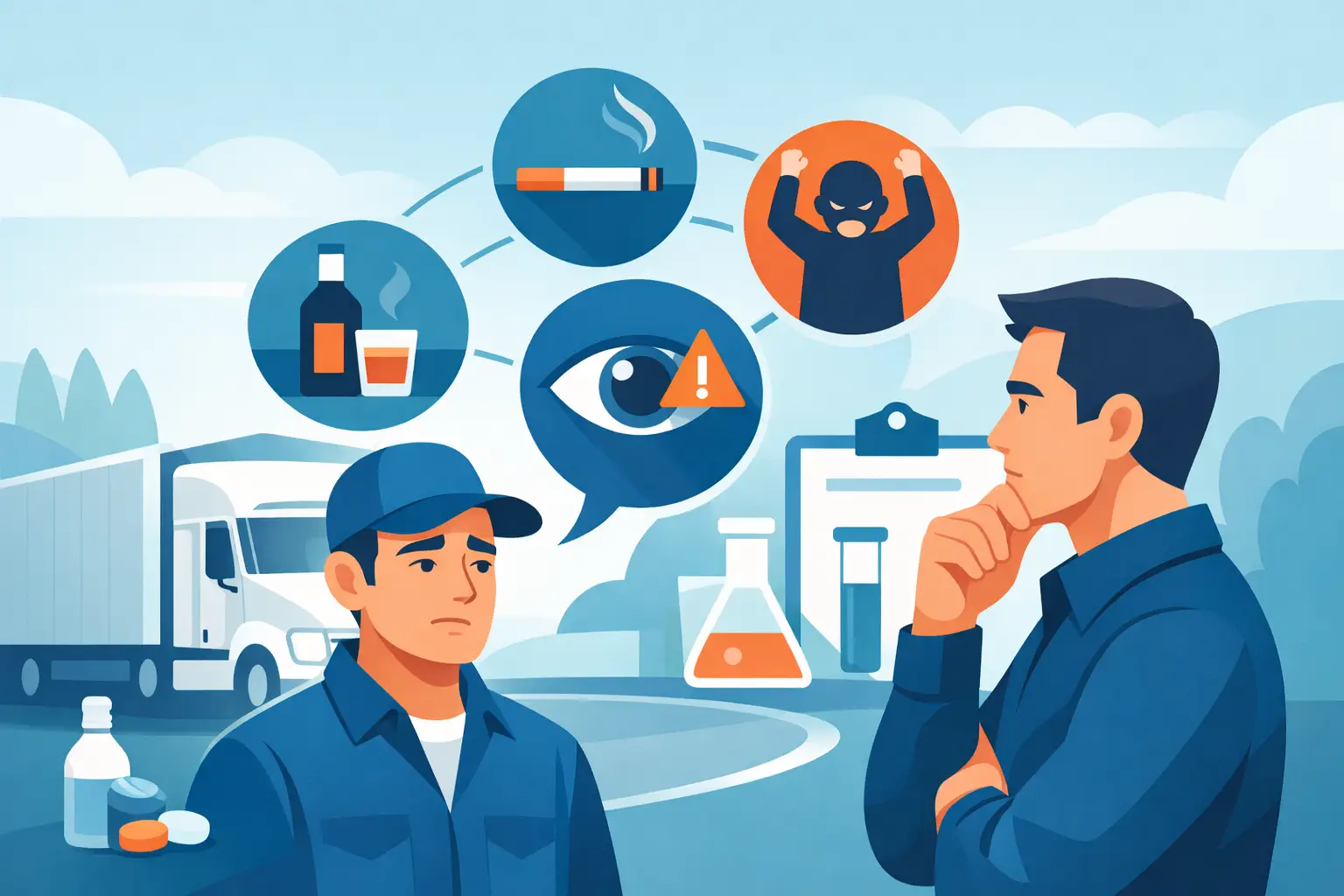
A trained supervisor understands the difference between concern and evidence. They know how to observe behavior, speech, appearance, and performance without jumping to conclusions. They know what to document, when to remove an employee from duty, and how to activate testing procedures without creating unnecessary conflict.
This is especially important in reasonable suspicion situations. Those decisions can carry immediate safety and employment consequences. If a supervisor cannot explain what they observed, when they observed it, and how the policy was applied, the employer is exposed.
Training also improves consistency. That matters for larger fleets, multi-site employers, and third-party administrators supporting different clients. A program should not feel strict in one terminal and optional in another.
DOT versus non-DOT program design
This is where employers often need the most clarity. Not all workplace alcohol screening programs are built under the same rules, and assuming they are can create costly mistakes.
For DOT-regulated employers, alcohol testing is tightly defined. The circumstances for testing, the methods used, the qualifications of personnel, and the recordkeeping requirements are all established by regulation. Employers do not have broad freedom to improvise. The goal is consistency, defensibility, and public safety.
For non-DOT employers, the picture is more nuanced. The right program depends on jurisdiction, workforce type, collective bargaining considerations where relevant, and the nature of the safety risk. In Canada especially, alcohol and drug testing policies require careful design because legal scrutiny often focuses on whether testing is justified, proportionate, and applied fairly.
That does not mean non-DOT programs should be weak. It means they should be tailored. A one-size-fits-all policy copied from a regulated template may create more problems than it solves.
What employers should expect from program support
A testing vendor can process a test. A compliance partner helps the employer run a program.
That difference shows up in daily operations. Employers should expect clear policy support, access to trained collection networks, reliable random program administration where required, timely reporting, and documentation that stands up to review. They should also expect help when timing is tight, including after-hours incidents and post-accident response.
This is where centralized management becomes valuable. When collection access, reporting, consortium administration, supervisor training, and compliance support are coordinated, the employer has fewer handoffs and fewer points of failure. For transportation companies and owner-operators, that can mean less downtime and fewer administrative errors. For HR and safety teams, it means less scrambling.
WOOTS works in that space by supporting both DOT-regulated and employer-driven programs across North America, which is often exactly what mixed or cross-border operations need. The value is not just access to testing. It is having a process that holds together when the situation is urgent.
Measuring whether the program is working
A program is not effective because it exists. It is effective if it can be used consistently and defended when challenged.
Look at practical indicators. Are post-accident events handled within required timelines? Are supervisors documenting concerns properly? Are random selections and notifications administered correctly? Are records easy to retrieve during an audit or dispute? Are policy exceptions becoming routine because operations are not aligned with the written process?
It is also worth looking at employee understanding. A program should be clear enough that employees know expectations before an incident occurs. Confusion often signals policy language that is too generic or training that has not been reinforced.
From a management standpoint, the best measure may be whether the program reduces friction. A good screening program should support fast decisions, not create bottlenecks every time a test is needed.
Where employers should be careful
More testing is not always better testing. Programs that are too aggressive, poorly documented, or disconnected from actual job risk can create legal and employee-relations problems. On the other hand, programs that are too loose tend to fail in the exact moment they are supposed to protect the business.
The right balance depends on the workforce, the regulatory environment, and the consequences of impairment on the job. For a motor carrier, the tolerance for ambiguity is low because public safety and federal compliance are on the line. For other employers, the analysis may be broader, but the need for structure remains the same.
The strongest workplace alcohol screening programs are not the ones with the most paperwork. They are the ones that give supervisors clear authority, give employers a fast path to action, and give the business confidence that the process will stand up after the fact.
If your current program would struggle at 2 a.m. after an accident, it is time to tighten the process before the next call comes in.

Leave A Comment