
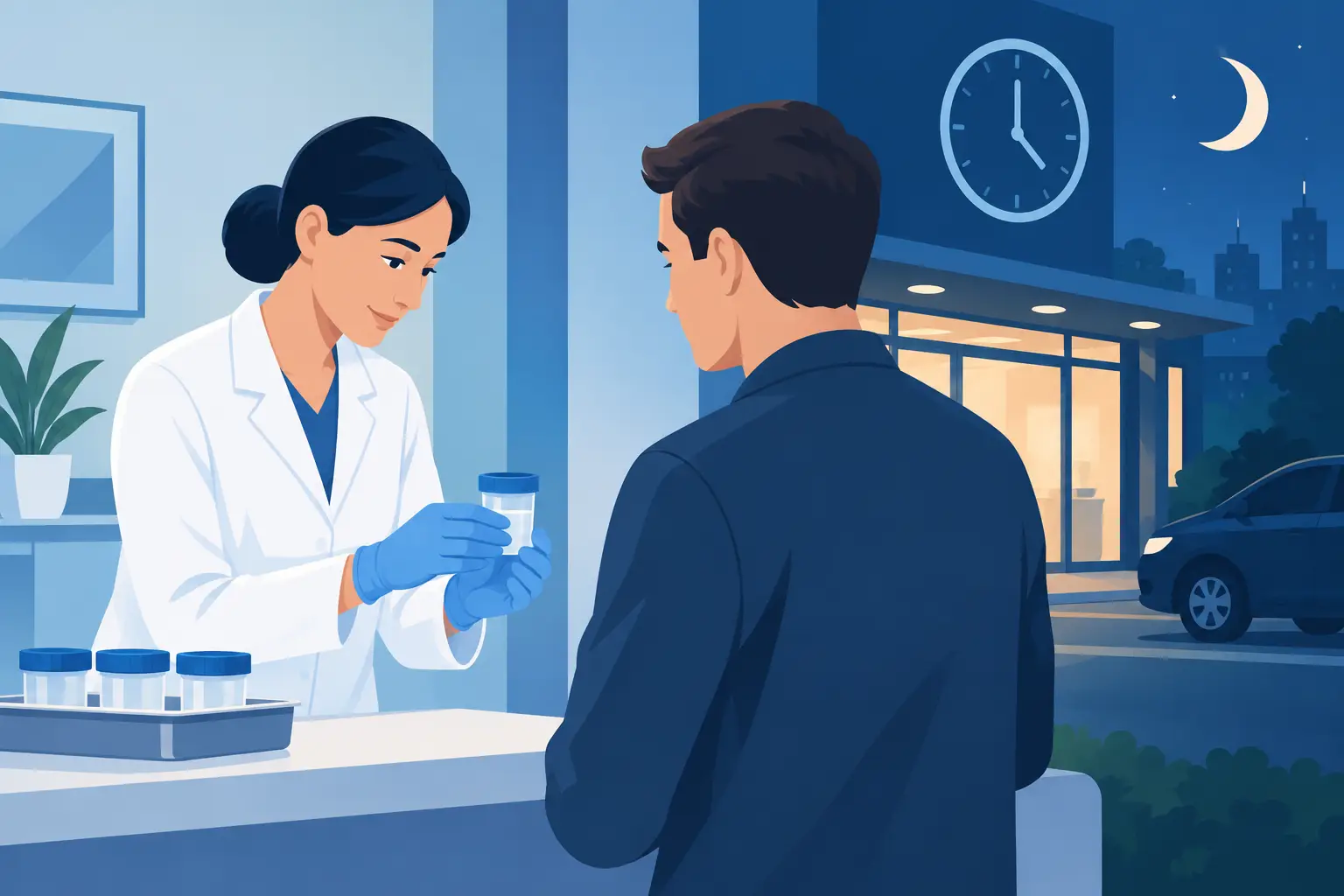
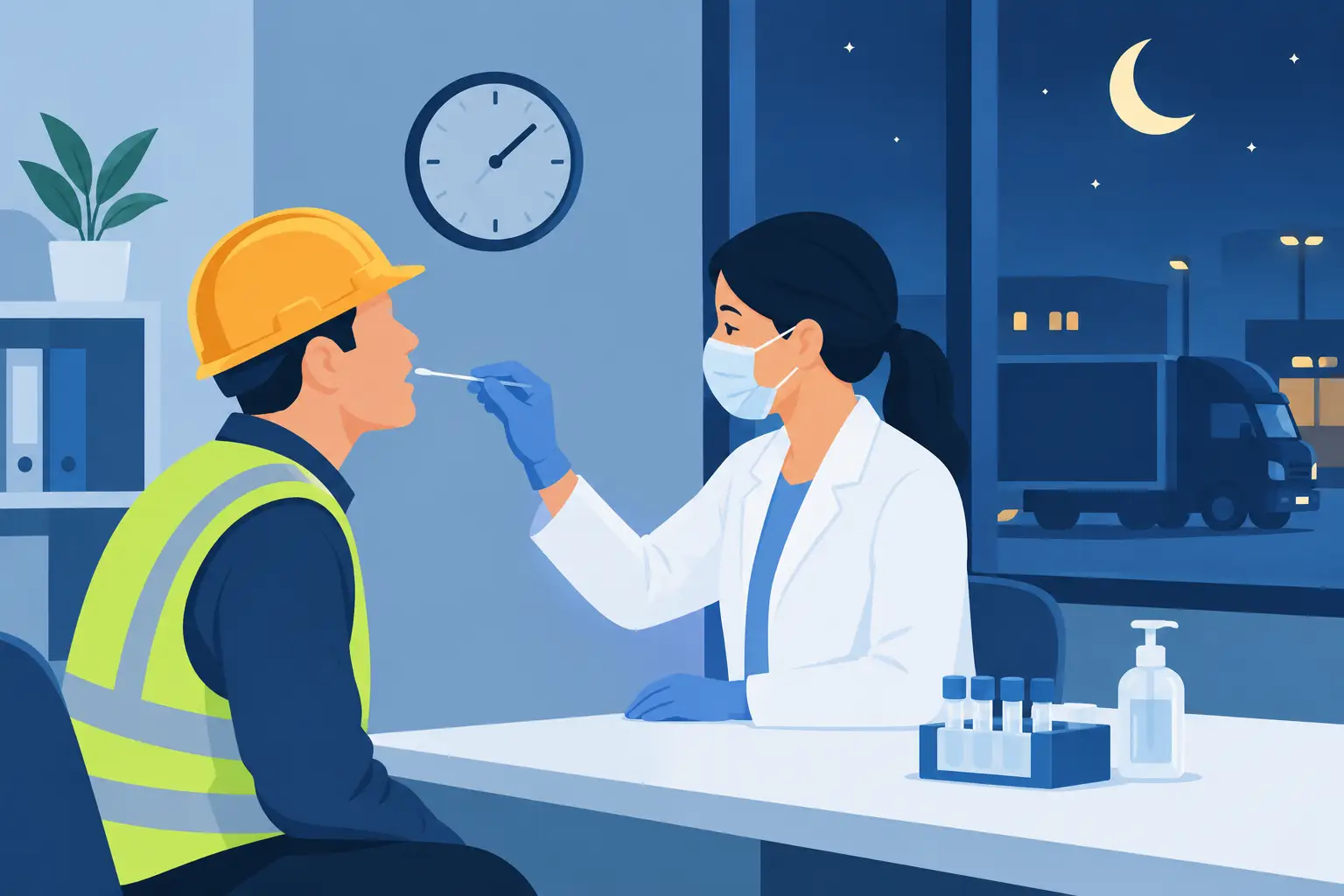
A driver reports an accident at 10:45 p.m. A supervisor has a reasonable suspicion concern during a weekend shift. A safety-sensitive employee is called in unexpectedly after a test order has been issued. These are not situations that can wait for the next business day. Reliable after hours drug testing access gives employers a defined response path when time, documentation, and regulatory obligations matter most.
For DOT-regulated employers, delayed action can complicate post-accident testing, weaken program consistency, and create avoidable compliance exposure. For non-DOT workplaces, a delayed test may affect the employer’s ability to enforce a written policy fairly. The right after-hours process is not simply a phone number for emergencies. It is a coordinated system that connects the employer, the employee, the collection site, and the testing program.
Why After Hours Drug Testing Access Matters
Testing needs do not follow office hours. Transportation, construction, manufacturing, warehousing, energy, and emergency service operations often run nights, weekends, and holidays. A program that only works from 9 to 5 leaves supervisors making high-stakes decisions without timely support.
After-hours access is especially valuable when an employee must be directed to a collection site promptly. Employers need to know where the individual should go, whether the site can perform the required service, and what instructions the employee must receive. For DOT testing, details such as the correct testing authority, chain-of-custody documentation, breath alcohol testing capability, and specimen collection procedures must be handled correctly from the start.
A broad collection-site network helps, but coverage alone is not enough. A location may be nearby but closed, unable to perform an observed collection when one is required, or unavailable for alcohol testing. Effective access means confirming the right service at the right location before the employee is sent there.
The Most Common After-Hours Testing Situations
Post-accident testing
Post-accident testing is one of the clearest reasons to establish an after-hours plan before an incident occurs. DOT agency rules determine whether a test is required and what circumstances trigger testing. Employers should train supervisors to recognize when they need to contact their program administrator rather than relying on assumptions made under pressure.
Timing matters. Under DOT post-accident requirements, employers should make a good-faith effort to complete alcohol testing as soon as practicable, with documentation required if it is not completed within eight hours. Drug testing should also be completed as soon as practicable, with documentation required if it is not completed within 32 hours. These timeframes do not replace agency-specific decision criteria, and they do not mean a supervisor should delay action while trying to interpret the rule alone.
A practical after-hours process helps the supervisor document the event, confirm the testing requirement, identify an appropriate collection site, and provide clear directions to the employee. If testing cannot be completed, the employer still needs a record of the efforts made and the reason the test did not occur.
Reasonable suspicion testing
Reasonable suspicion decisions require care. Supervisors must base the referral on specific, contemporaneous observations involving appearance, behavior, speech, or body odors, consistent with the applicable DOT rule or company policy. A test should never be used as a substitute for observation, discipline, or a vague feeling that something is wrong.
After-hours support can help a trained supervisor act promptly once a reasonable suspicion determination has been made. It can also reduce common errors, such as sending an employee to a site that is closed, failing to arrange transportation when needed, or using the wrong testing process.
When an employee may be impaired, the immediate priority is safety. Remove the person from safety-sensitive duties, do not allow them to drive themselves to the collection site, and follow the company’s written procedures. Testing coordination should support that response, not distract from it.
Random, return-to-duty, and follow-up testing
Most random testing can be planned during normal operations, but 24/7 workforces create exceptions. An employee may only be available overnight, on a remote assignment, or during a holiday shift. Return-to-duty and follow-up testing can also require fast coordination to avoid unnecessary time away from work.
The compliance requirement does not change because the test occurs outside standard business hours. Employers still need the correct test type, proper documentation, and a process that protects confidentiality. A flexible collection network allows the program to fit real operations without compromising the integrity of the test.
What a Dependable After-Hours Process Includes
A useful program gives supervisors one clear action path. They should know who to call or how to access service, what event information to provide, and how to receive collection-site instructions. Complicated escalation trees create delay when the supervisor is already managing an accident scene, an upset employee, or a disrupted operation.
The process should also distinguish between medical care and testing. If an employee needs emergency treatment, medical needs come first. Post-accident testing should be coordinated as soon as practical without interfering with necessary care. Supervisors should not attempt to make medical judgments or pressure medical staff to prioritize a collection over treatment.
Documentation is another essential element. A strong process records the time of the incident, the time the employer was notified, actions taken to arrange testing, collection-site details, and any reason a required test could not be completed. These records are often critical during an audit, investigation, or policy dispute.
Finally, after-hours service should connect back to the employer’s larger compliance program. Test results, chain-of-custody records, refusals, and follow-up actions should be available within the same reporting structure used for routine testing. Fragmented emergency arrangements can create missing documentation and unnecessary administrative work later.
Planning Before the Call Comes In
The most effective response starts long before a supervisor needs it. Employers should include after-hours instructions in their drug and alcohol testing policy, supervisor training, driver packets, and incident response materials. If the procedure is only known by one safety manager, it is not dependable.
Supervisors need practical training on when to initiate a post-accident decision review, how to document reasonable suspicion observations, and how to keep an employee from performing safety-sensitive work when required. They should also understand that local law enforcement testing or hospital testing does not automatically satisfy DOT testing requirements. Each situation must be reviewed against the applicable rule.
Employers should periodically test the plan. Call the after-hours service line, verify that collection sites are available near key terminals or work locations, and confirm which sites provide both drug and alcohol testing. This is particularly important for fleets operating across state lines or in rural areas, where the closest site may not offer every required service.
A collection network of more than 20,000 sites across North America can provide valuable reach, but program coordination remains the deciding factor. The goal is not just to find a location. It is to make sure the employee arrives at a qualified location with the correct authorization and instructions.
Choosing Support That Fits Your Program
Every employer’s needs are different. A local business with a single daytime shift may need occasional emergency support. A carrier with drivers moving across multiple states needs dependable access wherever operations take them. A third-party administrator may need a consistent process that can be applied across many client programs.
Look for a provider that understands DOT agency requirements, supports both drug and alcohol testing, provides after-hours assistance without unnecessary handoffs, and maintains organized reporting. Employers with non-DOT Canadian programs may also need policies and testing procedures tailored to their workplace and legal context rather than a one-size-fits-all DOT model.
WOOTS helps employers coordinate testing access, compliance administration, collection-site services, and reporting through one operational program. The value is not simply being available after hours. It is having experienced support that helps the employer take the next correct step.
When the call comes late at night, the best time to build a response is not then. Put the instructions, training, and testing access in place now so your supervisors can protect safety, document their actions, and move forward with confidence.



[…] employer’s process with controlled reporting, documented communication channels, and responsive after-hours coordination. Speed matters after an accident or for a removal-from-duty decision, but speed should not mean […]