
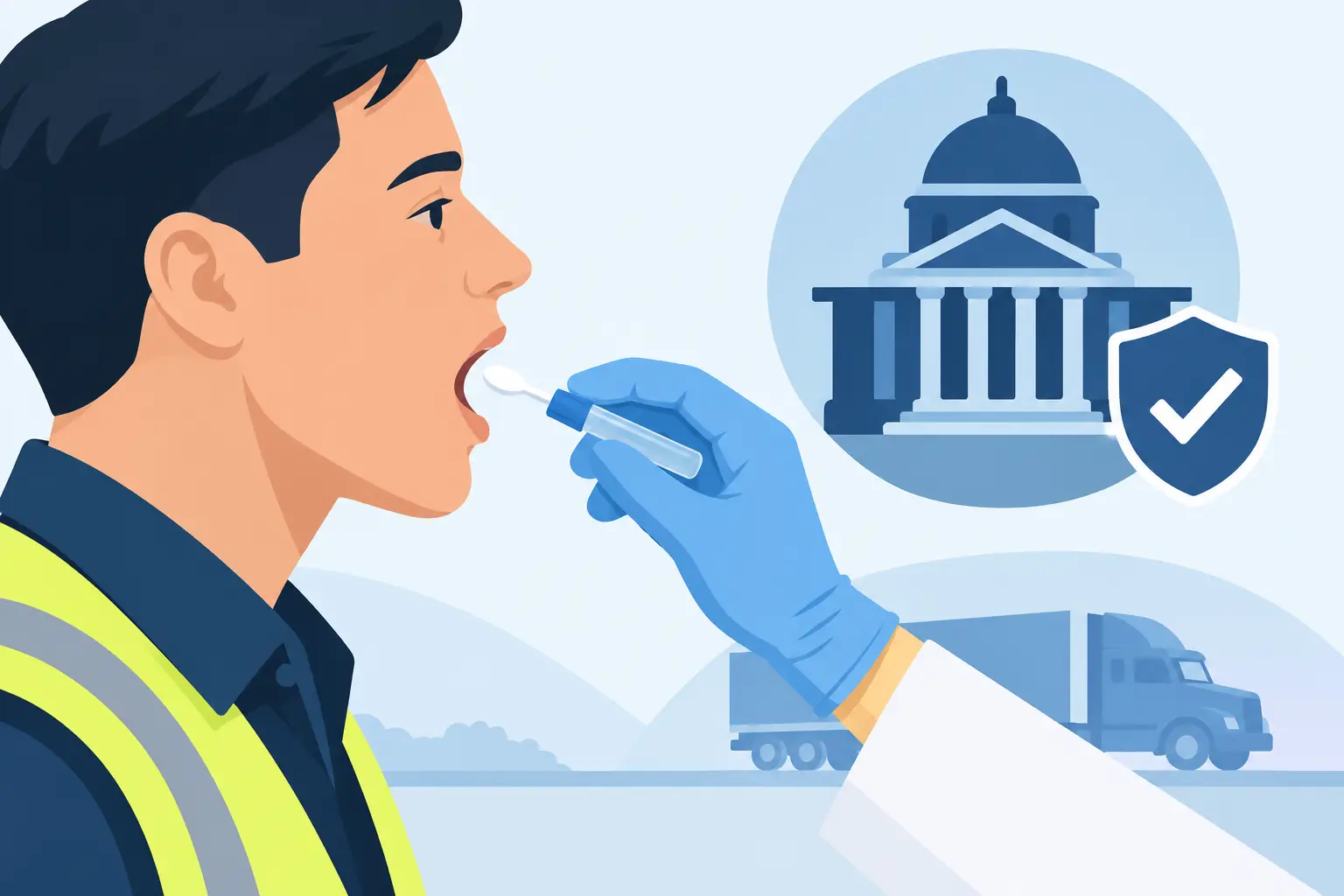
Does DOT allow oral fluid testing? Yes, DOT regulations authorize oral fluid as a specimen type for DOT drug testing. But authorization does not mean every regulated employer, collection site, or testing program can begin using it immediately. DOT implementation depends on specific federal laboratory certification requirements, and employers must follow the current procedures in 49 CFR Part 40 before changing their program.
For fleet operators, owner-operators, safety managers, and third-party administrators, that distinction matters. A non-DOT oral fluid program can often be implemented based on employer policy and applicable local requirements. A DOT program must use the specimen type, forms, laboratories, collection procedures, and Medical Review Officer process permitted under federal rules.
Does DOT Allow Oral Fluid Testing Under Part 40?
DOT’s final rule added oral fluid testing as an approved option for DOT-regulated drug testing. The rule allows employers to use either urine or oral fluid specimens for tests conducted under Part 40, subject to the rule’s implementation conditions.
The key condition is laboratory availability. DOT has stated that oral fluid testing cannot begin for DOT purposes until the Department of Health and Human Services has certified at least two laboratories to conduct oral fluid testing under the HHS National Laboratory Certification Program. This requirement supports the employee’s right to have a split specimen tested if a non-negative result is verified.
That means the practical answer is conditional: oral fluid is permitted in the regulations, but an employer should not schedule a DOT oral fluid test unless the required HHS-certified laboratory capacity is in place and DOT has confirmed that testing may proceed. Certification status can change, so relying on an old announcement, a laboratory sales message, or a non-DOT testing policy creates unnecessary compliance risk.
Why DOT Requires Two Certified Oral Fluid Laboratories
DOT testing is built around defensible procedures, not simply a collection method. When a laboratory reports a non-negative drug test result, the employee has the right to request testing of the split specimen at a different HHS-certified laboratory. That safeguard is one reason DOT cannot move to oral fluid testing based on the availability of a single laboratory.
The two-laboratory requirement helps protect both employers and employees. Employers need a testing process that will withstand an audit, an agency review, or a challenge following a removal from safety-sensitive duties. Employees need access to the same federally controlled split-specimen protections available in a DOT urine testing program.
A collection site that can collect an oral fluid specimen for a non-DOT customer is not automatically authorized to support a DOT oral fluid test. The collector, collection device, federal custody and control form, laboratory, MRO process, and reporting process must all meet the applicable DOT requirements.
What Oral Fluid Testing Does and Does Not Change
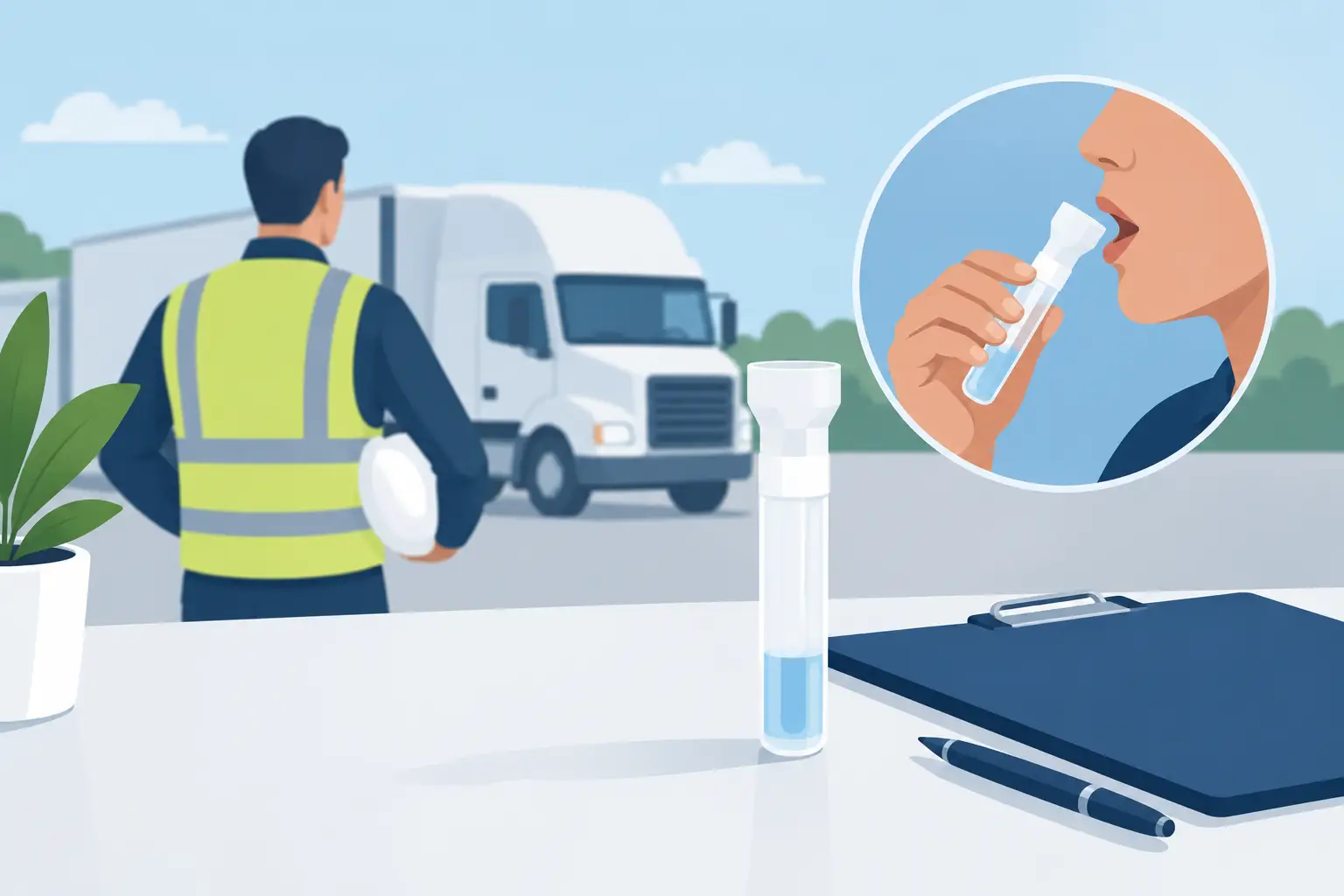
Oral fluid drug testing may offer operational advantages once it is available for the applicable DOT test. Collection is directly observed by the collector without requiring an observed urine collection, which can reduce some privacy concerns and make substitution more difficult. It may also be useful in situations where a donor cannot provide a urine specimen within the allowed time.
However, oral fluid is not a shortcut around Part 40. The same core compliance obligations remain: employers must maintain a compliant testing program, use trained service providers, protect confidential information, act on verified results, and retain required records. A DOT-regulated employer cannot switch specimen types selectively after a collection problem or result simply because oral fluid seems more convenient.
Oral fluid also does not replace DOT alcohol testing procedures. DOT drug testing and DOT alcohol testing are separate processes. DOT alcohol testing continues to follow the authorized alcohol-testing methods and confirmation requirements in Part 40. Employers should make sure supervisors, dispatch personnel, and collection coordinators understand the difference when arranging reasonable-suspicion, post-accident, return-to-duty, or follow-up testing.
Detection Windows Are Different
Employers should also avoid assuming that urine and oral fluid produce identical detection patterns. In general, oral fluid may be more likely to identify more recent drug use, while urine may have a longer detection window for certain substances and circumstances. The specimen type can affect operational expectations, but it does not change the DOT panel, the cutoff standards, or the MRO review process.
For a DOT test, the purpose is not to choose the specimen type with the longest or shortest window. The purpose is to complete the test exactly as the federal program requires. Any decision to add a separate non-DOT test with a different panel or specimen type should be clearly separated from the DOT test in scheduling, forms, laboratory reporting, and personnel records.
What Regulated Employers Should Do Now
Employers do not need to rewrite their DOT drug and alcohol program merely because oral fluid has been authorized in the rule. They do need a plan for confirming when it is actually available and for making a controlled transition if oral fluid becomes a practical option for their operation.
Start by reviewing your written policy. If the policy specifies urine as the only DOT drug-testing specimen, the employer may need to revise the language before adopting oral fluid testing. The policy should explain that testing will be conducted under DOT rules and should not promise a specimen type that cannot be consistently supported by the program.
Next, confirm your service-provider readiness. Your C/TPA or testing administrator should be able to verify the current DOT implementation status, identify qualified collection locations, coordinate with certified laboratories, and ensure the proper federal forms and electronic reporting steps are used. This is especially relevant for employers with drivers or employees spread across multiple states, after-hours operations, and post-accident testing needs.
Finally, train the people who make testing decisions. A designated employer representative should know who can authorize a test, how to order the correct DOT agency test, what to do if a collection issue occurs, and when to contact the program administrator for direction. Supervisors should never decide on their own to substitute a non-DOT oral fluid test for a required DOT urine or oral fluid test.
Oral Fluid Testing by DOT Agency
The Part 40 procedures apply across DOT agencies, including FMCSA, FAA, FTA, FRA, PHMSA, and the USCG. An agency may have additional rules affecting who must be tested, which events trigger testing, and how employers report or retain information. For example, FMCSA-regulated employers must still meet Clearinghouse reporting and query obligations regardless of the specimen type used for an authorized DOT drug test.
Employers operating under more than one program should keep their testing pools and records organized. A company may run DOT testing for U.S. drivers, non-DOT workplace testing for Canadian employees, and testing for non-regulated positions. Those programs can use different procedures, but the distinction must be clear. Combining records or treating a non-DOT oral fluid result as though it were a DOT result can create reporting and employment-action problems.
Common Compliance Mistakes to Avoid
The most common error is treating “permitted by rule” as “available for use today.” Before scheduling DOT oral fluid collections, verify the current HHS laboratory certification threshold and DOT implementation guidance.
Another mistake is using a rapid oral fluid test as a substitute for a federally required laboratory-based DOT drug test. Instant testing may have a place in an employer’s non-DOT program, but it does not meet DOT drug-testing requirements on its own. A DOT test requires the full federal collection, laboratory, and MRO process.
Employers should also avoid changing collection instructions midstream. If an employee reports to a site for a DOT test, the collection must be managed under the correct procedures from the start. When there is uncertainty about a specimen type, test reason, refusal issue, or collection discrepancy, pause and contact the program administrator rather than asking the site to improvise.
A well-managed DOT program leaves no room for guesswork. Confirm the current oral fluid implementation status before changing your process, keep non-DOT and DOT testing clearly separated, and make sure your team can arrange the correct test at any hour an event requires it. That preparation protects your operation when the call for a test cannot wait.




Leave A Comment