
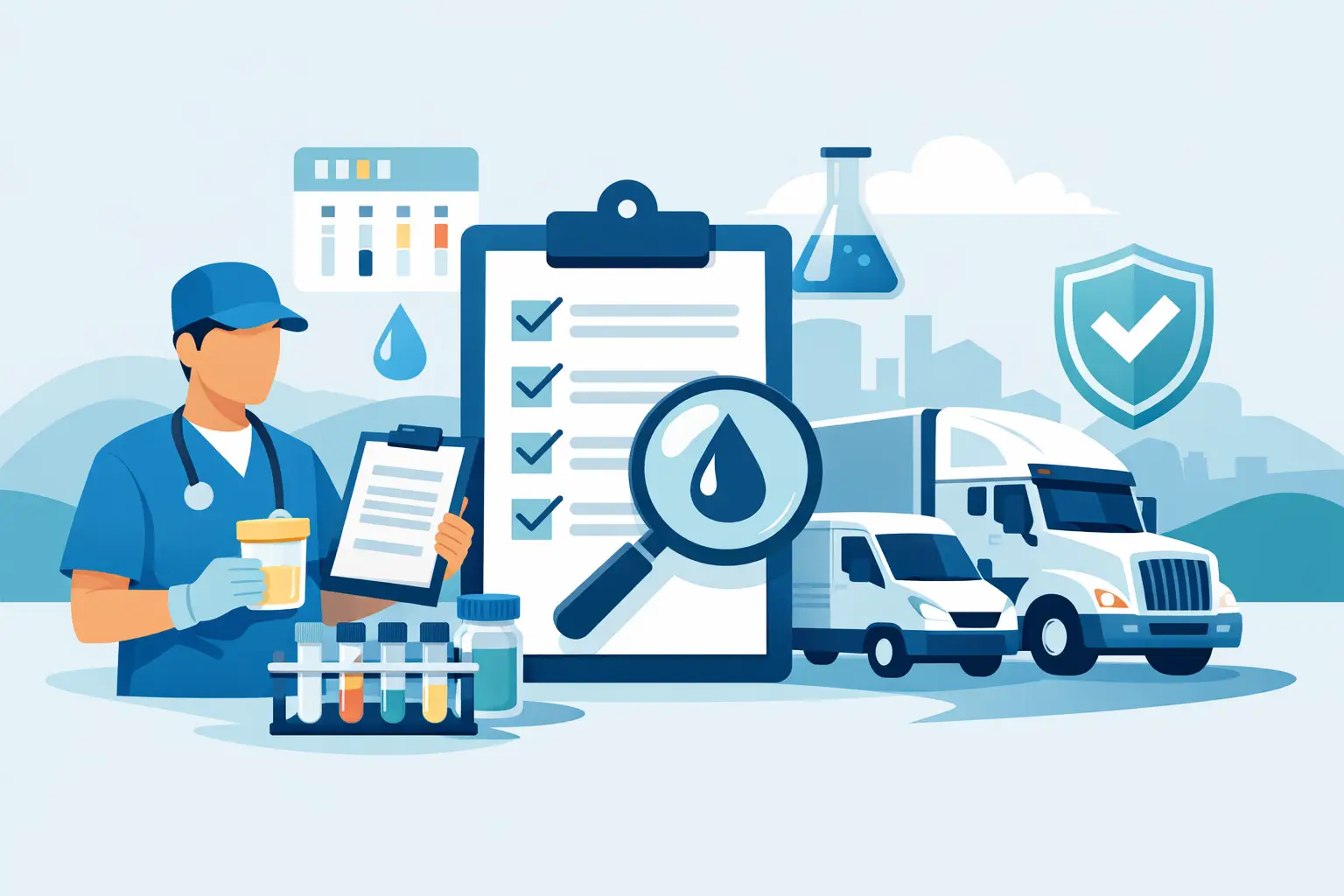
A driver reports an accident at 8:30 p.m. A supervisor needs to know whether testing is required, where to send the employee, how quickly the collection must occur, and what records to retain. DOT drug testing services are built for these moments. They give regulated employers a dependable process for meeting testing obligations without slowing down operations or leaving critical compliance decisions to guesswork.
For fleets, owner-operators, safety managers, and third-party administrators, the value is not simply access to a collection site. It is having a testing program that is correctly structured, actively managed, documented, and ready when a time-sensitive event occurs.
What DOT Drug Testing Services Should Cover
A DOT testing program must follow federal rules, but the practical work happens at the employer level. Someone must maintain the random testing pool, issue notices, coordinate collections, track results, protect confidential information, and preserve required records. When those tasks are divided among busy dispatchers, HR staff, and supervisors without a clear system, small administrative errors can become compliance exposures.
Effective DOT drug testing services bring the essential parts of that program together. This includes DOT-compliant urine drug testing, alcohol testing when required, collection coordination, laboratory and Medical Review Officer processes, reporting, and program administration. A qualified Consortium/Third-Party Administrator, or C/TPA, can handle much of this administration while the employer remains responsible for ensuring its program meets applicable requirements.
The right scope depends on the operation. A small owner-operator may need a compliant consortium pool, pre-employment testing, and help managing FMCSA Drug and Alcohol Clearinghouse responsibilities. A multi-terminal carrier may need separate pools, location-specific reporting, after-hours post-accident support, and supervisor training across several states. Both need accuracy, but their workflows are different.
Testing events must be handled correctly
DOT regulations identify the circumstances that trigger testing. Employers should have a written process for each event rather than relying on a supervisor’s memory during a stressful call. The core testing situations are:
- Pre-employment testing before a covered employee performs safety-sensitive duties
- Random testing through a scientifically valid, confidential selection process
- Post-accident testing when the applicable agency criteria are met
- Reasonable suspicion testing based on trained supervisor observations
- Return-to-duty and follow-up testing after a Substance Abuse Professional process
Drug and alcohol testing rules are related but not identical. For example, DOT rules do not require pre-employment alcohol testing, while alcohol testing may be required after certain accidents or when reasonable suspicion exists. Employers should avoid applying one testing rule to every situation. The applicable DOT agency, event type, employee role, and circumstances all matter.
Compliance Is More Than a Negative Result
A negative test result does not prove that an employer has a compliant program. Compliance also depends on whether the employee was in the correct pool, whether the test was ordered under the correct authority, whether the collection followed federal procedures, and whether records were maintained for the required period.
Random testing is a common pressure point. Selections must be made using a scientifically valid method, employees must have an equal chance of selection during each selection period, and testing rates must meet the minimum annual percentage required for the applicable DOT agency. An employer cannot simply test the same employees repeatedly because they are easiest to reach, nor can it allow selected employees to delay indefinitely for operational convenience.
Post-accident response requires the same discipline. The decision to test is based on the governing agency rules and accident facts, not on who appears responsible for the event. A clear after-hours process helps supervisors document the incident, determine whether testing is required, direct the employee to an appropriate collection site, and record timing if testing cannot be completed within regulatory timeframes.
Documentation is equally important. Employers need secure records for testing, training, chain-of-custody activity, refusals, completed follow-up plans, and other program actions. Records must be available when needed while still being handled as confidential employee information. A testing partner should make reporting understandable enough for daily management and detailed enough for an audit or investigation.
Choosing DOT Drug Testing Services for Your Operation
The best provider is not necessarily the one with the closest collection site or the lowest per-test price. Testing access matters, but so do response time, program knowledge, reporting quality, and the ability to support your operation when the normal workday has ended.
Start by confirming that the provider understands your specific DOT agency requirements. FMCSA, FAA, FTA, FRA, USCG, and PHMSA programs share foundational DOT procedures, but they can have different covered employees, random testing rates, reporting obligations, and operational concerns. A dedicated testing pool for the relevant agency can help prevent the confusion that comes from placing all regulated employees into one generic pool.
Collection coverage should also match where employees actually work. A national or cross-border operation needs more than a single local clinic. Access to a broad network gives dispatch and safety teams practical options when drivers are on the road, employees work remotely, or an incident occurs outside normal business hours. WOOTS supports employers through more than 20,000 collection sites across North America, combined with 24/7 online access and after-hours assistance.
Ask how the provider manages exceptions. A smooth program is easy when every employee is near a clinic, every test is scheduled in advance, and every result is negative. The real test of service is what happens when a selected driver is hundreds of miles from home, a donor needs an observed collection, a supervisor needs post-accident direction, or a result requires Medical Review Officer follow-up.
Reporting should support action
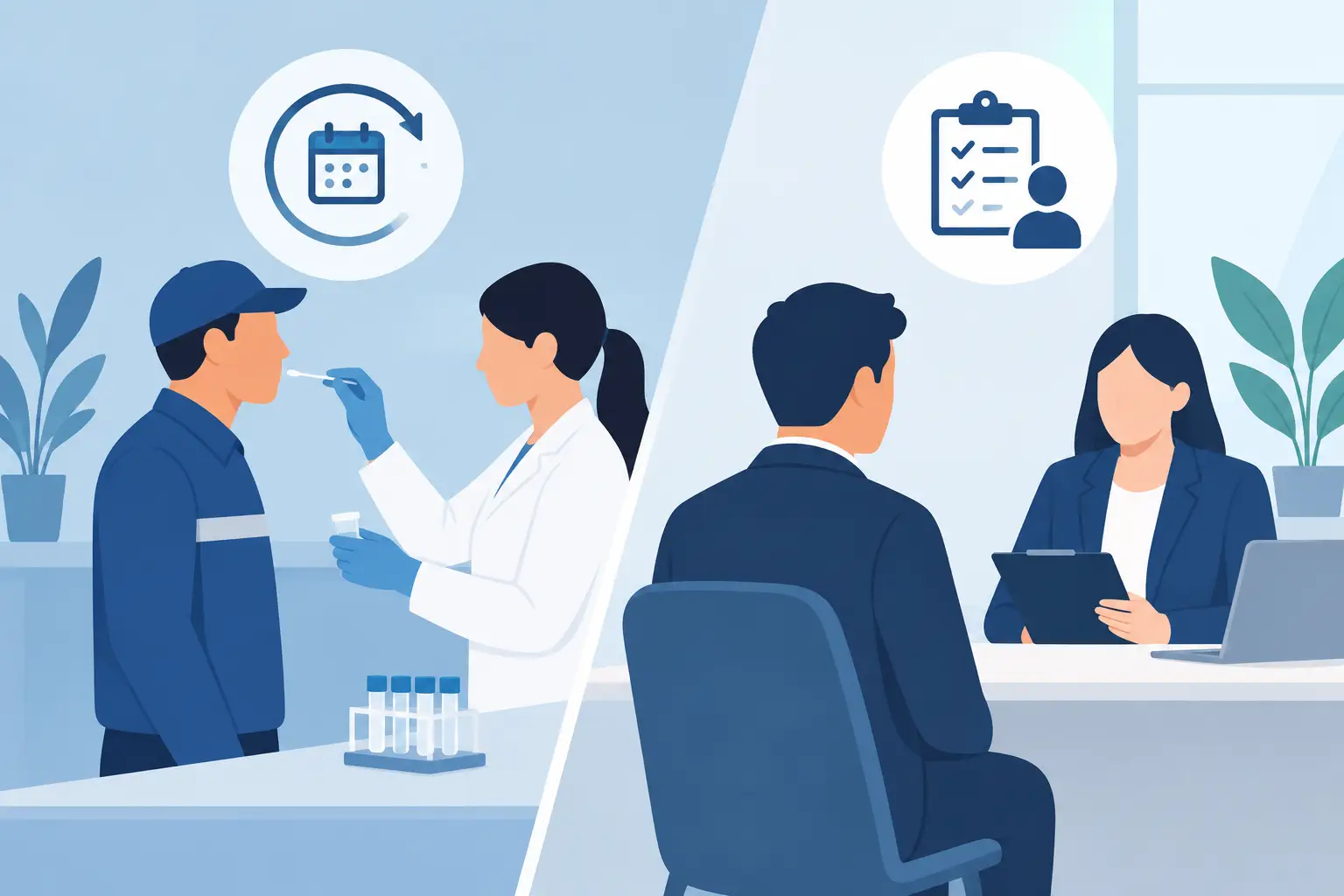
Compliance data is only useful when the right people can find and understand it. Fleet managers may need a quick view of upcoming random selections and pending tests. HR may need confidential result documentation. Compliance staff may need annual summary data, testing history, and proof that required actions were completed.
Look for reporting that can be tailored by company, location, DOT agency, employee group, or pool. Clear status reporting reduces unnecessary calls and helps employers identify missing pre-employment tests, overdue follow-up testing, or employees who should not be performing safety-sensitive functions. It also makes it easier to prepare records before an audit instead of reconstructing them afterward.
Clearinghouse and Return-to-Duty Support
For FMCSA-regulated employers, drug and alcohol program management also includes Clearinghouse responsibilities. Employers must register, designate a C/TPA where appropriate, conduct required queries, report applicable information, and ensure drivers with prohibited status do not perform safety-sensitive functions. These obligations should be part of the operating process, not a separate task addressed only when a driver is hired or a violation occurs.
A verified positive test, refusal, or other violation requires careful handling. The employee must be immediately removed from safety-sensitive duties and provided information about the Substance Abuse Professional process. The return-to-duty path is structured, and follow-up testing is not optional once the employee returns to covered work. Employers should never treat a negative return-to-duty test as the end of the process if a follow-up testing plan remains active.
This is where administrative coordination matters. Missed follow-up tests, incomplete Clearinghouse actions, or poor communication between HR, safety, and dispatch can create risk even after the initial violation has been addressed.
Train Supervisors Before They Need to Act
Supervisors are often the first people asked to act on a potential reasonable suspicion situation or post-accident event. They need training that is practical, role-specific, and clear about what they can and cannot do.
Reasonable suspicion decisions must be based on specific, contemporaneous observations concerning appearance, behavior, speech, or body odors. A supervisor should document facts, not make medical judgments or rely on rumors. Training should also cover how to remove an employee from safety-sensitive duties, protect privacy, arrange transportation when necessary, and contact program support promptly.
A strong testing program makes the correct action easier under pressure. It gives supervisors a current phone number, a defined escalation path, access to collection locations, and written instructions that fit the employer’s operations.
For employers with Canadian operations, keep non-DOT workplace testing separate from US DOT requirements. Canadian employer-driven programs may involve different policies, legal considerations, testing purposes, and reporting practices. One provider can coordinate both, but the programs should not be treated as interchangeable.
The practical goal is simple: build a program that works at 8:30 p.m. after an accident just as reliably as it does during a routine pre-employment test. When testing access, documentation, training, and program management are aligned, your team can act quickly, protect safety-sensitive work, and stay focused on the operation ahead.

Leave A Comment