
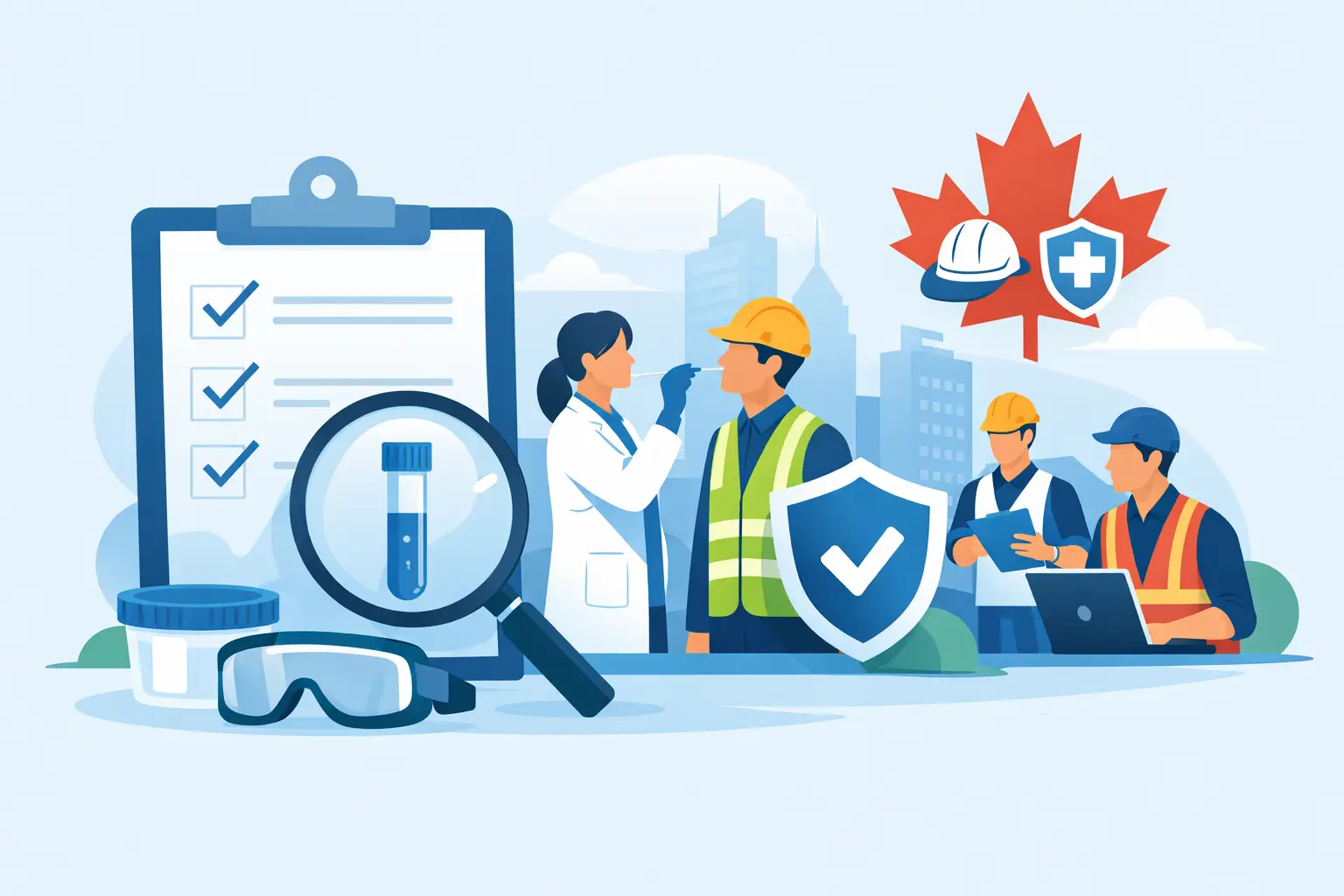
A testing decision can become a safety, privacy, and employee-relations issue within hours. A practical guide to Canadian employer testing starts with one core principle: employers need a defensible reason for testing, a policy that fits their workplace, and a process that treats every employee fairly.
For Canadian employers, drug and alcohol testing is not a one-size-fits-all program. Legal expectations vary by province, role, collective agreement, privacy requirements, and the facts of each incident. Employers with safety-sensitive operations must protect workers and the public while avoiding policies that are broader than the work environment can support.
Guide to Canadian Employer Testing: Start With the Role
The first question is not which test to order. It is whether the position is genuinely safety-sensitive.
A safety-sensitive employee performs work where impairment could create a serious risk of injury, environmental harm, property damage, or public safety consequences. Examples may include commercial drivers, equipment operators, rail personnel, workers in remote industrial settings, and employees responsible for critical infrastructure.
Job titles alone do not settle the question. Review the actual duties, level of supervision, access to hazardous equipment, and potential consequences of an impaired decision. A worker who occasionally drives a company vehicle may not carry the same risk profile as a driver whose primary function is operating a heavy vehicle on public roads.
This distinction matters because Canadian decision-makers commonly assess whether a testing requirement is connected to a legitimate workplace safety need. The greater the safety risk and the clearer the connection between testing and that risk, the stronger the employer’s position may be.
For unionized workplaces, also review the collective agreement before implementation. Testing provisions, grievance procedures, and just-cause standards can affect how a policy is introduced and enforced.
Build a Policy Before You Need a Test
A test ordered without a clear written policy is difficult to defend and even harder to administer consistently. Your policy should explain when testing may occur, who is covered, what method is used, how results are handled, and what happens after a result or refusal.
Keep the language direct. Employees and supervisors should be able to understand their responsibilities during a reasonable-cause event or after an incident without trying to interpret legal language under pressure.
A complete employer policy generally addresses pre-employment or pre-access testing where appropriate, reasonable-cause testing, post-incident testing, return-to-duty or follow-up testing, confidentiality, and the consequences of refusing a required test. It should also set out the process for removing an employee from safety-sensitive duties when there is an immediate safety concern.
Random testing requires particular care in Canada. It is not automatically permitted simply because an employer considers the workplace high risk. The legal support for random testing can depend on the jurisdiction, the safety-sensitive nature of the role, evidence of a workplace substance-use problem, applicable human rights principles, and workplace agreements. Do not import a U.S. testing policy into a Canadian operation without reviewing whether it is suitable for Canadian employees.
Know When Testing May Be Appropriate
Reasonable-cause testing is often the area where supervisor judgment matters most. Reasonable cause should be based on specific, current, observable facts, not rumor, personal conflict, or assumptions about an employee’s appearance or medical condition.
Observable indicators may include slurred speech, confusion, impaired coordination, unsafe behavior, an odor of alcohol, or a material change in behavior that creates a credible safety concern. One sign may not be enough. Supervisors should document what they directly observed, when it occurred, how it affected the work, and who else was present.
Post-incident testing also needs a defined threshold. An incident alone does not always prove that testing is necessary. The policy should identify the types of events that trigger review, such as a serious vehicle collision, near miss, equipment damage, injury, release of hazardous material, or deviation from a critical safety procedure. The employer should then determine whether there is a reasonable basis to believe impairment could have contributed.
In both situations, the immediate task is safety. Remove the employee from duties when needed, arrange safe transportation, preserve relevant records, and contact the testing provider. Avoid asking a supervisor to diagnose impairment. Their job is to observe, document, act on the policy, and escalate the situation promptly.
Select Methods That Match the Purpose
Drug and alcohol testing are not interchangeable. Alcohol testing generally addresses current impairment, while drug testing may detect the presence of a substance without establishing impairment at the time of work. That difference should shape both the policy language and the response to a result.
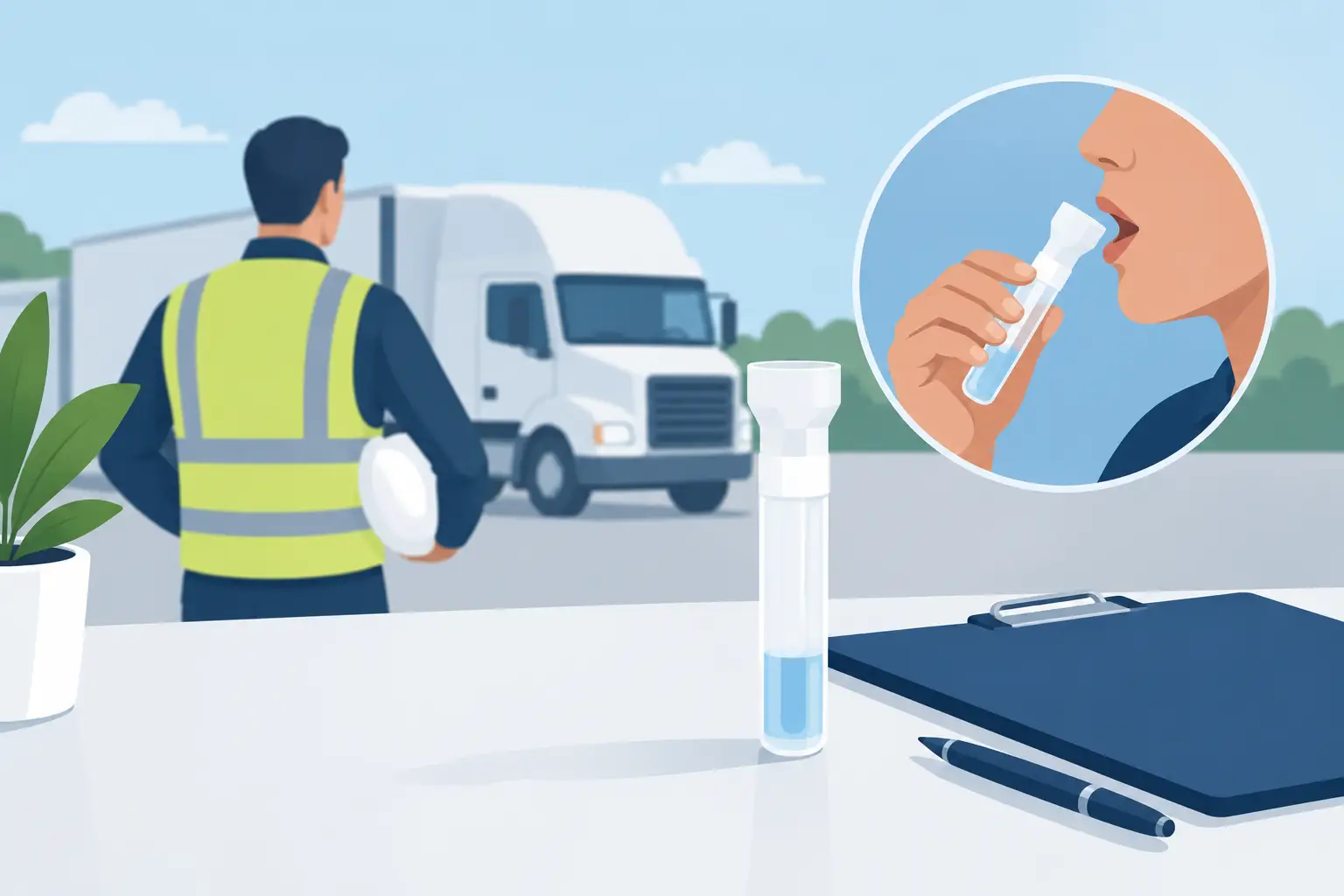
Testing methods should be selected based on the workplace risk, available collection access, required turnaround time, and legal context. Alcohol testing may involve breath testing. Drug testing may use urine or oral fluid collection, depending on the program design and the circumstances.
Employers should also establish a secure chain of custody, use qualified collection personnel, and define how laboratory findings are reviewed. A properly managed result-review process helps distinguish a verified result from an initial screening result and gives the employee an appropriate opportunity to provide legitimate medical information through the established process.
Speed matters after an accident or reasonable-cause concern, but speed should not mean shortcuts. A collection process that is poorly documented, delayed without explanation, or handled inconsistently can weaken the employer’s position and create unnecessary conflict.
Protect Privacy and Medical Information
Testing records are sensitive personal information. Access should be limited to the people who need it to manage workplace safety, accommodation, compliance, or employment decisions. Supervisors do not need broad access to medical details, and test information should not be stored in ordinary personnel files where unrelated managers can view it.
Your program should identify where records are kept, how long they are retained, who can request them, and how disclosures are controlled. The right approach may differ for federally regulated employers and provincially regulated employers, so privacy obligations should be reviewed against the organization’s location and industry.
Confidentiality does not mean ignoring a safety concern. It means sharing only the information necessary to make a safe and lawful decision. In many cases, the operational message can be limited to whether an employee is cleared for duty, temporarily removed from a role, or subject to a next step under the policy.
Plan for Positive Results, Refusals, and Accommodation
A policy should not end at the collection site. Employers need a documented response process for verified positive results, test refusals, adulterated or substituted specimens, and employees who disclose a substance-use concern before an event occurs.
Substance dependence may engage human rights and accommodation obligations. That does not require an employer to place an impaired employee in a safety-sensitive role. It does require an individualized assessment rather than an automatic response that overlooks medical circumstances, treatment needs, and available accommodations.
Separate the safety decision from the employment decision. First, determine whether the employee can safely perform current duties. Then assess what information is needed, whether accommodation is required, what treatment or support may be appropriate, and what conditions are necessary before a return to safety-sensitive work.
Consistency is essential. Similar circumstances should receive similar process, while still allowing for individual accommodation needs. Document each decision, the facts considered, communications with the employee, and the basis for any work restrictions.
Train Supervisors for the First 30 Minutes
Most testing program failures happen before a collection is scheduled. A supervisor who confronts an employee publicly, fails to document observations, lets the employee drive away, or waits until the next shift can create significant safety and legal exposure.
Supervisor training should focus on recognizing observable indicators, documenting facts rather than conclusions, handling reasonable-cause and post-incident events, protecting confidentiality, and arranging safe transportation. Training should also make clear that supervisors are not expected to determine what substance may be involved or make medical judgments.
A simple response checklist is useful when events occur after hours. It should identify the internal contact, testing provider, transportation steps, documentation requirements, and the decision-maker authorized to remove an employee from duty. Employers with 24/7 operations need a provider and internal escalation process that can respond when the incident happens, not only during business hours.
Keep the Program Operational
A compliant policy has little value if employees cannot access testing promptly or records cannot be produced when needed. Review collection coverage near your facilities, job sites, terminals, and common travel routes. Confirm after-hours procedures, reporting timelines, result escalation contacts, and secure record access before an urgent event occurs.
For organizations operating in both Canada and the United States, keep Canadian employer-driven programs distinct from U.S. DOT requirements. Some employees or functions may be subject to specific U.S. regulatory rules, while Canadian workplace testing decisions may require a different policy analysis. Clear program separation prevents accidental use of the wrong forms, testing triggers, or reporting process.
WOOTS helps employers coordinate workplace testing, collection access, reporting, and program support across North America. The right service model depends on your workforce, operating locations, safety risks, and the level of internal compliance support available.
A well-run testing program should give supervisors a clear next step, give employees a fair process, and give leadership reliable documentation when a safety decision must be made. Build those pieces before the next incident, and the response will be calmer, faster, and easier to defend.







Leave A Comment