
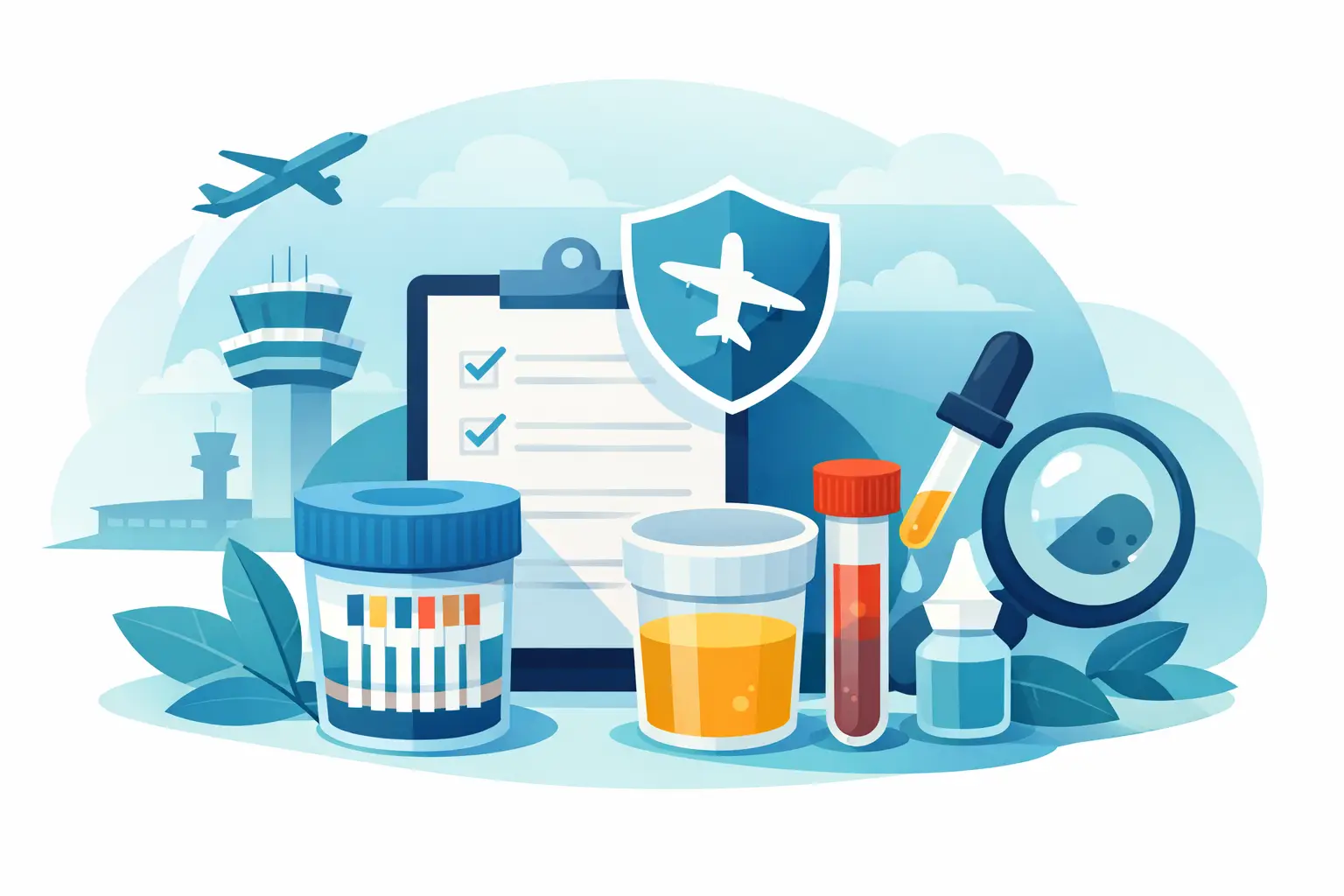
If you employ workers who perform safety-sensitive aviation functions, FAA drug testing program requirements are not an administrative side issue. They sit directly in the path of your operating authority, your audit exposure, and your day-to-day safety risk. A program that looks fine on paper can still fail if random selections are mishandled, records are incomplete, or supervisors do not know what to do when a reasonable suspicion event occurs.
For aviation employers, that is the real challenge. Compliance is not just about ordering tests. It is about building a program that works under pressure, holds up to review, and supports operations without creating delays or preventable violations.
Who must follow FAA drug testing program requirements
The FAA regulates drug and alcohol testing for employers covered under 14 CFR Part 120, with testing procedures generally tied to 49 CFR Part 40. In practical terms, this applies to employers with workers performing FAA-defined safety-sensitive duties. That can include air carriers, maintenance providers, repair stations, contractors, and other aviation organizations depending on the function being performed.
The key issue is not job title alone. It is whether the employee performs, either directly or by contract, a covered safety-sensitive function. That distinction matters because many employers assume only pilots or flight crews fall under the rule. In reality, FAA-covered employees may include aircraft maintenance personnel, flight attendants, flight dispatchers, ground security coordinators, aviation screening personnel, and others identified by regulation.
This is where programs often drift off course. An employer may classify the company correctly as FAA-regulated but miss individual covered roles, especially when duties change, staffing is seasonal, or contractors are involved. If a worker should have been in the testing pool and was not, that gap can become a serious compliance problem.
What the FAA drug testing program requirements actually include
At a minimum, an FAA-compliant drug and alcohol testing program includes policy implementation, employee coverage determinations, required testing events, reporting procedures, recordkeeping, and training. Employers also need to make sure their testing process follows federal collection and laboratory rules, not just a general workplace testing standard.
Drug testing under the FAA program generally covers marijuana, cocaine, amphetamines, opioids, and PCP through DOT protocols. Alcohol testing is separate and comes with its own event triggers, timing standards, and decision points. These are not interchangeable programs, even though employers often manage them together.
A compliant program usually needs to account for pre-employment testing, random testing, reasonable suspicion or reasonable cause testing, post-accident testing, return-to-duty testing, and follow-up testing where applicable. Not every event applies the same way in every circumstance, but the employer must know when each trigger becomes mandatory.
That is why a generic testing policy is rarely enough. FAA employers need a program built around aviation rules, agency definitions, and documented procedures that managers can actually follow during a live event.
Pre-employment testing
Before an employee first performs a covered safety-sensitive function, a DOT drug test is required with a verified negative result. This is a hard stop. If the person starts covered work before that result is in place, the employer has already created exposure.
Alcohol testing is different. The FAA does not require a pre-employment alcohol test in the same across-the-board way that drug testing is required, although employers must still understand the circumstances where alcohol rules apply. Confusing drug and alcohol triggers is a common administrative error.
For employers using transfers, rehires, or contractors, timing matters. A worker moving into a covered role must meet the same testing threshold before performing that function. Internal movement does not erase the requirement.
Random testing
Random testing is where many FAA programs either stay healthy or start to break down. Covered employees must be placed in a scientifically valid random selection pool, and selections must be made throughout the year at the required annual rate. Those rates can change, so employers need to monitor current FAA requirements rather than rely on an old schedule.
Random means every covered employee in the pool has an equal chance of selection each time. It does not mean rotating names manually or testing only when convenient. If supervisors delay notifications, substitute selected employees, or skip tests because operations are busy, the integrity of the program is compromised.
For aviation employers with multiple locations or mixed DOT agencies, pool management deserves close attention. Combining or separating pools can be allowed in some circumstances, but it has to be done correctly. Poor pool design can create uneven selection patterns and audit issues.
Reasonable suspicion and reasonable cause
FAA-covered drug testing can be triggered by reasonable cause, and alcohol testing by reasonable suspicion, based on trained observations concerning appearance, behavior, speech, or body odors. The wording matters less in day-to-day management than the practical requirement behind it: supervisors must know what signs to look for and what steps to take next.
A policy alone does not solve this. If the trained decision-maker is unavailable, if observations are not documented, or if the employee is allowed to continue safety-sensitive work while management debates what to do, the employer loses control of the event.
Training is one of the most overlooked parts of compliance. Supervisors do not need legal essays. They need clear guidance, current training records, and a response process that works after hours and under operational pressure.
Post-accident testing
Post-accident testing under FAA rules is fact-specific. It depends on the event, the function performed, and whether the employee’s performance either contributed to the accident or cannot be completely discounted as a contributing factor. This is not a test decision employers should guess on in the moment.
The trade-off is speed versus accuracy. Move too slowly and you can miss required testing windows. Move too casually and you can order tests that are not supported by the rule or fail to document the basis properly. A written decision process and immediate access to compliance support can make the difference.
Return-to-duty and follow-up testing
If an employee violates DOT drug and alcohol testing rules, the path back to safety-sensitive work is structured. The employee must be evaluated by a Substance Abuse Professional, complete the required process, and pass a return-to-duty test before resuming covered duties. Follow-up testing then continues according to the SAP’s plan.
This is another area where employers get into trouble by acting informally. An employee cannot simply serve a suspension, produce a negative test later, and return to covered work. The return-to-duty process has required steps, and every one of them needs documentation.
Employer responsibilities beyond ordering tests
The most effective FAA programs are not built around test events alone. They are built around documented control. Employers need a current written policy, a clear roster of covered employees, proper consortium or pool administration where applicable, secure recordkeeping, and a reliable process for reporting and response.
Records matter because audits do not evaluate intent. They evaluate proof. If random selections were made correctly but the records are incomplete, the employer may still have difficulty demonstrating compliance. The same applies to training logs, chain of custody records, annual summaries, and documentation of testing decisions.
Contractor oversight also deserves attention. If your operation relies on third parties for maintenance or other covered functions, you still need clarity on who is responsible for testing compliance. Assumptions create gaps quickly. The contract may assign obligations, but the FAA will still expect the covered work to be handled within the rules.
Where FAA programs most often fail
Most FAA testing failures are not dramatic. They are administrative, preventable, and cumulative. A new employee starts one shift too early. A random selection sits unaddressed for days. A supervisor never completes required training. A post-accident event is handled by someone unfamiliar with the FAA standard. On their own, these may look small. In an audit or enforcement review, they rarely stay small.
Another common issue is using a general occupational testing vendor without strong DOT aviation program management. Collection access is only one part of the equation. The employer also needs agency-specific reporting, current forms, defensible random management, and support when timing is tight.
That is why many aviation employers use a C/TPA or compliance partner to manage testing logistics, records, and response workflows. The right support model reduces administrative strain and helps employers avoid the slow drift that turns a compliant program into a reactive one.
Building a program that holds up
FAA compliance works best when the program is simple to operate, not just technically correct. Covered employees should be identified clearly. Supervisors should know exactly who to call and what to document. Random testing should run on schedule without manual workarounds. After-hours incidents should have a response path that does not depend on one person checking email.
For some employers, that means bringing structure to an existing internal program. For others, it means outsourcing administration so safety managers can stay focused on operations. WOOTS supports FAA-regulated employers with practical testing management, reporting, and program coordination designed to hold up in real operating conditions, not just in theory.
The best time to fix an FAA testing program is before a missed random, a post-accident event, or an audit forces the issue. If your current process depends too much on memory, spreadsheets, or one experienced manager keeping everything together, it is time to tighten it now.






Leave A Comment