

A testing program can fail long before a specimen is collected. It can fail when a supervisor makes a reasonable-suspicion decision without training, when a policy conflicts with state law, or when a post-accident test is ordered outside the required process. For employers, a guide to employer drug testing laws must start with one practical fact: the rules depend on your workforce, your location, and whether federal transportation regulations apply.
A compliant program is not a single policy pulled from a template. It is a documented process for deciding who is tested, when testing occurs, how results are handled, and what happens next. The right approach protects public safety while treating employees fairly and limiting unnecessary legal exposure.
Start With the Rules That Apply to Your Workforce
For U.S. employers, the first question is whether any employees perform DOT safety-sensitive functions. DOT-regulated employers must follow the applicable agency rules and the DOT drug and alcohol testing procedures in 49 CFR Part 40. Those requirements are not optional, and an employer cannot substitute a general workplace policy for a DOT-compliant program.
DOT testing rules apply differently across FMCSA, FAA, FTA, FRA, PHMSA, and USCG programs. Each agency defines which positions are safety-sensitive and may set program-specific requirements, including random testing rates and post-accident testing triggers. A fleet may have drivers subject to FMCSA rules, while other employees in the same organization are not DOT-covered. Those groups should not be managed as though they are identical.
Non-DOT testing is more dependent on state law, local requirements, collective bargaining agreements, and company policy. Many states permit some form of pre-employment, reasonable-suspicion, post-accident, return-to-duty, or random testing. The conditions matter. Some states require advance written notice, a compliant testing method, specific laboratory standards, or a clear employee appeal process.
Canadian employers face a different legal framework. Workplace drug and alcohol testing can engage privacy, human rights, labor, and occupational health and safety obligations. Testing is often more defensible for safety-sensitive roles when it is connected to a legitimate workplace safety purpose, supported by a clear policy, and conducted in a proportionate manner. A U.S.-style random testing policy should never be assumed to be appropriate for a Canadian workforce without jurisdiction-specific review.
Guide to Employer Drug Testing Laws: The Core Testing Types
Every testing category should be defined in writing before it is used. A policy that simply says the company may test “when necessary” leaves too much room for inconsistent decisions.
Pre-employment testing is commonly used for applicants entering designated positions. Employers should make clear whether a negative test is a condition of employment and ensure the same requirement is applied consistently to similarly situated candidates. For DOT roles, the employer must also complete the required pre-employment process before allowing an individual to perform safety-sensitive duties.
Random testing is required in many DOT programs and must be genuinely random. Selection cannot be based on performance, appearance, attendance, shift, or a supervisor’s perception of risk. A properly managed random pool provides each covered employee an equal chance of selection during each draw and maintains records that demonstrate the process was unbiased.
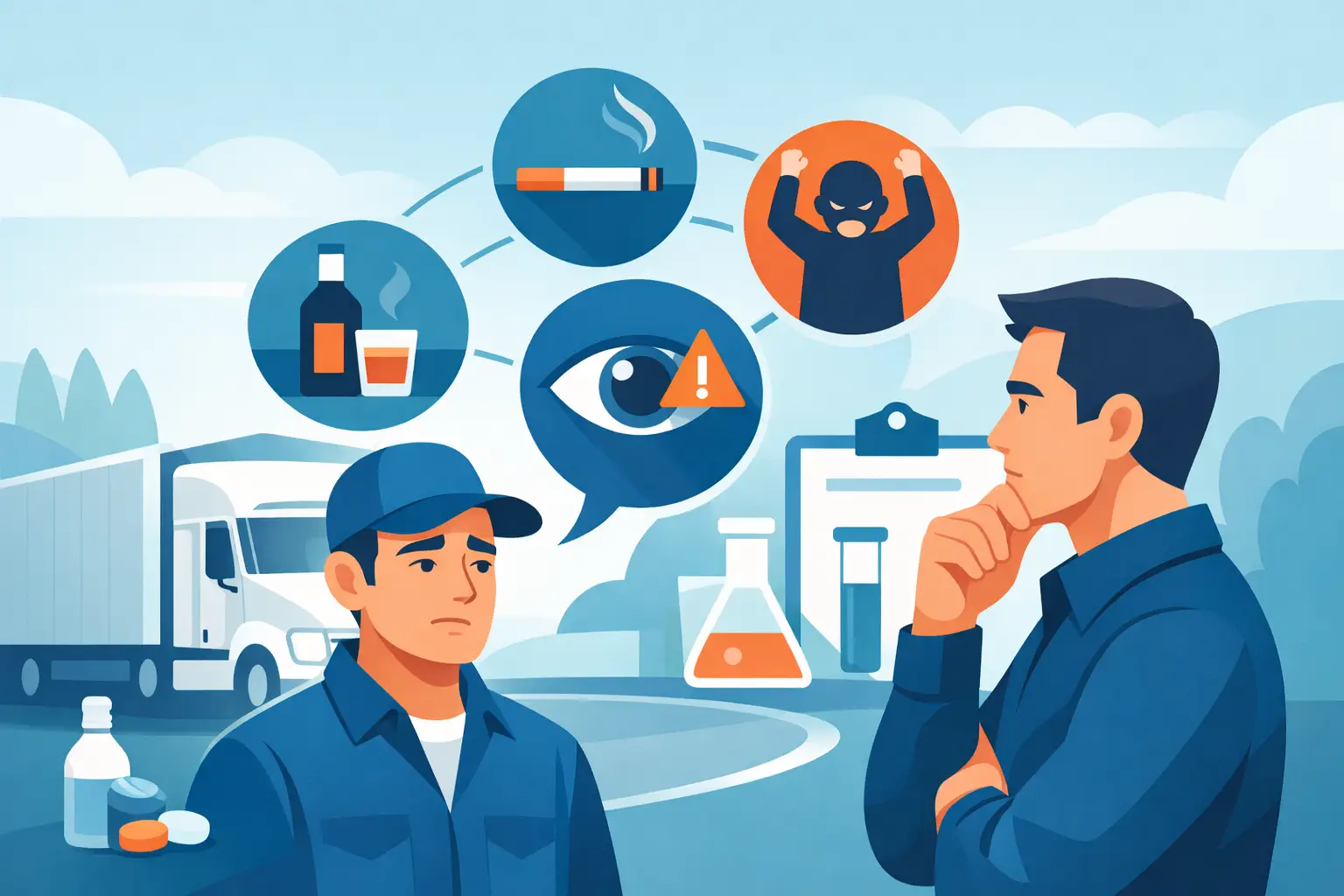
Reasonable-suspicion testing is based on specific, contemporaneous observations of appearance, behavior, speech, or body odors. It is not a tool for addressing personality conflicts, generalized concerns, or rumors. Supervisors should document what they observed, when they observed it, and who made the decision. DOT supervisors require training on the physical, behavioral, speech, and performance indicators of probable drug use and alcohol misuse.
Post-accident testing requires careful handling because the trigger is not the same in every program. For DOT-covered employees, the applicable agency rules determine when testing is required. Employers should focus first on medical care, emergency response, and required reporting. Testing should be arranged as soon as practicable, but a test must never delay necessary medical attention or interfere with law enforcement.
Return-to-duty and follow-up testing apply after a DOT employee has violated drug and alcohol testing rules and completed the required SAP process. These tests are distinct from a new-hire screen or a standard random selection. The follow-up plan is set by the Substance Abuse Professional, and the employer must carry it out as directed.
Written Policies Must Match Actual Practice
A policy is only useful when managers, supervisors, and employees can follow it during a real event. It should identify covered positions, testing circumstances, substances tested, consequences, confidentiality protections, and contact procedures for after-hours incidents. It should also explain what employees must do when they are notified of a random test or directed to testing after an accident.
Avoid promising more than the organization can administer. For example, if a policy says post-accident collection is available at any hour, the employer needs a dependable process for locating a qualified collection site and arranging the required testing. If a policy states that every reasonable-suspicion decision will involve two trained supervisors, the employer needs a practical plan for remote sites and overnight operations.
Consistency matters, but it does not mean ignoring legitimate differences between DOT and non-DOT programs. Keep procedures separate where the legal rules differ. A DOT positive test has federally prescribed next steps, including immediate removal from safety-sensitive duties. A non-DOT result may require a response based on state law, company policy, and the circumstances of the role.
Privacy, Medical Review, and Cannabis Require Careful Decisions
Drug testing results are sensitive employee information. Access should be limited to people with a legitimate business need to know, such as designated HR, safety, compliance, or management personnel. Store results separately from ordinary personnel records when appropriate, and establish retention procedures that meet applicable DOT and employment law requirements.
For DOT testing, laboratory results are reviewed by a Medical Review Officer. The MRO provides the employee an opportunity to discuss legitimate medical explanations before verifying a result. Employers should not treat a laboratory report as a final DOT result until the MRO process is complete.
Cannabis is a frequent source of confusion. State legalization does not change the DOT prohibition on marijuana use by safety-sensitive employees. A medical marijuana card also does not excuse a DOT-covered employee from a verified positive marijuana test.
Outside DOT, the analysis may be more complicated. Several states provide employment protections connected to lawful off-duty cannabis use or medical marijuana status, while still allowing action based on workplace impairment or use during working time. Employers should avoid assuming that a positive non-DOT test alone always supports the same employment decision in every state. Review the role, the policy, the state law, and any contractual obligations before acting.
Build an Operational Response Plan
Testing compliance depends on what happens in the first hour after an event. Employers should identify who has authority to order testing, who contacts the collection provider, how employees are transported when needed, and where documentation is stored. Supervisors should know not to allow an employee suspected of impairment to continue safety-sensitive work or drive themselves to a collection site.
A workable plan should cover at least these operational points:
- A current list of DOT-covered and non-DOT-covered positions.
- A verified after-hours contact process for post-accident and reasonable-suspicion events.
- Supervisor training schedules and documentation of completed training.
- Random pool administration that is separated by applicable DOT agency when required.
- Clear result-reporting contacts and confidentiality controls.
- Record retention procedures, including DOT-specific documentation requirements.
For DOT employers, Clearinghouse responsibilities are another essential part of the program. FMCSA-regulated employers must complete required queries and report applicable violations within the required timeframes. A test result is only one part of compliance. Eligibility checks, reporting, removal from duty, and return-to-duty tracking must also be managed correctly.
Use Training and Documentation to Reduce Risk
Most testing disputes are not caused by the collection itself. They arise because the employer cannot show why a test was ordered, whether the employee was covered by the policy, or whether the procedure was applied consistently. Timely documentation provides the record needed to support safety and compliance decisions.
Train supervisors before an incident occurs. They need to recognize signs of possible impairment, remove an employee from safety-sensitive duties when appropriate, document observations objectively, and contact the right support person. They should not attempt to diagnose substance use or argue with an employee about the result.
Employers also benefit from periodic program reviews. Changes in operations, acquisitions, new locations, updated state laws, and employee role changes can all create gaps in an existing program. Reviewing pools, policies, training records, collection-site access, and reporting workflows helps identify problems before an audit, accident, or contested test exposes them.
The strongest drug testing program is one your team can execute calmly at 2:00 a.m., not just describe during a policy review. Clear rules, trained supervisors, accurate records, and responsive testing support give employers a practical way to protect people, meet their obligations, and keep operations moving when a testing event occurs.







Leave A Comment