
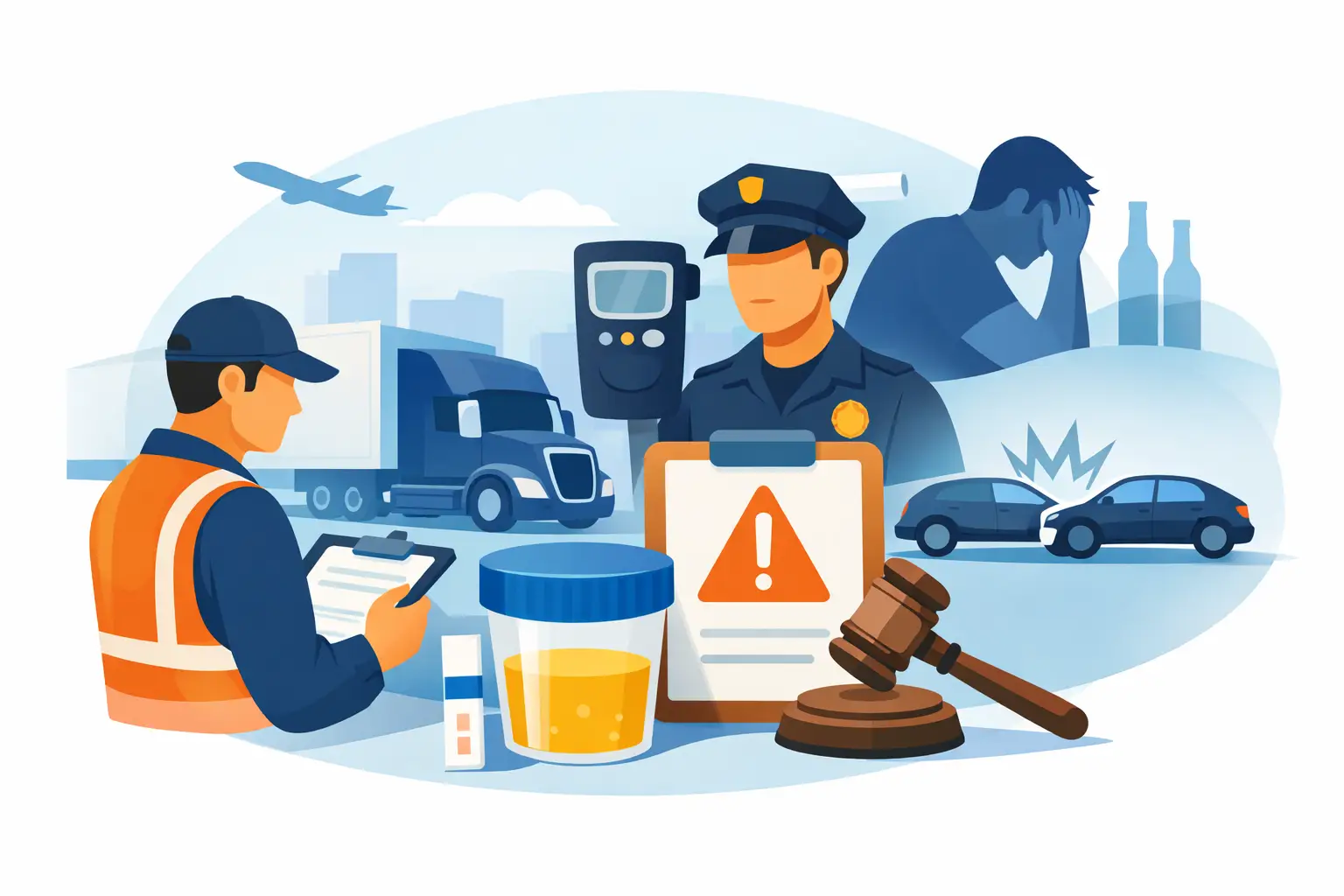
A DOT return-to-duty process starts when a safety-sensitive employee has a DOT drug and alcohol program violation. For employers asking what triggers DOT return to duty testing, the short answer is a verified violation that removes an employee from safety-sensitive work and requires completion of the SAP process before they can be considered for return.
This is not a routine test or a tool to clear an employee after time away from work. Return-to-duty testing is a regulated step in a specific rehabilitation and evaluation process. Employers must manage it carefully because placing an employee back into a safety-sensitive role too early can create serious compliance and safety exposure.
What Triggers DOT Return to Duty Testing?
A return-to-duty test is triggered when an employee violates DOT drug and alcohol testing regulations and then completes the required Substance Abuse Professional, or SAP, process. The violation may occur during pre-employment, random, post-accident, reasonable suspicion, return-to-duty, or follow-up testing.
The most common triggers include a verified positive DOT drug test, an alcohol confirmation test result of 0.04 or greater, a refusal to test, or a test reported as adulterated or substituted. Each of these is treated as a DOT violation.
A refusal can take several forms. It may involve failing to appear for a required test, leaving the collection site before the process is complete, failing to provide a sufficient specimen without an acceptable medical explanation, interfering with the testing process, or declining a required directly observed collection. A refusal carries the same removal and return-to-duty requirements as a positive test.
For FMCSA-regulated drivers, the violation must also be reported to the FMCSA Drug and Alcohol Clearinghouse. Employers must verify that the driver has completed the required return-to-duty steps before allowing the driver to perform safety-sensitive functions again.
A 0.02 Alcohol Result Does Not Always Trigger Return to Duty
One distinction matters for supervisors and program administrators: not every alcohol result that requires temporary removal triggers the full DOT return-to-duty process.
An alcohol confirmation result of 0.02 through 0.039 requires the employee to be removed from safety-sensitive duties for the required waiting period. Under DOT rules, the employee cannot return until at least 24 hours have passed, or until a subsequent alcohol test shows a result below 0.02, depending on the applicable circumstances and employer procedures.
However, a result in this range is not a DOT violation under Part 40 and does not, by itself, require SAP evaluation, return-to-duty testing, or follow-up testing. An employer may have a more restrictive company policy or collective bargaining requirement, but that policy should be clearly separated from federal DOT return-to-duty requirements.
What Happens After a DOT Violation?
Once an employer receives notice of a DOT violation, the employee must be immediately removed from all DOT safety-sensitive duties. This requirement applies even if the employee disputes the outcome, plans to seek treatment independently, or has an otherwise strong employment record.
The employer must provide the employee with a list of qualified SAPs. The employer does not select the treatment plan or direct the SAP’s clinical decisions. The SAP independently evaluates the employee and recommends the education and/or treatment needed to address the violation.
The return-to-duty process generally follows this sequence:
- The employee is removed from safety-sensitive duties after the violation.
- The employee completes an initial SAP evaluation.
- The employee completes the education or treatment program recommended by the SAP.
- The SAP conducts a follow-up evaluation and determines whether the employee has successfully complied with recommendations.
- The SAP sends a written compliance report to the employer or designated service agent.
- The employer schedules the DOT return-to-duty test.
- After a passing result, the employer decides whether to return the employee to a safety-sensitive role.
The employer’s decision to reinstate the employee is separate from the DOT testing requirement. DOT regulations do not require an employer to retain or rehire an employee after a violation. They do require that, if the employee is returned to a DOT safety-sensitive function, the employee has completed the required process and passed the return-to-duty test first.
When Can the Employer Schedule the Return-to-Duty Test?
The employer can schedule the test only after receiving the SAP’s written report confirming successful compliance with the recommended education or treatment. The employee cannot simply provide a treatment completion certificate and request testing. The SAP must complete the follow-up evaluation and issue the appropriate report.
The return-to-duty test must be conducted under DOT procedures and must address the substance involved in the violation. If the violation involved drugs, the employee must receive a DOT drug test with a negative result. If it involved alcohol, the employee must receive a DOT alcohol test with a result below 0.02. If the violation involved both, both tests are required.
For a DOT drug return-to-duty test, collection must be directly observed. This is a required safeguard, not an employer option. Employers should confirm that the collection site understands the test type and follows the proper DOT procedures before the employee arrives.
A negative return-to-duty test does not close the case. It only allows the employer to consider the employee eligible to resume safety-sensitive duties, subject to the employer’s own employment decision and agency-specific requirements.
Return-to-Duty Testing Is Different From Follow-Up Testing
Return-to-duty and follow-up testing are often confused because both occur after a DOT violation. They serve different purposes.
The return-to-duty test is a single test that occurs after the SAP has determined the employee has successfully complied with the recommended program. It happens before the employee resumes safety-sensitive work.
Follow-up testing begins after the employee returns to safety-sensitive duties. The SAP establishes the follow-up testing plan, including the number and timing of tests. The plan must include at least six unannounced follow-up tests during the first 12 months after the employee returns to duty. The SAP may prescribe testing for up to 60 months.
Employers cannot substitute their own follow-up schedule for the SAP’s plan, reduce the required number of tests, or tell the employee when a follow-up test will occur. Follow-up testing must be unannounced and completed in addition to the employer’s regular random testing program.
Common Employer Errors to Avoid
The most frequent compliance issue is treating a negative test as proof that an employee may return to duty. A negative test alone does not satisfy DOT requirements after a violation. The SAP process, written compliance report, required return-to-duty test, and employer documentation must all be in place.
Another common error is allowing an employee to perform even limited safety-sensitive tasks while waiting for SAP evaluation or test results. Driving a commercial motor vehicle, dispatching duties that meet a safety-sensitive definition, aircraft maintenance, rail operations, and other covered functions cannot resume until the process is complete.
Employers also need to distinguish DOT testing from company-authority testing. A company may require additional non-DOT testing under its own policy, but those tests do not replace DOT tests or alter DOT procedures. Keeping the records, forms, and reporting pathways separate helps prevent avoidable administrative mistakes.
For FMCSA employers, Clearinghouse records need close attention. A driver’s status will not move from prohibited to not prohibited until the required SAP and return-to-duty steps are reported. A completed test without the required Clearinghouse updates can still leave the driver prohibited from operating a commercial motor vehicle.
Build a Process Before a Violation Occurs
Return-to-duty cases move more smoothly when responsibilities are assigned before a problem arises. Supervisors should know how to remove an employee from duty, program administrators should know how to arrange testing and SAP referrals, and designated staff should know which records must be retained.
A qualified C/TPA can help employers coordinate collections, maintain documentation, manage Clearinghouse activity, and keep follow-up testing on schedule. The value is not just administrative convenience. Consistent process control reduces the risk of an employee being returned too soon or a required test being missed.
When a DOT violation occurs, act promptly, document each step, and do not rely on assumptions. The right return-to-duty process protects the employee’s path back to compliance while protecting the employer, the public, and the operation that depends on safe performance.







Leave A Comment