
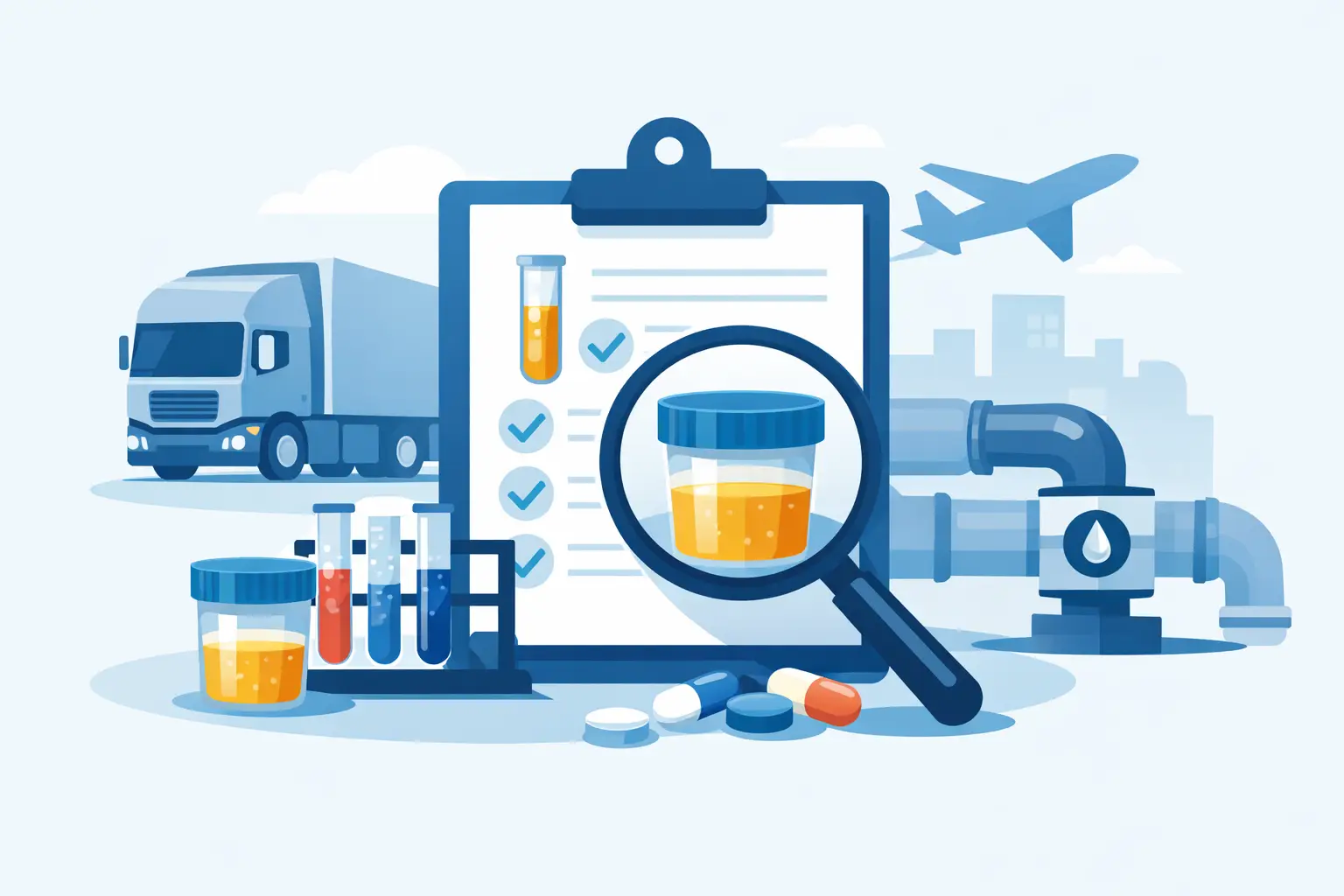
A PHMSA drug testing program is not something you set up once and revisit when an audit letter arrives. For pipeline operators and contractors with covered safety-sensitive employees, the program has to work every day – in hiring, random selections, post-accident decisions, return-to-duty steps, and recordkeeping.
That daily execution is where many employers run into trouble. The rule itself is not vague, but the real challenge is applying DOT drug and alcohol testing requirements consistently across crews, locations, supervisors, and service vendors. If one part of the process breaks, the compliance issue rarely stays isolated.
What the PHMSA drug testing program covers
PHMSA regulates drug and alcohol testing for employees who perform covered pipeline safety-sensitive functions. The agency rules are found in 49 CFR Part 199, and they work alongside the DOT-wide procedures in 49 CFR Part 40. Part 199 tells employers when testing is required. Part 40 tells employers how the testing process must be carried out.
That distinction matters. A company can understand when to test and still mishandle collections, documentation, laboratory reporting, or return-to-duty procedures if Part 40 requirements are not followed. In practice, compliance depends on both.
Covered employees generally include individuals who perform operations, maintenance, or emergency-response functions on a pipeline or liquefied natural gas facility that are regulated under the pipeline safety rules. This can include employees of the operator as well as contractor personnel, depending on the work being performed and the operator’s responsibilities.
For employers, the first job is not ordering tests. It is defining who is covered and why. If your roster is incomplete or outdated, every downstream part of the program becomes unreliable.
Who must be included in a PHMSA drug testing program
The answer is not simply “all field employees.” Coverage depends on whether a worker performs a covered function under the regulation. Some employees clearly belong in the pool, such as pipeline operations and maintenance staff performing regulated safety-sensitive work. Other cases require more care.
Supervisors, project managers, mechanics, temporary workers, and contractors may move in and out of covered duties. That creates a common compliance risk. Employers sometimes classify by job title instead of actual function. Auditors and investigators do not look only at titles. They look at the work being performed.
This is especially important for companies using contractors or mixed workforces across multiple sites. If a contractor performs covered functions, the operator still needs confidence that testing obligations are being met. The paperwork trail should show who is in the testing program, who manages selections, and who is responsible for records.
Required PHMSA drug and alcohol tests
A PHMSA drug testing program includes the standard DOT testing events: pre-employment, random, reasonable cause for drugs, post-accident, return-to-duty, and follow-up. Alcohol testing is also required in certain situations, including reasonable suspicion, post-accident, return-to-duty, and follow-up.
Pre-employment drug testing must be completed before a covered employee performs a safety-sensitive function. That sounds simple, but timing errors are common during hiring surges, contractor onboarding, or emergency staffing situations. If an employee starts covered work before a verified negative test result is received, the problem cannot be fixed after the fact.
Random testing has its own pressure points. Selections must be scientifically valid, spread reasonably throughout the year, and completed at the required annual rate. Delays, substitutions, or informal handling of missed tests can create patterns that regulators view as noncompliant.
Post-accident testing is where employers often feel the most uncertainty. The rule does not mean every incident automatically triggers testing, but it also does not leave room for casual judgment. Supervisors need clear decision support, documented criteria, and fast access to collections. A delayed response after an event can affect both compliance and defensibility.
Return-to-duty and follow-up testing are equally sensitive. Once a covered employee violates the drug and alcohol rules, the process is no longer just an employer decision. The employee must be evaluated by a Substance Abuse Professional, complete the required steps, and test as directed before returning to covered duties. Follow-up testing then continues under the SAP’s plan. Missing one required step can expose the employer to serious risk.
Where PHMSA compliance programs break down
Most PHMSA programs do not fail because employers ignore the rules completely. Problems usually come from inconsistent administration.
One weak spot is supervisor readiness. A supervisor may understand that reasonable cause or post-accident testing exists, but that is different from knowing when the rule applies, what to document, and how to act quickly. Training is not just a box to check. It affects real-time decisions under pressure.
Another issue is fragmented vendor management. When different providers handle collections, MRO services, random selections, policy support, and recordkeeping, gaps appear. One vendor may assume another is maintaining records or tracking completion rates. Regulators will not accept that confusion as an excuse.
Record retention is another area where small mistakes become large problems. If your records are incomplete, disorganized, or spread across internal folders and outside providers, audit response becomes slow and unreliable. A compliant program should allow you to confirm coverage, testing status, and required documents without reconstructing the file from scratch.
There is also the challenge of workforce change. Employers add new contractors, expand service territory, open locations, or reassign duties. If the testing program is not updated with those operational changes, the random pool and covered employee list drift out of alignment.
How to manage the PHMSA drug testing program effectively
The practical approach is to treat the program as an operating system, not an HR task. Start with a current determination of covered positions and covered functions. Then align policy language, testing pools, supervisor training, and vendor responsibilities to that structure.
The next priority is process control. Pre-employment clearance should be tied directly to onboarding. Random testing should be managed through documented selection and completion procedures. Post-accident and reasonable cause decisions should be supported by written internal steps, contact points, and after-hours collection access.
For many employers, this is where outside administration becomes useful. A well-managed consortium or third-party administrator can help coordinate selections, reporting, records, and service access across regions. That does not remove the operator’s responsibility, but it can reduce administrative drift and response delays.
It also helps to review your program against actual field conditions. Can a supervisor get a test arranged at night or on a weekend? Can you document why a post-accident test was or was not performed? Can you show that a contractor performing covered work is included in a compliant structure? If the answer depends on one person being available, the process is too fragile.
Policy, documentation, and audit readiness
A PHMSA program should be supported by a clear DOT-compliant policy, but policy alone is not enough. Regulators expect the program to operate as written. If the policy says one thing and the records show another, the records will carry more weight.
Documentation should be organized around the questions an auditor is likely to ask. Who is covered? What testing events occurred? Were rates met? Were positive tests managed correctly? Were return-to-duty and follow-up requirements completed under Part 40? Can the company produce records quickly?
This is where consistency matters more than volume. Employers do not need extra paperwork for its own sake. They need accurate paperwork that supports the decisions they made.
For multi-state operators and contractor-heavy environments, centralized reporting can make a major difference. It allows compliance managers to spot missed tests, delayed collections, outdated rosters, or incomplete files before those issues become enforcement problems. WOOTS supports employers with that kind of hands-on administration when internal teams need added control and speed.
Why the details matter
The PHMSA drug testing program exists because pipeline operations leave little room for preventable risk. A missed pre-employment test, a mishandled post-accident response, or an incomplete random pool is not just a paperwork issue. It can affect safety outcomes, regulatory exposure, and your ability to defend the program when questions arise.
The right standard is not whether your testing program works most of the time. It is whether it works under routine operations, urgent incidents, staffing changes, and close regulatory review. That is the difference between having a policy on file and having a program you can rely on when it counts.



Leave A Comment