
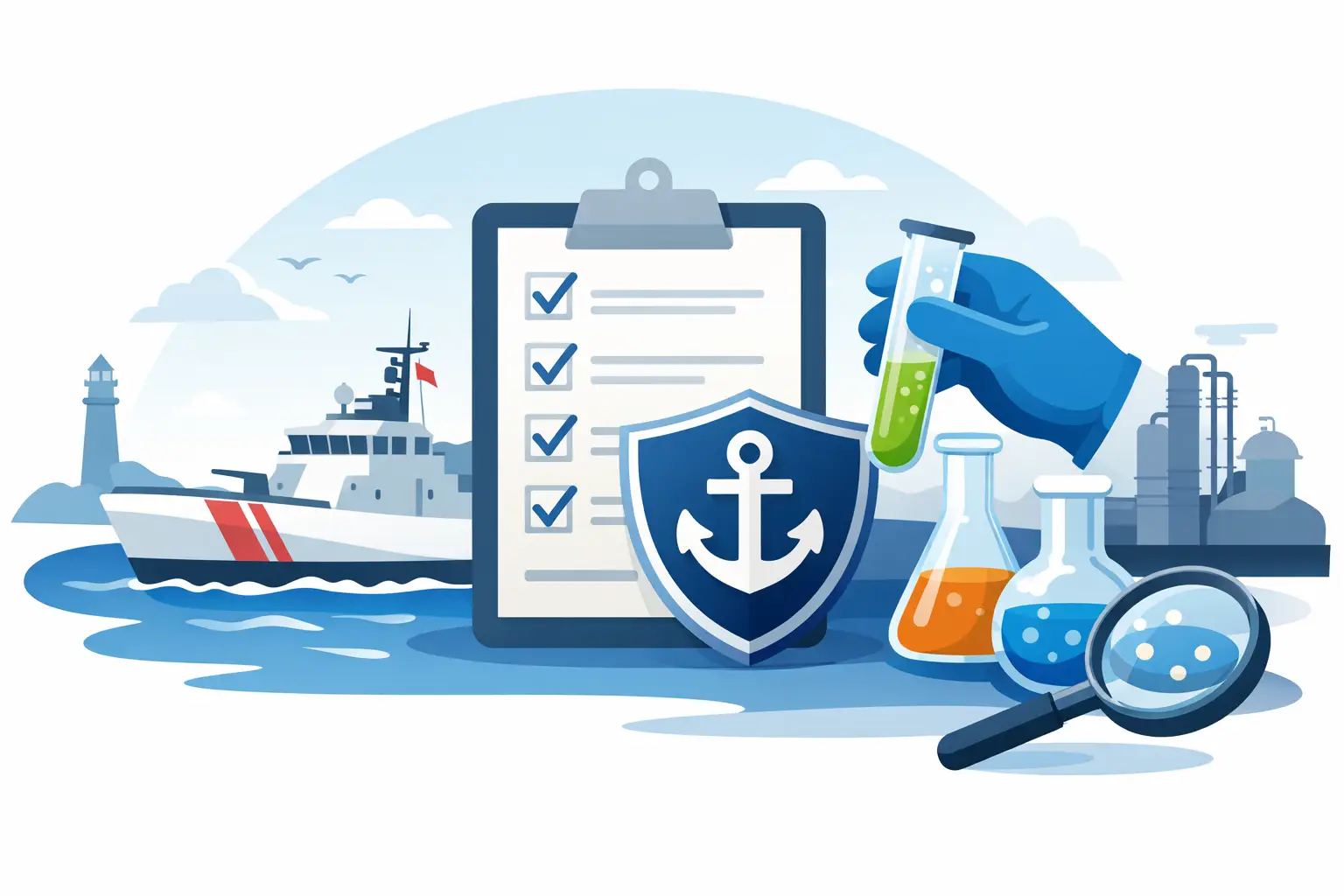
A marine employer usually finds out where the weak spots are when a serious marine incident happens at 2 a.m. and nobody is sure who must be tested, what panel applies, or how fast the collection has to happen. That is why understanding USCG chemical testing requirements matters before an incident, not after one. For vessel operators, marine employers, and consortium administrators, the rules are specific, time-sensitive, and unforgiving when documentation is missing.
What USCG chemical testing requirements cover
In the Coast Guard context, chemical testing generally refers to drug and alcohol testing for crewmembers who perform safety-sensitive duties. These rules apply to a wide range of commercial marine operations and are intended to reduce risk on the water, protect the public, and give marine employers a defensible compliance process.
The core framework includes pre-employment testing, random testing, reasonable cause testing, post-serious marine incident testing, return-to-duty testing, and follow-up testing. Alcohol testing is part of the program, but not every testing trigger is handled the same way. The timing, the type of test, and the documentation standard depend on the event and the employee’s role.
That distinction matters. A company can have a testing policy in place and still fall short if collections are delayed, random selections are not scientifically valid, or post-incident decisions are made by people without training.
Who must follow USCG chemical testing requirements
Marine employers are responsible for compliance when they employ crewmembers on vessels that fall under Coast Guard regulations. In practice, that can include towing companies, passenger vessel operators, commercial fishing operations in certain cases, and other marine businesses with personnel assigned to safety-sensitive functions.
Coverage is based less on job title and more on whether the employee directly affects the safe operation of the vessel. Licensed and unlicensed crewmembers may both be covered if they stand watch, handle navigation or engineering functions, supervise operations, or perform duties tied to vessel movement and onboard safety.
For employers with mixed operations, this is where mistakes often happen. An office employee is not treated the same way as a deckhand, and a shore-based worker is not automatically in the random pool just because they work for the same company. The testing program has to match the actual regulated population.
The main testing triggers
Pre-employment testing
Before an individual first performs safety-sensitive duties, a marine employer must have a verified negative drug test result on file. This is not a paperwork formality. If a crewmember starts work before the result is received, the employer has already created a compliance problem.
Alcohol testing is handled differently. Coast Guard rules do not use pre-employment alcohol testing in the same way as pre-employment drug testing. Employers that operate across multiple DOT modes need to be careful here because assumptions carried over from another agency can create confusion.
Random testing
Random drug testing is a standing requirement under the USCG program. The selection process must be genuinely random, spread through the year, and applied at the required annual rate. Employers cannot simply test everyone at renewal time or pick names informally when it is convenient.
A compliant random program also depends on administration. The pool has to be accurate, additions and removals need to be timely, and each selection must be documented. If your headcount changes often, the math and recordkeeping become more difficult, not less.
Reasonable cause testing
When a trained supervisor has a reasonable and articulable belief that a crewmember is under the influence, testing may be required. That decision should be based on observable facts such as speech, behavior, appearance, odors, or performance indicators.
This is one of the most sensitive areas in the program because weak documentation can undermine the decision. The employer needs a trained supervisor, clear observations, and prompt action. Delayed decisions or vague statements such as “seemed off” do not hold up well under review.
Post-accident and serious marine incident testing
Post-incident testing under the Coast Guard rules is not handled the same way as a standard workplace accident response. Serious marine incident testing has its own threshold and timeline. When an event meets the definition of a serious marine incident, drug and alcohol testing obligations can be triggered quickly.
Alcohol testing should occur within a short window, and drug specimen collection also has a strict timeframe. If testing cannot be completed in time, the employer should be prepared to document why. The key point is simple: waiting to “see what happened first” can cost valuable hours and put the employer out of compliance.
Return-to-duty and follow-up testing
If a crewmember violates drug and alcohol rules and later becomes eligible to return to safety-sensitive work, return-to-duty and follow-up testing enter the picture. These tests are not casual reinstatement steps. They are structured parts of the compliance process and typically involve a substance abuse professional’s recommendations, documented conditions for return, and ongoing follow-up testing.
For employers without an experienced administrator, this stage can be hard to manage correctly. It involves confidentiality, timing, status tracking, and exact recordkeeping.
USCG chemical testing requirements and serious marine incidents
The most urgent part of USCG chemical testing requirements is often serious marine incident response. A marine employer may only deal with one such event in years of operation, which makes advance planning even more important. When it happens, there is little room for hesitation.
A serious marine incident can involve a fatality, injury requiring medical treatment beyond first aid, significant property damage, actual or constructive total loss of a vessel, or a discharge of oil or hazardous substances in reportable quantities. The exact facts matter because they determine whether Coast Guard testing requirements are activated.
Once that threshold is met, the employer has to identify which individuals are directly involved and ensure required testing occurs within the allowed windows. This is where a written response process helps. You need decision-makers, collection access, after-hours support, and a way to document every step while operations are under pressure.
Some incidents look straightforward at first but become more complicated once facts are reviewed. Others clearly trigger testing but happen in remote areas where collection logistics are difficult. Compliance does not disappear because the vessel is offshore or because the nearest collection site is hours away. It means the employer needs a realistic response plan that accounts for those operational limits.
Common compliance problems
Most marine employers do not struggle because the rules are hidden. They struggle because the rules are precise and the operating environment is demanding. A missed random draw, an outdated pool, an untrained supervisor, or a delayed post-incident collection can all create avoidable exposure.
Another common issue is mixing Coast Guard requirements with a general company drug policy. A non-DOT workplace policy may still have value, but it cannot replace a USCG-compliant program for covered employees. The custody and control process, panel requirements, testing triggers, and records must match the regulated framework.
Documentation gaps are just as risky as missed tests. If an employer cannot show when a random selection was made, when a supervisor observed signs of impairment, or why a post-incident collection was delayed, that missing paper trail becomes part of the compliance problem.
Building a program that works in real operations
A compliant marine testing program has to work on normal days and bad days. That means having a current random pool, trained supervisors, accessible collection arrangements, clear internal escalation steps, and records that can be produced when needed.
For many employers, the practical solution is centralized program management. That includes maintaining the random testing schedule, coordinating collections, supporting serious marine incident response, tracking test status, and keeping records organized by employee and event type. Companies with multi-state operations or irregular schedules benefit even more because the administrative burden grows fast.
It also helps to review coverage regularly. Vessel assignments change. Crews rotate. Job duties evolve. If your testing roster has not been revisited in a year, there is a good chance it no longer reflects the people who actually perform safety-sensitive work.
Training deserves the same attention. Supervisors need to know when they can act, what they should document, and who to call after hours. A written policy without trained decision-makers is not much protection when a time-critical event occurs.
For employers that want fewer gaps and faster response, working with a compliance partner such as WOOTS can reduce the day-to-day strain of keeping a USCG program current while still giving internal teams clear visibility into test status and documentation.
Why the details matter
USCG chemical testing requirements are not just about checking a box for an audit file. They shape how a marine employer responds to hiring, random selections, suspected impairment, and serious incidents with legal and operational consequences attached.
The employers that handle these requirements well usually do one thing differently: they treat testing as an active compliance system, not a form they pull out when there is a problem. If your crews are covered, the best time to tighten the process is before the next call comes in.


Leave A Comment