
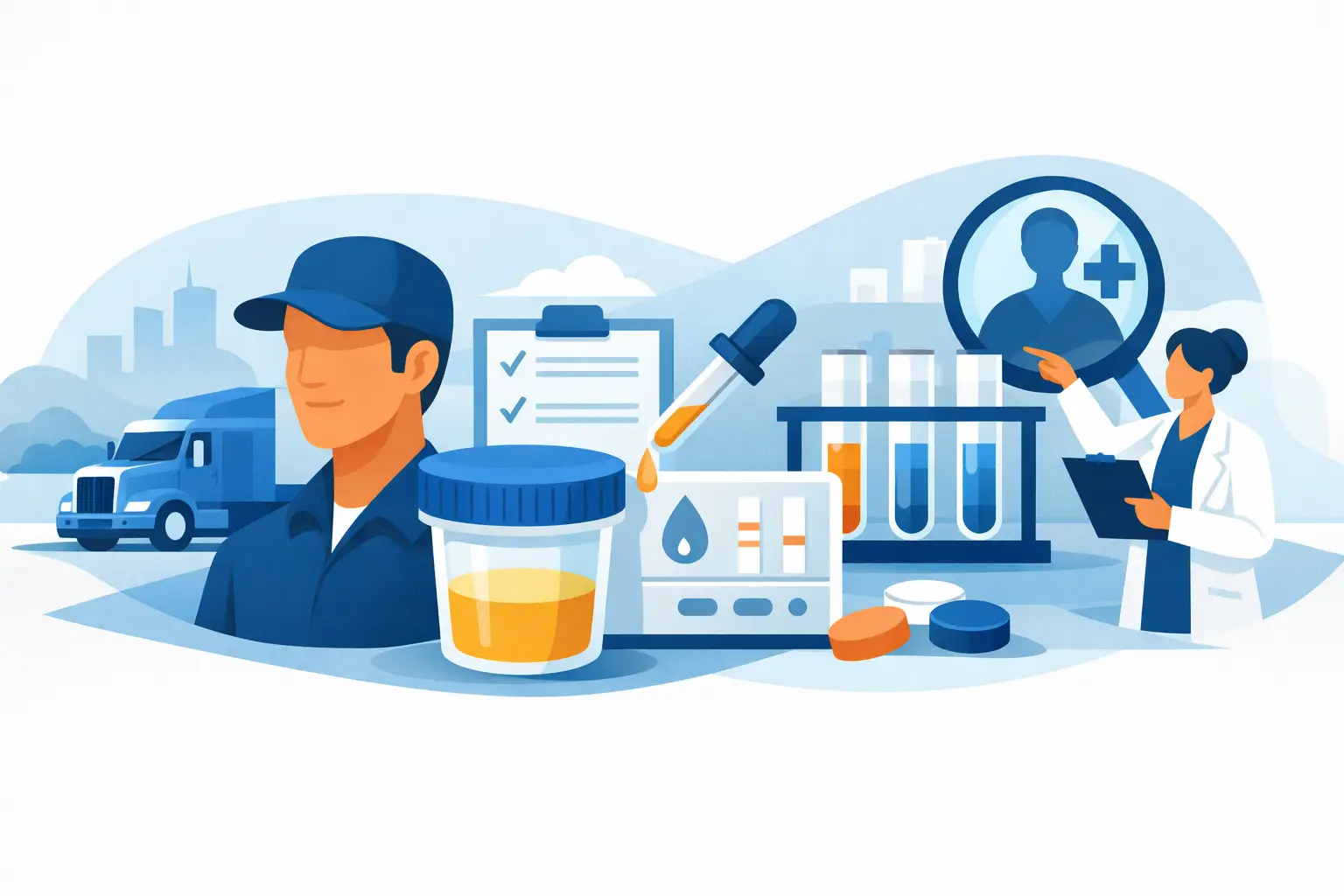
If you are an owner-operator with a CDL, the owner operator drug testing program is not optional paperwork you can handle later. If you operate under FMCSA rules, you must be enrolled in a compliant DOT drug and alcohol testing program before you get pulled into a random selection pool. That requirement applies even if you are the only person in the truck.
This is where many independent drivers get tripped up. Running your own business does not remove DOT testing obligations. In practice, it creates a different challenge: you have to meet the same federal requirements without an in-house safety department to manage enrollment, records, random selections, post-accident response, and Clearinghouse responsibilities.
What an owner operator drug testing program actually includes
A compliant program is more than a pre-employment test. For FMCSA-regulated owner-operators, it usually means participating in a consortium or third-party administrator structure that manages required testing and documentation. You cannot place yourself in your own random pool and call it compliant. Random selections must be handled independently and according to DOT rules.
At minimum, the program should support your drug and alcohol testing requirements, maintain records, coordinate collections, and help you respond when a test is required now, not next week. That matters for random testing, but it matters even more in time-sensitive situations like post-accident or reasonable suspicion events involving leased drivers or mixed fleet structures.
For many drivers, the practical issue is not understanding that testing is required. The issue is keeping up with every moving part while also booking freight, managing maintenance, and staying on schedule. A strong program reduces administrative risk and gives you a clear process when regulators, motor carriers, or auditors ask for proof.
Who needs an owner operator drug testing program
If you are a CDL driver operating a commercial motor vehicle under FMCSA authority and performing safety-sensitive functions, you generally need to be in a DOT-compliant testing program. This often includes leased owner-operators, independent drivers with their own authority, and small operators who assume that being a one-person business changes the rule. It does not.
The exact setup can depend on how you operate. A driver leased to a motor carrier may have some responsibilities handled through that carrier, but assumptions create compliance gaps. Some carriers include leased operators in their program. Others require independent enrollment or separate documentation. That is why it is worth confirming who is managing what, instead of relying on verbal direction from dispatch or onboarding staff.
If you cross regulated lines of operation or work with multiple entities, the answer can get more nuanced. What matters is that your testing coverage matches your actual regulatory exposure.
The core DOT testing requirements
For most FMCSA owner-operators, the required testing framework includes several specific testing events. Pre-employment drug testing is required before performing safety-sensitive duties, unless a limited exception applies. Random drug and alcohol testing must be administered through a compliant random selection process. Post-accident testing may be required depending on the circumstances of the crash. Return-to-duty and follow-up testing apply when a driver has violated drug and alcohol program rules and completed the required SAP process.
That sounds straightforward on paper, but real compliance problems usually happen in the details. Was the driver enrolled in a valid random pool? Was the test completed within the required time frame? Was the paperwork retained properly? Was the motor carrier relying on the wrong party to manage the records? Those are the kinds of mistakes that create enforcement risk.
A well-run owner operator drug testing program is designed to prevent those mistakes before they become violations.
Why random testing is the part that matters most
Random testing is where owner-operators most often need outside program support. The DOT requires random selection at prescribed annual rates, and the process must be scientifically valid and truly random. You cannot self-administer that process. You need to be in a consortium or similarly compliant arrangement managed by a qualified third party.
This is not just a technicality. If you are asked to produce proof of enrollment, proof of selection methodology, and proof of completed tests, weak administration becomes obvious fast. Being a safe driver is not enough. You have to be able to document that you were part of a compliant testing system the entire time.
Timing also matters. If you are selected, you need to be notified properly and tested within the required window. Delays, missed communications, and unclear procedures can turn a routine random test into a serious compliance problem.
Recordkeeping is part of the program, not an extra task
A DOT testing program is also a recordkeeping system. You need documentation that supports enrollment, test results, chain of custody information, policy administration where applicable, and proof that random testing requirements were being met. If you are audited or asked for records by a motor carrier, insurer, or enforcement official, you need those records organized and accessible.
This is one reason owner-operators often use a C/TPA instead of trying to piece together services from separate providers. A collection site can collect a specimen. A lab can process it. But compliance depends on administration, tracking, notifications, reporting, and retention. When those functions are disconnected, errors are more likely.
For independent operators, administrative simplicity has real value. Fast access to records, after-hours support, and a broad collection network are not conveniences alone. They help keep you moving when you are selected for testing away from home or need immediate direction after an incident.
Common mistakes that put owner-operators at risk
The first mistake is thinking a one-time drug test equals a program. It does not. A single negative result does not replace ongoing random testing enrollment.
The second is assuming the motor carrier is handling everything. Sometimes that is true. Sometimes it is only partly true. Unless responsibilities are clearly assigned and documented, gaps happen.
The third is waiting until an audit, roadside issue, or onboarding request to gather records. At that point, you are reacting under pressure. Compliance works better when enrollment, testing, and documentation are already in place.
Another frequent problem is using providers that can collect tests but do not really manage DOT program requirements. Testing access is essential, but access alone is not compliance support. Owner-operators need both.
How to choose the right owner operator drug testing program
Start with FMCSA experience. DOT rules are specific, and owner-operator arrangements add another layer of complexity. You want a provider that understands consortium management, random selections, post-accident response, record retention, and Clearinghouse-related processes where applicable.
Then look at operational coverage. If you run long distances or cross multiple states, a limited site network creates delays. Broad access to collection sites makes it easier to complete a required test quickly and document that it was handled properly.
Responsiveness matters just as much as network size. A program may look fine until you need help after business hours. That is when service quality becomes obvious. If you have a crash at night or receive a random testing notice while on the road, you need instructions and access right away.
Reporting is another factor. Owner-operators and small fleets benefit from clear, usable records, not just raw test data. If you cannot quickly show proof of enrollment and compliance activity, the program is not doing enough administrative work for you.
Providers like WOOTS build value here by combining collection access, DOT program management, reporting, and responsive support under one structure. For owner-operators, that can remove a lot of avoidable friction.
When the answer depends on your operating setup
Not every owner-operator situation looks the same. If you are leased to one carrier full time, your testing arrangement may be more centralized. If you move between contracts or operate under your own authority, you may need a more independent setup. If you are adding drivers, your needs also change because you are no longer solving only for yourself.
That is why the right question is not just, Do I need a test? The better question is, Who is responsible for my compliance program, and can they prove it? If the answer is vague, that is your signal to fix it.
A practical way to stay compliant
The simplest path is usually the best one: enroll in a properly managed program, confirm who owns each compliance task, keep your records current, and use a provider that can support you wherever your route takes you. Testing requirements do not get easier because you are independent. They get easier when your program is built to match the way you actually operate.
A good owner operator drug testing program should do more than check a box. It should give you confidence that when a carrier, auditor, or enforcement officer asks for proof, your answer is already in place.

Leave A Comment