
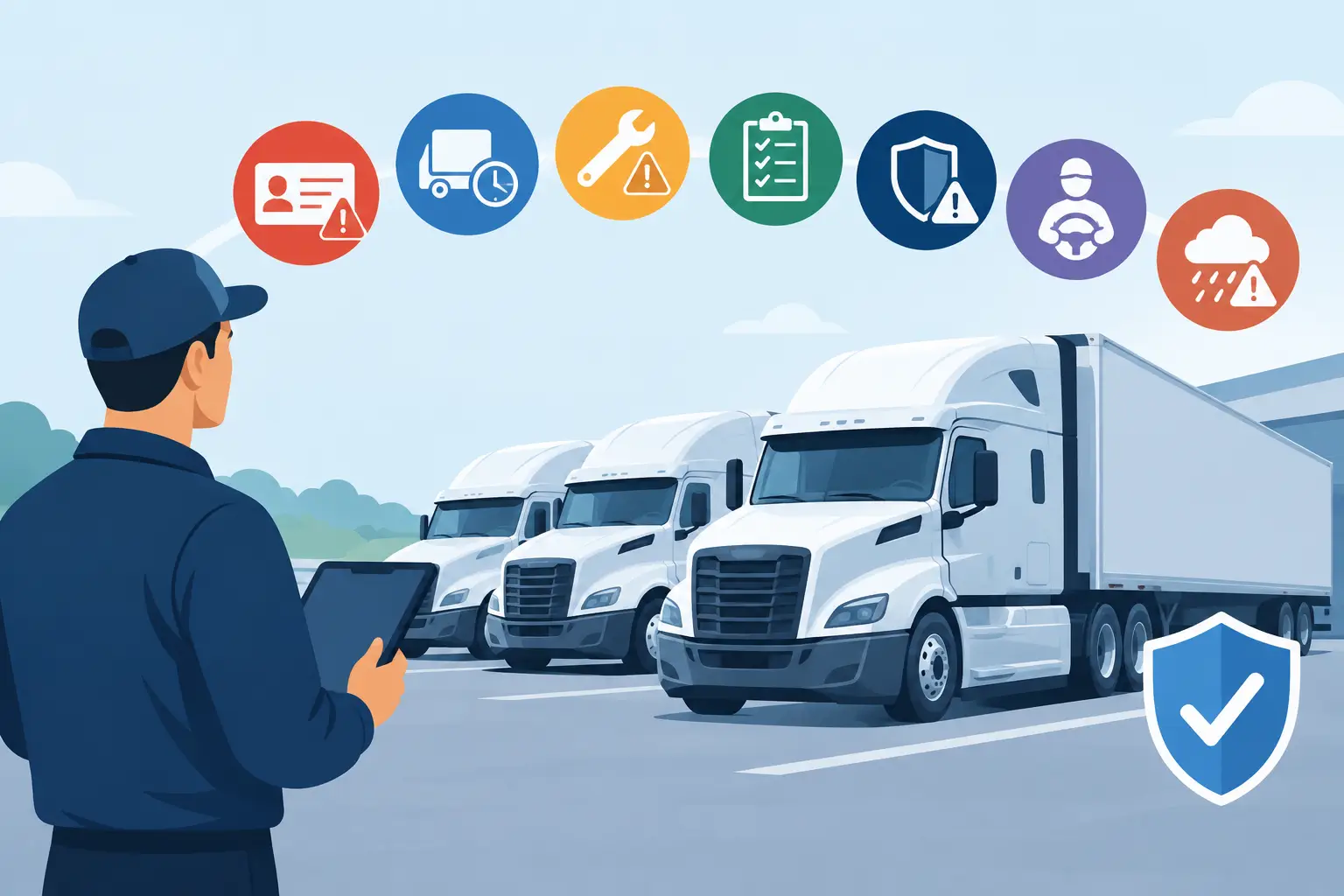
A driver is ready to dispatch, the truck is loaded, and then the question hits your team at the worst possible moment: was the required Clearinghouse step completed, documented, and tied to the right driver record? That is where clearinghouse consortium management services stop being an admin task and start becoming an operational safeguard.
For DOT-regulated employers, owner-operators, and third-party administrators, the FMCSA Drug and Alcohol Clearinghouse is not just another database. It is a live compliance obligation with real consequences for missed queries, incomplete consent steps, and weak recordkeeping. If your company also operates a consortium, the pressure increases because one process gap can affect multiple members at once.
What clearinghouse consortium management services actually cover
At a practical level, clearinghouse consortium management services support the day-to-day administration required to keep FMCSA-regulated drivers and employers aligned with federal rules. That usually includes driver enrollment support, limited and full query management, annual query scheduling, consent tracking, record monitoring, employer reporting support, and documentation management.
For consortiums, the service extends beyond one employer account. It often means coordinating multiple member companies, different driver populations, changing hiring activity, and uneven levels of compliance knowledge. Some members know the process well. Others only discover a problem when they try to place a driver into a safety-sensitive function.
That difference matters. A standalone employer may only need help keeping its own query calendar in order. A consortium needs consistency across all members, clear account roles, and a process that can hold up under review.
Why consortium management is more complex than basic Clearinghouse support
Many employers assume Clearinghouse administration is straightforward until they try to manage volume, turnover, and documentation across multiple entities. The rules may be clear, but execution can become messy fast.
A consortium has to account for more than query completion. It has to manage timing, authorization, status changes, communication, and follow-up. A driver may move between employers. A member company may hire irregularly. An owner-operator may need support with both enrollment and ongoing compliance activity. Those details create risk if no one is actively managing them.
There is also a difference between software access and actual oversight. A login does not create compliance. Someone still has to verify that queries were ordered correctly, consents were completed, annual requirements were not missed, and records can be produced when needed.
Where employers and TPAs usually run into trouble
Most compliance failures are not dramatic. They are procedural. An annual limited query gets delayed. A full query is needed, but the driver does not complete consent quickly. An employer assumes a consortium handled the step, while the consortium believes the employer did. The problem sits unnoticed until an audit, hiring event, or roadside issue puts it in view.
Another common issue is fragmented responsibility. HR may handle hiring paperwork, safety may handle random testing, and operations may be trying to seat drivers quickly. Without a defined clearinghouse process, gaps appear between departments. Consortium management services are valuable because they centralize those responsibilities and make ownership clear.
Documentation is another weak point. Completing a task is only part of compliance. Being able to show when it was completed, by whom, and under what authority is just as important. If records are scattered across email threads, spreadsheets, and multiple portals, your program becomes harder to defend.
The operational value of managed Clearinghouse support
The best reason to use clearinghouse consortium management services is not convenience alone. It is control. Good management reduces the chance of missed requirements, keeps hiring and onboarding moving, and gives employers a cleaner audit trail.
That matters for fleets with active recruiting, for owner-operators who cannot afford delays, and for TPAs supporting multiple clients at once. Administrative accuracy affects dispatch readiness. A driver who cannot be cleared on time is not just a paperwork issue. It can create route disruption, customer dissatisfaction, and lost revenue.
Managed support also improves consistency. Instead of each employer or staff member interpreting the process differently, the consortium follows one standard method for queries, consent handling, monitoring, and reporting. That structure becomes especially useful when regulations are fixed but workforce activity is not.
What to look for in clearinghouse consortium management services
Not all service models are equal. Some providers mainly offer access to a platform. Others provide active administrative support with real follow-through. For regulated employers, that difference is significant.
Look for a partner that handles more than query submission. The service should support annual query scheduling, full query follow-up, employer registration support, record retention, and clear communication when action is required. Responsiveness matters because many Clearinghouse issues are time-sensitive, especially during hiring or post-violation follow-up.
You should also look at whether the provider understands the broader DOT testing program, not just the Clearinghouse itself. Clearinghouse requirements do not exist in isolation. They intersect with pre-employment testing, consortium administration, random program participation, post-accident response, and policy enforcement. A provider that understands the full compliance picture can catch issues earlier.
Reporting quality matters too. Employers need visibility into what has been completed, what is pending, and what needs attention next. If reporting is vague or delayed, your team still ends up chasing answers.
A good service model should fit different types of regulated employers
An owner-operator has very different needs from a national fleet, and both differ from a TPA managing multiple client accounts. Good consortium management accounts for that.
Smaller operators often need more hands-on support because they do not have internal compliance staff. They may need help with registration, driver consent workflows, and keeping annual requirements from slipping. Larger employers usually need scale, consistency, and reporting discipline across many drivers and locations. TPAs need a service partner that can support client complexity without creating more administrative work.
That is why one-size-fits-all service can fall short. The right structure depends on driver count, turnover, hiring frequency, internal staffing, and how much of the DOT program your team already manages well.
How clearinghouse consortium management services reduce audit stress
Audit stress usually comes from uncertainty. Teams know they are doing the work, but they are not sure whether every required step was completed, documented, and stored in the right place. Managed Clearinghouse support helps remove that uncertainty.
When queries are scheduled properly, consents are tracked, and records are maintained in an organized way, audits become more manageable. You spend less time reconstructing history and more time producing clear documentation. That is a major difference when regulators or internal stakeholders ask for proof.
The value is even greater for consortium administrators. If several members rely on the same program structure, one disciplined process can improve readiness across the group. That does not eliminate every risk, but it gives the consortium a stronger compliance foundation.
The trade-off between internal management and outsourced support
Some employers prefer to keep Clearinghouse administration fully in-house. That can work well if the team has enough time, training, and process discipline. The benefit is direct control.
The trade-off is that internal teams are often balancing many responsibilities at once. Hiring, testing coordination, supervisor training, policy management, and incident response all compete for attention. Clearinghouse steps can then become reactive instead of planned.
Outsourced consortium management services add cost, but they can lower administrative strain and reduce avoidable compliance errors. For many employers, especially those with limited internal bandwidth, that trade is worth it. It depends on your risk tolerance, staffing model, and how consistently your current process performs.
Why end-to-end compliance support matters
Clearinghouse activity is one part of a larger testing and compliance program. If your provider can only address one piece, your team still has to connect the rest. That creates handoff risk.
A more practical approach is to work with a partner that can support the broader compliance process, from program administration and testing coordination to reporting and after-hours response. For employers operating across the US and Canada, that broader support becomes even more useful because program needs often vary by jurisdiction, workforce type, and regulatory environment. WOOTS is built around that kind of hands-on support model.
The right service should make compliance easier to manage without making your process harder to understand. You should know what is being handled, what still needs your approval, and what deadlines are coming next.
If your consortium or employer program is relying on memory, scattered reminders, or last-minute checks, that is usually a sign the process needs attention. Clearinghouse compliance works best when it is organized before there is pressure, not when a loaded truck is waiting on an answer.






Leave A Comment